

Have you encountered the following problems when using a body fat scale?
Does the body fat rate measured with a body fat scale differ in the morning and evening?
Is the body fat measurement immediately after exercise different from the data displayed after taking a shower?
These problems are most likely due to inaccurate readings due to other factors when measuring with a body fat scale.
Next, I will assist you to use the body fat scale scientifically, hoping to help you get more accurate data when using the body fat scale!
First of all, let us first understand the working principle of body fat scales: whether it is a home body fat scale, or a body fat scale used in a gym or a medical examination center in a hospital, the bio electrical impedance method is used to measure the body fat rate, that is, the "BIA test method".
The process of measuring the body impedance value is probably like this:
There are 4/8 electrode pads on the body fat scale. The scale body of the body fat scale sends a weak current into the human body through the electrode sheet. The micro current enters the human body from one foot, and after conduction in the body, the data is transmitted back to the electrode sheet under the other foot. The human body and the scale body form a closed The AC circuit, so you get an electrical impedance value, and then combine the electrical impedance value with the height, weight and other data to calculate your body fat percentage.
The main reason for the error is the resistance value measurement (temperature changes, changes in the moisture content of the contact surface, changes in body water content after exercise, etc. will affect the accuracy of the resistance value).

When using a home body fat scale, to get more accurate measurement results, it is recommended to do the following:
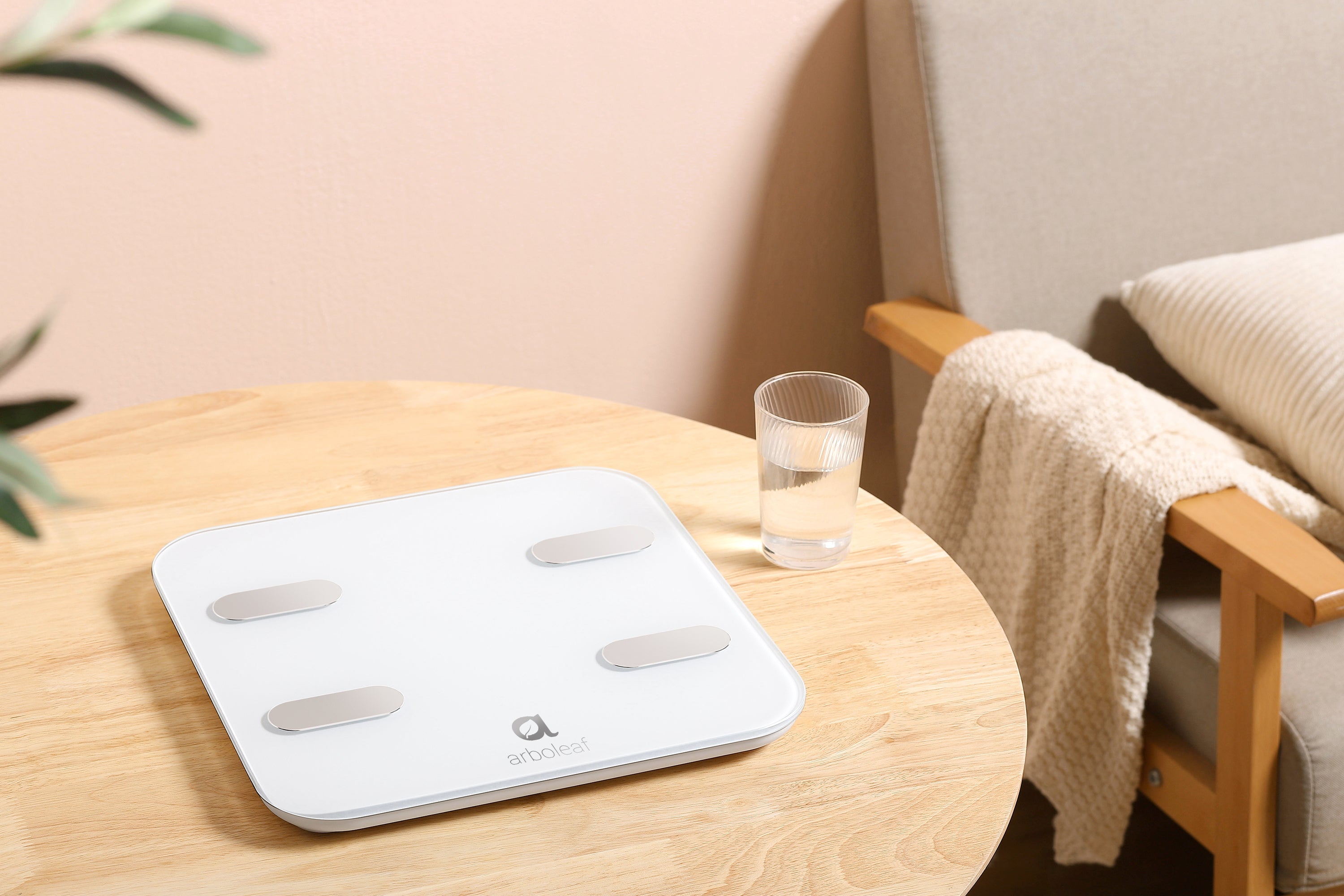
- I recommended that regularly clean the surface of your body fat scale. Some body fat scales have 4 small metal discs on the surface, which are electrode pads, which are in contact with the skin and are used to measure body impedance.
- Please enter the correct gender, height and age information on the smart APP associated with your body fat scale, so that your body fat scale can accurately calculate your body fat according to the impedance value in combination with the smart APP

- Please try to measure at the same time and under the same conditions. Because eating, drinking, bathing, and exercising can change the body's resistance. The best way to measure it is to measure it on an empty stomach after getting up.
- Please take off your socks when measuring, stand on the body fat scale (please avoid bringing your legs together), and don't get too wet on your feet (water droplets on your feet may reduce the impedance value).

The above are some practical tips on the use of body fat scales, I hope it will be helpful to your daily use of body fat scales!
Wrote by Mia Myers


Share: