

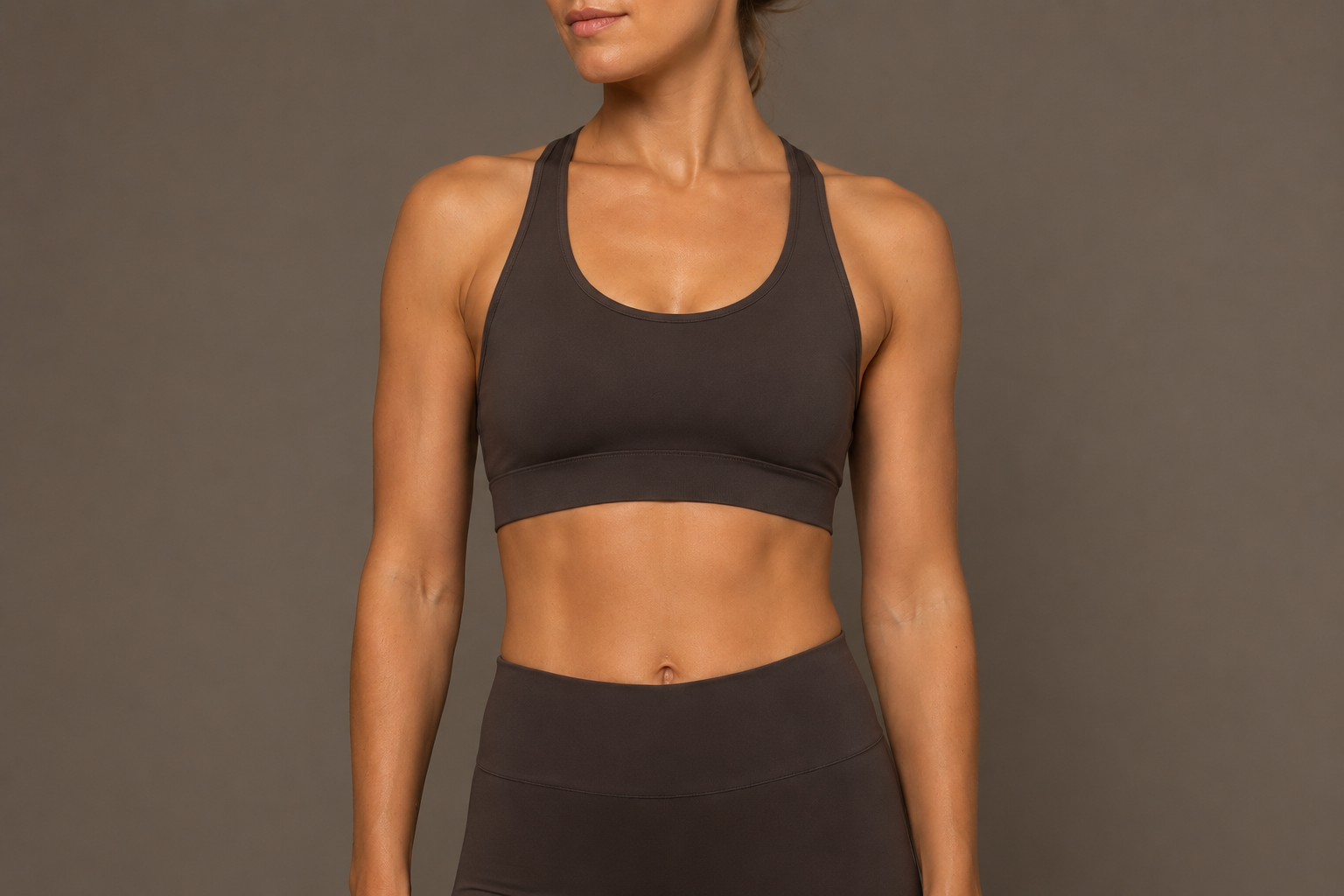
Body fat percentage sounds simple, but it carries important meaning. Whether you just got your results from a body composition scan and saw "20%" staring back at you, or you're trying to figure out where you stand health-wise, it is easy to feel confused. You might wonder: What is considered a normal range for women? Why do the fitness photos I see online of a 20 body fat female look so different from what I see in the mirror? And ultimately, should this number be my primary fitness goal?
This guide explains what it looks like, whether it is healthy, and how it relates to body composition.
What Is Body Fat Percentage?
Before evaluating your results, it helps to understand what the metric actually means. Body fat percentage is the proportion of your total body weight that comes from fat mass, as opposed to lean mass, which includes muscle, bone, water, and organs. At 20% body fat, exactly one-fifth of your body weight is fat tissue.
That fat isn't all bad, by the way. Your body needs a baseline amount of fat, called essential fat, just to keep things running: hormone production, brain function, organ protection, and more. The key question is whether the amount of body fat supports your health and fitness goals.
What is a Normal Body Fat Range for Women?
So right off the bat, you can see that 20% lands differently depending on whether you're male or female. Because women biologically require a higher baseline of fat for hormonal health, 20% is a particularly interesting spot on the spectrum. It's not extremely lean, but it's not in the danger zone either.
For context, body fat categories for women (per the American Council on Exercise (ACE)) generally break down like this:
-
Essential Fat (10–13%): The absolute minimum required for basic physical survival.
-
Athletes (14–20%): Highly active, lean, and physically conditioned.
-
Fitness (21–24%): A very healthy, active lifestyle.
-
Acceptable (25–31%): The general health baseline for everyday wellness.
-
Obese (32%+): Associated with elevated metabolic risks.
Depending on your sex, age, and goals, 20% body fat can mean very different things. As you can see, a 20 percent body fat female sits right at the border of the "Athlete" and "Fitness" categories.

What Does a 20 Body Fat Female Look Like?
If you are wondering what does 20 body fat look like female, the reality is that body fat distribution is highly individual; two people at exactly 20% can look noticeably different depending on genetics and muscle mass. However, there are general visual markers you can expect.
Typical Physical Characteristics At this level, a woman typically carries very little excess subcutaneous fat (the soft fat just under the skin).
-
Stomach and Core: You will often see a flat stomach with light abdominal shadows when flexing. While a deeply carved six-pack might not be fully visible, the vertical core lines are usually apparent.
-
Arms and Shoulders: Deltoids and biceps often show clear definition and separation, especially during movement.
-
Legs: Quads and hamstrings will generally have visible separation without appearing overly vascular.
Why It Looks Different on Everyone A woman who consistently strength trains will look much firmer and more "toned" than a woman with lower muscle mass at the exact same percentage. Your skeletal framework also dictates whether you naturally store fat in your hips and thighs or evenly across your torso.

Is 20 Body Fat Good for a Female?
As the ACE guidelines show, it is widely considered highly healthy, but there is a crucial medical caveat.
The danger of low body fat rarely comes from the number itself; it comes from under-fueling (low energy availability). If you reach this level by starving yourself, your body will likely experience fatigue, mood swings, and a disrupted menstrual cycle. However, if you maintain this physique by eating adequate protein, fueling your workouts properly, and prioritizing recovery, it can be a highly sustainable and metabolically healthy state.
20% vs. 18%, 25%, and 30% Body Fat: What’s the Difference?
To better understand where 20% sits, it is helpful to compare it to other common benchmarks without getting lost in the raw numbers.
18% Body Fat
-
Appearance: Highly defined, visible abs, and deep muscle separation.
-
Health & Lifestyle: Sits near the top of the elite athlete range. It requires a highly regimented diet and intense training. Can risk hormonal disruption if energy intake drops too low.
-
Suitable For: Elite athletes, fitness competitors, and bodybuilders during peak season.
20% Body Fat
-
Appearance: Athletic, flat stomach, and slight but visible muscle definition.
-
Health & Lifestyle: Generally very healthy when properly fueled. Requires consistent exercise and mindful nutrition, but still allows for lifestyle flexibility and occasional treats.
-
Suitable For: Highly active individuals and dedicated fitness enthusiasts.
25% Body Fat
-
Appearance: Softer contours, natural curves, and less visible muscle separation.
-
Health & Lifestyle: An excellent, highly sustainable balance. Hormonally safe and much easier to maintain year-round without food anxiety or intense macro-tracking.
-
Suitable For: The general population prioritizing overall wellness and longevity.
30% Body Fat
-
Appearance: A fuller figure, with fat distributed naturally across the body.
-
Health & Lifestyle: Still falls within standard acceptable ranges, though trending toward the higher end.
Suitable For: Individuals with less active lifestyles or varying genetic baselines.
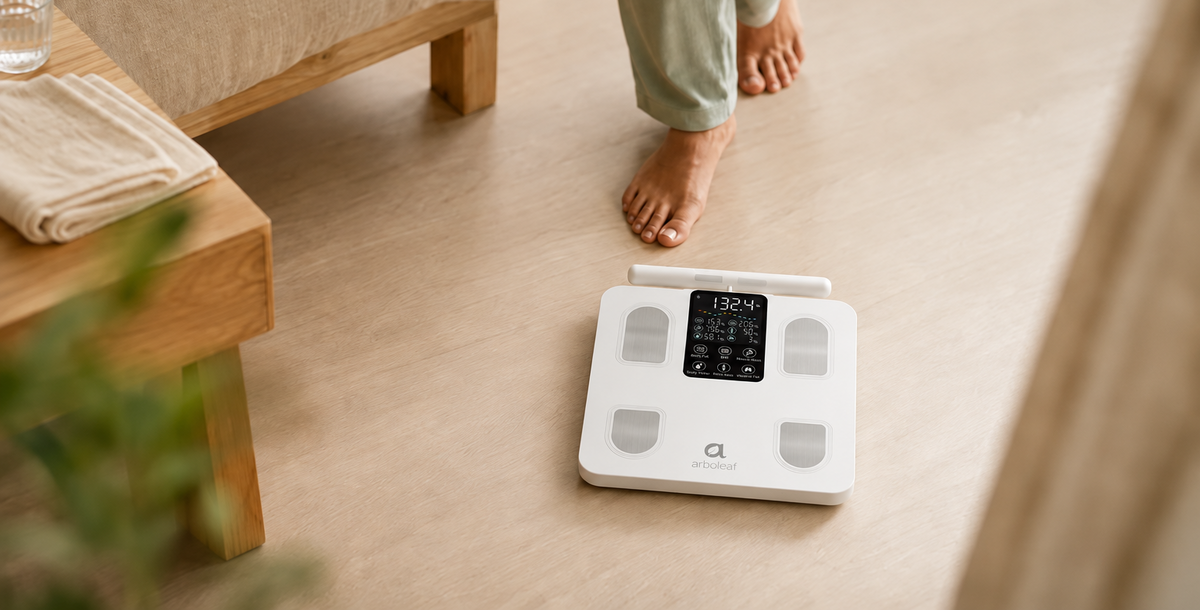
For different user groups, the arboleaf Smart Body Composition Scale also offers specialized modes such as Athlete Mode, designed for people with active and healthy lifestyles. This helps provide more accurate body composition analysis, allowing you to better understand your body metrics and track your health journey.
Should You Aim For a Female 20 Body Fat Level?
The short answer is: it depends entirely on your specific lifestyle and goals. Let's look at two distinct approaches:
-
The Physique-Prep Path (For Athletes): If your goal is to step on a competitive stage or maximize athletic performance, this is an excellent baseline. Reaching this requires structured training blocks, precise macro-tracking, and a moderate caloric deficit specifically designed to preserve lean muscle mass.
-
The Sustainable Lifestyle Path (For Everyday Wellness): If your goal is simply to live a long, energetic life, hitting exactly 20% is completely optional. Many women feel their absolute best—with high energy, stable moods, and great sleep—when maintaining a percentage between 22% and 26%.
Why You Shouldn't Obsess Over the "Body Fat 20 Female" Number
While many beginners chase this exact number, obsessing over a single digit can cause you to miss the bigger picture of your overall metabolic health. First, it is important to realize that not all fat is created equal. Pinchable subcutaneous fat is largely an aesthetic concern, whereas Visceral Adipose Tissue (VAT)—the hidden fat stored around your internal organs—is what actually drives health risks, as supported by extensive clinical research published in the National Library of Medicine. Improving your strength, eating whole foods, and lowering your visceral fat is far more important for your long-term wellness than hitting a specific number on a screen.
Furthermore, your body fat percentage is not a static number. Because home Bioelectrical Impedance Analysis (BIA) technology is naturally hydration-sensitive, you might test at 20% on Tuesday and 21.5% on Wednesday simply due to recent sodium intake or normal hormonal water retention. Rather than stressing over a single morning's reading, the most reliable strategy is to establish a consistent baseline and focus on long-term trends.
This is why having a comprehensive tracking tool like an Arboleaf smart scale is so helpful for your fitness journey. Instead of just giving you a single body fat percentage that bounces around daily, it tracks over 50 essential metrics—including your skeletal muscle mass and visceral fat—giving you a complete look at your body recomposition. By stepping on the scale under the same conditions every morning, you can rely on the companion app to monitor your 30-day moving average, ensuring your hard work is genuinely moving your health in the right direction.
How to Reach 20 Body Fat Female Safely
If you have decided that this is a healthy goal for you, the biggest mistake you can make is just aggressively cutting calories. How to lower body fat for females successfully relies on body recomposition—losing fat while maintaining muscle.
-
Prioritize Strength Training: Lifting weights is essential. Building muscle raises your resting metabolic rate and ensures that the weight you lose is actually fat.
-
Eat Adequate Protein: A slight caloric deficit is needed to burn fat, but high protein intake is non-negotiable to protect your muscle mass.
-
Track Your Cycle: Women experience massive metabolic shifts across their menstrual cycle. Expect slight shifts in appetite and water retention.
-
Optimize Sleep: Cortisol causes your body to stubbornly hold onto fat. Adequate sleep is required for true recovery.
Frequently Asked Questions
Q: Can you see abs at 20 body fat female?
A: Yes, typically. While you may not have a sharply carved six-pack (which usually appears closer to 15-17%), a 20 body fat female usually displays clear abdominal definition, a flat stomach, and visible vertical core lines.
Q: Is a female at 20% body fat considered athletic?
A: Yes. In the medical and fitness communities, this level falls directly into the "Athlete" or advanced "Fitness" category. It indicates a high level of lean mass and low subcutaneous fat.
Q: How to maintain 20 body fat female long-term?
A: For some highly active women with fast metabolisms, it is effortless. For others, maintaining this level requires strict dietary tracking and high-volume training, which may not be enjoyable or sustainable year-round. It is important to find a balance that supports your mental and physical health.
Q: Are smart scale body fat percentages accurate?
A: While home smart scales are hydration-sensitive, they are incredibly accurate at tracking consistency and long-term trends. Measuring at the same time every day provides a highly reliable trajectory of your physical transformation.
Partager: