

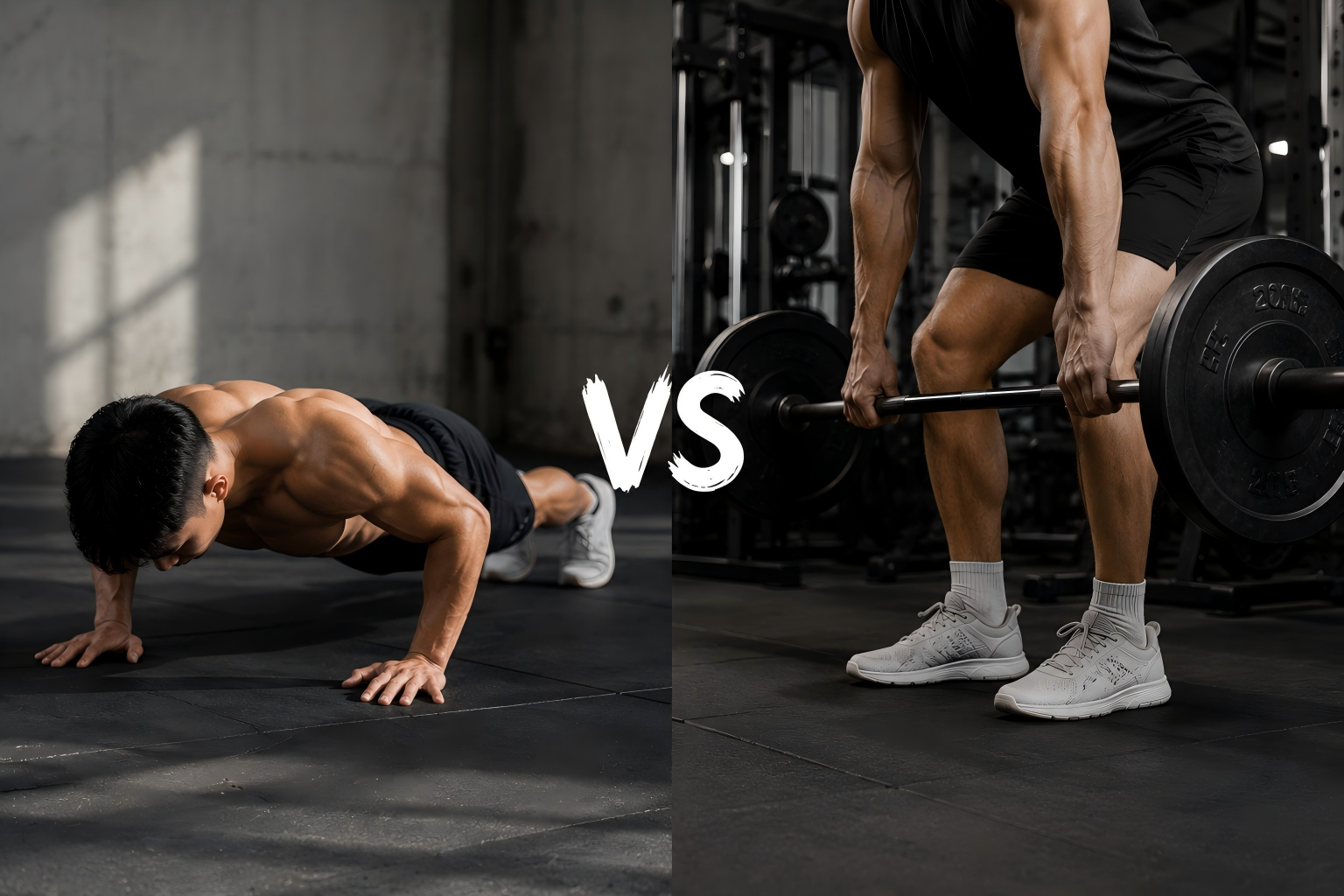
When you decide to get serious about fitness, one question comes up almost immediately: calisthenics vs weightlifting—which is better for building muscle, strength, and an impressive physique?
The short answer is that both training styles work. Weightlifting is generally the faster path to maximizing muscle growth because it allows precise progressive overload, while calisthenics excels at developing functional strength, body control, mobility, and a lean athletic physique.
In this guide, we'll break down the key differences between calisthenics and weightlifting, explain how each method builds muscle, compare the physiques they typically produce, and help you decide which training style best fits your goals.
Calisthenics vs Weightlifting: The Core Difference
To understand which training style is right for you, you first need to understand where the resistance comes from.
Weightlifting
Weightlifting is a form of resistance training that uses external loads such as barbells, dumbbells, kettlebells, or gym machines. Instead of moving your body through space, you primarily move an external weight while specific muscle groups generate force.
One of the biggest advantages of weightlifting is the ability to precisely control resistance. As you become stronger, you can gradually increase the weight being lifted, making progressive overload simple and measurable.
Key Advantages
-
Easily target specific muscle groups
-
Simple and measurable progression
-
Ideal for maximizing muscle size and strength
Classic Exercises
-
Barbell Bench Press
-
Squats
-
Deadlifts
-
Dumbbell Curls
-
Overhead Press
Calisthenics
Calisthenics, often referred to as bodyweight training, uses your own body mass as resistance. Instead of relying on external equipment, you perform movements such as push-ups, pull-ups, dips, squats, and planks to build strength and muscle.
As you progress, exercises become more challenging by changing leverage, range of motion, or movement complexity.
Key Advantages
-
Requires little or no equipment
-
Can be performed almost anywhere
-
Builds functional strength and coordination
-
Promotes core stability and body control
Classic Exercises
-
Push-ups
-
Pull-ups
-
Dips
-
Bodyweight Squats
-
Planks
Both training styles can build strength and muscle effectively. The main difference is that weightlifting increases difficulty by adding resistance, while calisthenics increases difficulty by making the movement itself more challenging.
The Science: Can Calisthenics Build Muscle?
One of the most common questions in the calisthenics vs weightlifting debate is whether bodyweight training can build muscle as effectively as lifting weights.
According to the National Academy of Sports Medicine (NASM), muscle hypertrophy (growth) requires progressive overload—consistently forcing your muscles to work harder than they did during previous workouts.
-
In Weightlifting: Progressive overload is straightforward. You simply increase the resistance by adding more weight to the bar, dumbbell, or machine. This creates greater tension in the muscles and encourages them to grow stronger and larger.
-
In Calisthenics: Progressive overload comes from making movements more difficult. Once standard push-ups become easy, you can progress to decline push-ups, archer push-ups, or other advanced variations that place greater demands on your muscles.
The key takeaway is simple: both methods can build muscle effectively. Whether you're increasing the weight on a barbell or progressing to a harder bodyweight exercise, your muscles respond to the same principle of progressive overload.
The Visual Results: Calisthenics Body vs Weightlifting Body
If both methods build muscle, the next question is obvious: what kind of physique can you expect?
While both training styles can produce impressive results, they tend to emphasize different physical qualities. Calisthenics often develops a lean, athletic look with excellent relative strength, while weightlifting provides greater opportunities for maximizing muscle size and targeting specific muscle groups.
| Factor | Calisthenics | Weightlifting |
|---|---|---|
| Physique | Lean and athletic | More muscular and developed |
| Muscle Growth Potential | Strong for beginners | Higher long-term potential |
| Upper Body Development | Excellent | Excellent |
| Leg Development | More challenging | Easier to maximize |
| Muscle Isolation | Limited | Highly effective |
| Mobility & Coordination | Excellent | Moderate |
| Equipment Required | Minimal | Moderate to High |
| Training Location | Almost anywhere | Usually requires equipment |
It's important to remember that nutrition, recovery, genetics, and training consistency all play major roles in determining your final physique.
Which Training Style Is Right for You?
When deciding between calisthenics vs weightlifting, the best choice depends on your goals, lifestyle, and training preferences.
Choose Calisthenics If...
-
You want a lean, athletic physique.
-
You prefer training at home or outdoors.
-
You travel frequently or have limited access to a gym.
-
You enjoy mastering bodyweight skills such as pull-ups, handstands, and muscle-ups.
-
You want to improve mobility, balance, and body control.
Choose Weightlifting If...
-
You want to maximize muscle size and strength.
-
You enjoy tracking measurable progress.
-
You want to target specific muscle groups.
-
You have regular access to gym equipment.
-
You prefer a structured training approach.
Quick Decision Guide
If your primary goal is convenience, athleticism, and functional strength, choose calisthenics.
If your primary goal is maximizing muscle mass and strength, choose weightlifting.
If you want the benefits of both, consider a hybrid approach.
The Ultimate Solution: Hybrid Training
Many people approach the calisthenics vs weightlifting debate as if they must choose one and ignore the other. In reality, the two training styles complement each other extremely well.
Weightlifting is highly effective for building muscle and developing lower-body strength, while calisthenics excels at improving body control, coordination, mobility, and core stability.
A practical hybrid approach is to use weightlifting for exercises that are difficult to progressively overload with bodyweight alone—such as squats, deadlifts, and lunges—while using calisthenics for upper-body and core movements like pull-ups, dips, push-ups, and planks.
For many people, hybrid training offers the best balance between muscle growth, athletic performance, and long-term sustainability.
Frequently Asked Questions (FAQ)
Q: Can calisthenics build big legs?
A: Yes, calisthenics can strengthen and build your legs, especially with exercises like lunges and pistol squats. However, if your goal is maximum leg size, weightlifting generally provides a more effective path.
Q: Will starting with weights cause injuries for beginners?
A: Not if done correctly. Start with lighter weights, focus on proper technique, and gradually increase resistance as your strength improves.
Q: Can I get a six-pack with just bodyweight exercises?
A: Absolutely. Exercises like planks and leg raises can effectively develop your abs. Combined with a low body fat percentage, they can help reveal a defined six-pack.
Q: Is calisthenics or weightlifting better for beginners?
A: Both can be effective. Calisthenics is often easier to start because it requires little equipment, while weightlifting may be more efficient for building muscle and strength.
Conclusion
At the end of the day, there is no single winner in the calisthenics vs weightlifting debate. Calisthenics gives you the freedom to train anywhere and master your own body, while weightlifting provides a more direct path to maximizing muscle size and strength.
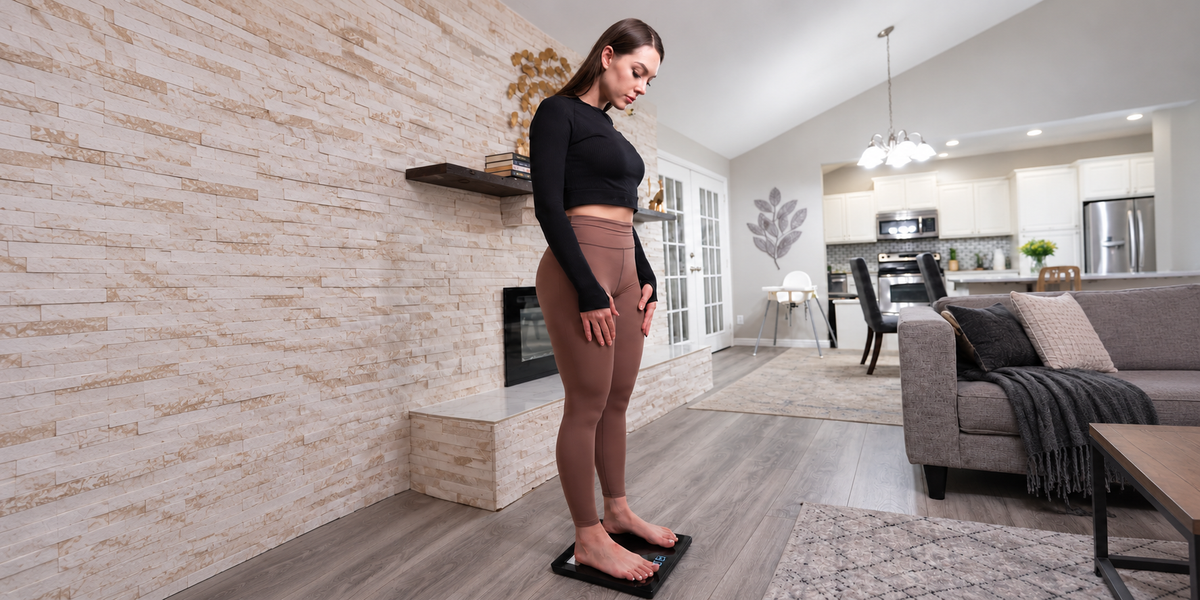
The best approach is the one that aligns with your goals and keeps you training consistently. As your body changes, remember that progress isn't always reflected by body weight alone. Tools like the Arboleaf Body Composition Scale can help you track muscle mass, body fat percentage, and other key metrics so you can better understand the results of your training.
Whether you choose calisthenics, weightlifting, or a combination of both, consistency remains the most important factor in building the body you want.

Share: