


You have started hitting the gym, prioritizing your protein, and pushing yourself during every workout. Naturally, you want to know: how long does it take to build muscle mass?
The direct answer is that if you are consistently strength training, eating enough protein, and prioritizing recovery, most people will start to see noticeable, visible muscle growth in about 6 to 12 weeks. However, your strength will actually improve much faster than your muscle size. True, lasting body transformation is a long-term commitment that takes several months to over a year.
This guide will break down exactly what happens in your body week by week, explain why some people build muscle faster than others, and show you how to accurately track your progress so you know your hard work is actually paying off. Because remember: muscle growth isn't linear, and the traditional scale rarely tells the full story.
Muscle Growth Timeline: What to Expect From Week 1 to Month 6+
Understanding the realistic muscle growth timeline helps you set expectations and prevents you from quitting just before the physical changes become visible.
- Week 1–2: Strength Improves Before Muscle Size
During your first couple of weeks, you will likely feel significantly stronger, and your lifting form will feel much smoother. However, the mirror won't show much change. This is due to neural adaptation. Your brain is simply learning how to fire your existing muscle fibers more efficiently. You are getting stronger, but you are not necessarily getting bigger yet.
- Week 3–6: Your Muscles Begin to Grow
- Month 2–3: Visible Muscle Growth Becomes Noticeable
This is the sweet spot where your hard work becomes visible. You will begin to see clear muscle definition, particularly in your arms, chest, shoulders, and back. If you are also losing body fat at the same time, this visual transformation will appear even more dramatic because there is less fat covering the new muscle tissue.
- Month 6+: Consistency Creates Lasting Results
Real, undeniable body transformation takes half a year or more. At this stage, your physique fundamentally changes. The people in the gym with the most impressive physiques aren't necessarily training harder than you—they have simply been training longer.
Muscle Growth vs. Strength Gains: Why They Don't Happen at the Same Time
A very common frustration is: "Why did my bench press go up by 20 pounds, but my chest looks exactly the same?"
It is crucial to understand that strength comes first, and muscle size comes later. When you first start lifting weights, your nervous system adapts very rapidly. Your brain learns to recruit more motor units and coordinate your movements, which allows you to lift heavier weights almost immediately.
Actual muscle protein synthesis—the biological process of repairing micro-tears in muscle tissue to make them thicker—is a much slower metabolic process. Do not let the lack of visual changes in the first few weeks discourage you. If your strength is increasing, the physical muscle growth is working quietly in the background and will eventually show.
What Determines How Fast You Build Muscle?
When people ask how long does it take to build muscle mass, the ultimate answer heavily depends on how well you manage several key lifestyle factors outside of the gym.
- Progressive Overload → The Biggest Driver of Muscle Growth
Doing the exact same workout with the exact same weights for months will not build new muscle. You must continuously challenge your muscles by gradually increasing the weight, the number of repetitions, or the total training volume. This forces the tissue to adapt and grow.
- Protein Intake → Supports Muscle Repair and Growth
Training breaks muscle down; protein builds it back up. To gain muscle faster, you need to consume adequate protein daily, generally recommended around 0.7 to 1 gram per pound of body weight . Consistency every day with your macronutrients is more important than eating a massive amount of protein in just one sitting.
- Calories → Fuel for Building New Muscle
Building new tissue is an energy-intensive process. For most experienced lifters, constant severe caloric deficits make building muscle nearly impossible. However, as we'll explain later, beginners or those with higher body fat can actually build muscle in a slight deficit—a process called body recomposition.
- Sleep & Recovery → When Muscles Actually Grow
You do not build muscle in the gym; you build it in your bed. During deep sleep, your body releases human growth hormone and repairs the micro-tears you created during training. Ignoring recovery days or skimping on sleep will severely stall your progress.
- Genetics & Age → Why Everyone Grows at a Different Pace
While genetics and age do play a role in your natural baseline of testosterone and muscle fiber composition, they are rarely the determining factor for success. Intelligent training and consistent nutrition will always trump average genetics over the long term.
Beginner vs. Experienced Lifters: Who Builds Muscle Faster?
Your training age (how long you have been lifting weights) heavily dictates how quickly you will see new growth.
- Beginners → The "Newbie Gains" Advantage
If you are completely new to strength training, you will experience the fastest rate of muscle growth of your entire life. Because your body has never faced this type of stimulus before, it adapts incredibly fast, often allowing you to build muscle and lose fat simultaneously.
- Intermediate Lifters → Progress Starts to Slow
After your first year or two, progress naturally slows down. You will hit plateaus, and you will need to pay much closer attention to your programming, progressive overload, and nutrition to keep growing.
- Advanced Lifters → Every Pound Takes More Time
For those who have been lifting for years, gaining even one pound of pure muscle is a massive achievement that requires months of dedicated, highly structured training. Muscle growth slows down as you get closer to your genetic potential.
Building Muscle vs. Losing Fat: Why Your Timeline May Look Different
Many individuals embark on a fitness journey wanting to do two things at once: lose belly fat and build muscle. This process is called body recomposition.
If you are successfully losing fat while gaining lean mass, your overall body weight might not change at all. You could easily step on the scale after two months of hard work and see the exact same number. If you only look at your total weight, you might feel like you failed. In reality, your body composition has drastically improved. This is why you must evaluate your progress using metrics that go beyond simple gravity.
How To Tell If You're Building Muscle
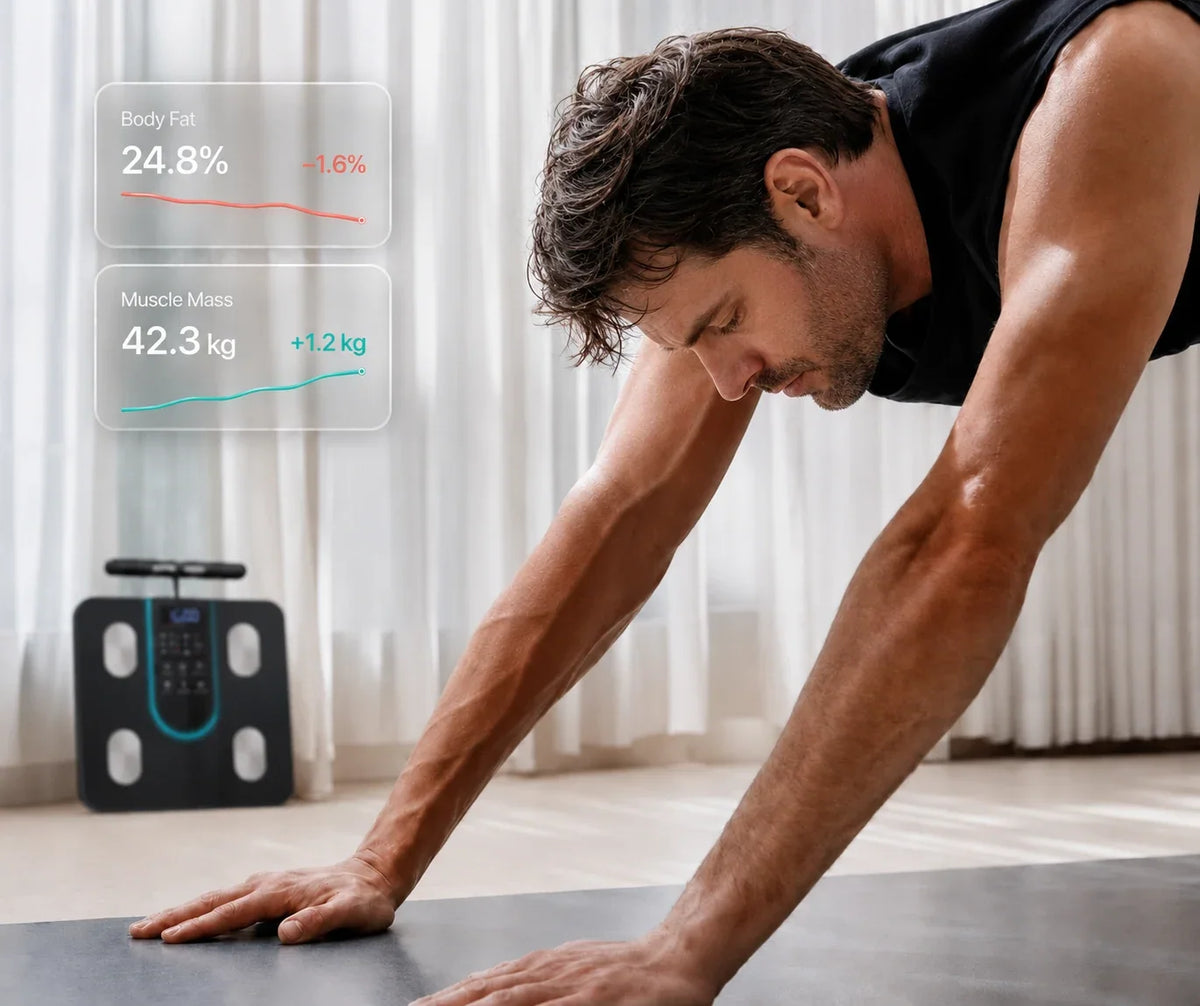
Signs of muscle growth are not always immediately obvious in the mirror. A dual-energy X-ray absorptiometry scan, or DEXA scan , is a highly precise way to measure your lean muscle mass. However, since this specialized scan isn't accessible to most of us for regular check-ins, experts often recommend using a home scale that can measure muscle. While they are not clinical medical scanners, they are incredibly practical tools to help you track your progress.
For example, using an Arboleaf smart scale allows you to seamlessly track over 50 specific body metrics—including skeletal muscle mass and body fat percentage. By logging these metrics in the companion App, you can focus on your 30-day moving average and observe long-term trends, which is far more insightful than reacting to daily weight fluctuations.
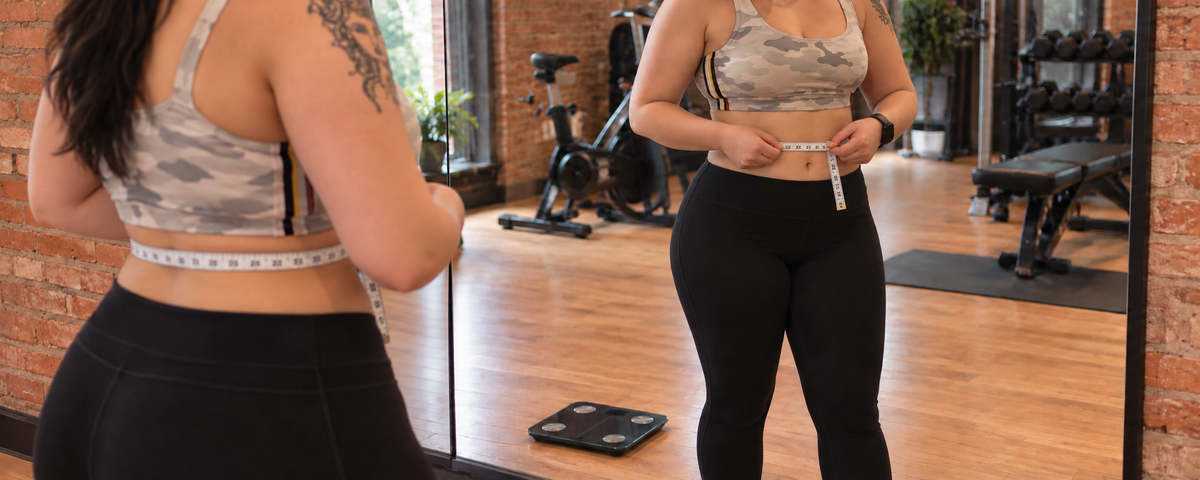
You can also monitor your body composition over time by taking photos of yourself to track muscle definition, or by logging your tape measurements. Notice how your clothing might fit you differently—such as a t-shirt feeling tighter across the chest but looser around the waist—or how workouts that once challenged you start to feel easier.
And be sure to track how consistent you are being with your training, nutrition, and sleep. A helpful mindset is to think in months, not weeks, and recognize that muscle building is a gradual biological process rather than a rapid transformation.
How to Build Muscle Faster Without Cutting Corners
There are no shortcuts, but you can optimize your routine to ensure you aren't wasting time in the gym.
- Prioritize Compound Exercises: Moves that recruit multiple muscle groups at once—like squats, deadlifts, bench presses, and pull-ups—are far more efficient for overall muscle growth than isolating small muscles with machines.
- Train Harder, Not Just Longer: A highly focused, intense 45-minute workout is far superior to a two-hour session where you spend half the time looking at your phone.
- Stay Consistent for Months, Not Weeks: Program hopping (changing your routine every two weeks) prevents you from achieving progressive overload. Pick a proven program and stick with it for at least 12 weeks.
The Biggest Muscle-Building Mistakes to Avoid
To keep your muscle growth timeline on track, make sure you are not falling into these common traps:
- Training Without Progressive Overload:Lifting the same 20-pound dumbbells for six months will not stimulate new growth.
- Not Eating Enough Protein:Your body simply cannot build new tissue out of thin air.
- Ignoring Recovery Days:More is not always better. Working out seven days a week usually leads to overtraining and muscle breakdown, not growth.
- Expecting Visible Results Too Soon:Giving up at week four because you don't look like a fitness model will rob you of the results waiting for you at week twelve.
- Only Watching the Scale:As mentioned, body composition tells a much bigger, more accurate story than body weight alone.
Frequently Asked Questions (FAQ)
Q: How long does it take to build muscle mass for beginners?
For most beginners, significant increases in strength occur within the first 2 to 4 weeks, while visible muscle growth typically becomes noticeable between 6 to 12 weeks of consistent training and proper nutrition.
Q: How much muscle can you gain in a month?
Under optimal conditions (great training, surplus calories, adequate protein), a beginner might gain 1 to 2 pounds of actual muscle tissue per month. Advanced lifters will gain significantly less in that same timeframe.
Q: Can you build muscle while losing fat?
Yes, this is known as body recomposition. It is most common in beginners, individuals returning to training after a long break, or those carrying a higher body fat percentage. It requires a slight caloric deficit paired with high protein intake and progressive strength training.
Q: Do women build muscle more slowly than men?
While men naturally have higher testosterone levels leading to greater absolute muscle mass and size, research shows that relative to their starting baseline, women can build muscle at a very similar percentage rate as men when following the same training protocols.
Q: What happens if you stop strength training?
Your muscles will not turn into fat, and they will not disappear overnight. However, if you stop training entirely, your body will slowly begin to lose muscle mass (atrophy) after about three to four weeks of inactivity.
Conclusion
When asking how long does it take to build muscle mass, there is no single schedule that applies to everyone. While most people will begin to see exciting physical changes around the 6 to 12-week mark, true muscular development is a long-term journey that rewards consistency over months and years.
Remember that progress is not always reflected in the mirror or on a standard scale immediately. Instead of just focusing on total body weight, rely on your strength performance, how your clothes fit, and the objective data of your body composition. By consistently tracking metrics like your lean muscle mass and body fat percentage, you can confidently measure your real progress, make smart adjustments to your routine, and stay motivated as you build a stronger, healthier body.

Share: