

Stepping on the scale after weeks of hard workouts and disciplined eating, only to see your total weight or BMI remain exactly the same—or even go up—is incredibly frustrating. You feel stronger, your clothes fit better, but the numbers refuse to budge.
Why does this happen? Because a single number for your total weight or overall body fat percentage only shows a rough global average. It completely masks the localized, structural changes actually happening inside your body.
To clearly interpret these changes, sports science introduces a much more detailed dimension of assessment. Today, we will objectively explore what a segmental body is and how breaking your physique down into distinct sections helps you track your health progress much more scientifically.
What Exactly is a Segmental Body?
If you search basic biology for the term "what is a segmented body," the answer usually points to ants or annelids because their body is segmented in a physical, structural way.
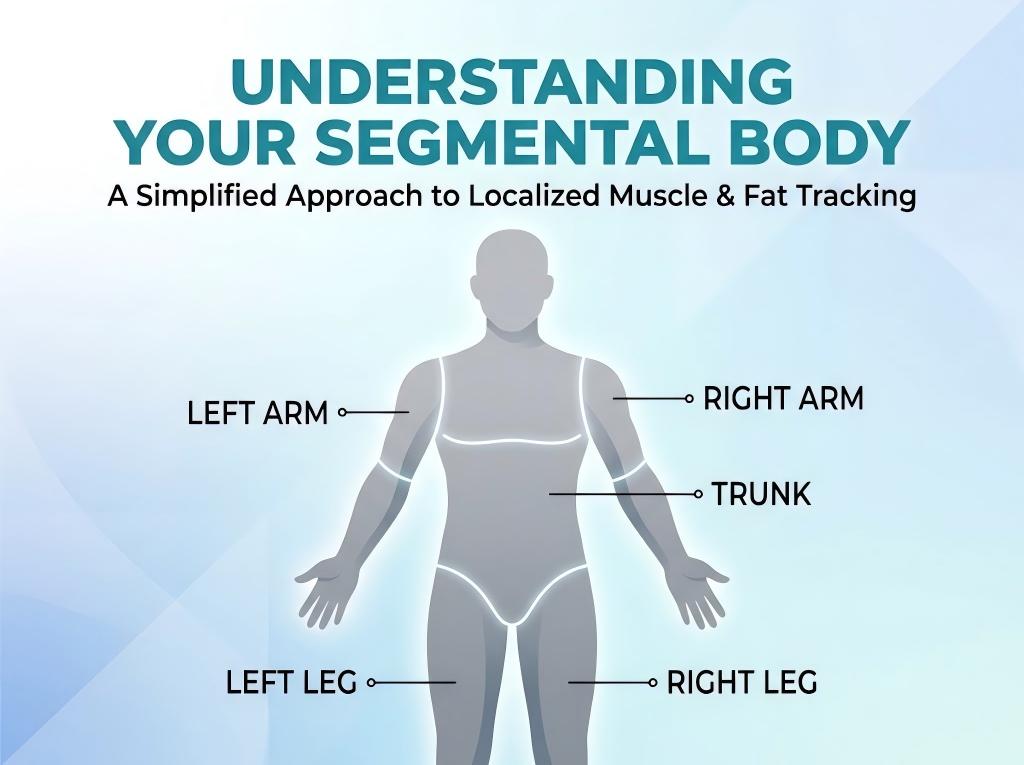
However, in the field of human body composition and fitness tracking, viewing the human form as a segmental body has a completely different practical meaning. It is a scientific approach that divides the human body into five independent anatomical regions for separate measurement:
-
Left arm
-
Right arm
-
Trunk (including the chest, abdomen, and back)
-
Left leg
-
Right leg
Instead of treating you as a single cylinder and providing an average, this method evaluates the muscle and fat mass within each of these five areas. It provides a detailed "body composition map," allowing you to see exactly where fat and muscle are distributed.
The Science of Measurement: How is Localized Data Captured?
Knowing that the body is made up of these five segments, how does everyday technology actually capture the data for these specific areas?
Currently, most body fat scales used in homes and gyms utilize BIA technology. If you're curious about the science behind these measurements, learn more about how scales measure body fat and the technology that powers modern smart scales. The basic principle is straightforward: muscle contains a lot of water and conducts electricity easily, while fat contains almost no water and resists the current.
The device sends a weak, safe electrical current through the body to measure resistance (impedance) and calculates body composition. Depending on the number of electrodes used, this technology captures "segmental data" at different depths:
Depending on the number of electrodes, this technology is applied in two main ways:
-
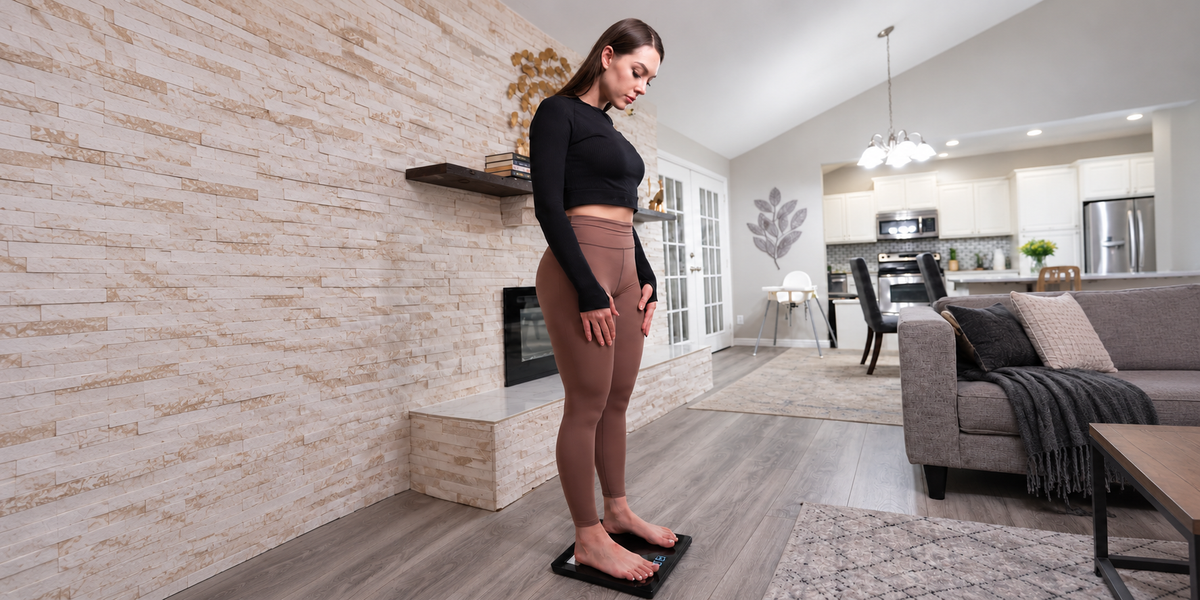
Classic 4-Electrode Measurement (For overall trends): Most common smart scales have four electrodes located on the footpad. The current primarily forms a circuit between your lower limbs. The device captures the actual data of your legs and uses database algorithms to estimate your full-body data. This is sufficient for understanding general macro trends.
-
Precision 8-Electrode Measurement (For real Segmental Body data): If you need specific localized data, 8-electrode technology is required. You stand on four footpads while holding a handle with four additional electrodes. The current forms multiple intersecting circuits (e.g., between the hands and feet, or hands and trunk). This directly measures the actual impedance values of your limbs and trunk, eliminating algorithm-based guesswork for your upper body.
Segmental Scales vs. DEXA Scans: Which Do You Need?
When discussing high-precision body composition, you will inevitably hear about DEXA (Dual-Energy X-ray Absorptiometry) scans. DEXA is the undisputed clinical "gold standard," used in hospitals and research centers to measure bone density and fat mass with absolute precision.
However, comparing a DEXA scan to a smart scale is like comparing a professional medical checkup to a daily fitness tracker—they serve entirely different purposes:
| Feature | DEXA Scan (Clinical) | Segmental Smart Scale (At-Home) |
| Accuracy | The Gold Standard. Highest possible clinical accuracy. | High Consumer-Grade. Excellent for personal tracking. |
| Accessibility | Low. Requires booking appointments and traveling to a clinic. | High. Available instantly in your bathroom, 24/7. |
| Cost | Expensive. Typically $100 - $250+ per single scan. | Affordable. Typically $40 - $100 for unlimited lifetime use. |
| Best Use Case | Getting an annual, absolute baseline comprehensive checkup. | Tracking weekly trends, workout feedback, and daily habits. |
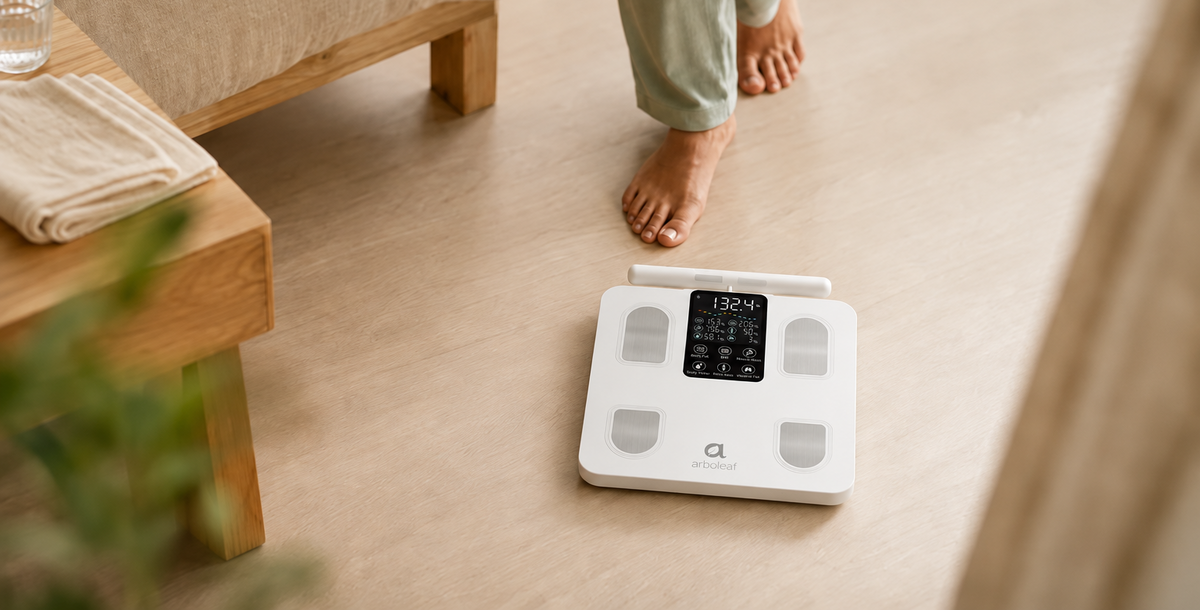
Both methods have their place in a complete health journey. While a DEXA scan offers an incredibly detailed baseline snapshot, its cost and the need for clinical appointments make it less suited for frequent, routine tracking. For consistent, day-to-day monitoring, a high-quality home device like the Arboleaf Segmental Body Scale offers a practical way to observe how your body composition shifts over time. It allows you to track your limbs and trunk data independently from the comfort of your home, making long-term health management simple, accessible, and consistent.
Who Benefits Most from Segmental Body Data?
Localized data turns vague health anxiety into highly specific action plans. If you fall into any of the categories below, you will find immense value in this level of tracking:
-
Fitness Enthusiasts Evaluating Specific Training Results:
-
If you are following a strict muscle-building or body-sculpting routine, you need objective data. Segmental data clearly shows whether your recent workouts are actually translating into muscle growth in targeted areas, helping you optimize your training plan in real-time.
-
Sedentary Adults Monitoring Diet and Exercise (Skinny Fat / Normal Weight Obesity):
-
Many office workers have a perfectly normal weight and BMI, but due to prolonged sitting, their limb muscle mass is severely deficient while fat quietly accumulates. As research from the National Institutes of Health (NIH) shows, "Normal Weight Obesity" carries high health risks. Segmental data reveals the truth, reminding you that dieting alone isn't enough and strength training is essential.
-
Individuals Focusing on Core Health and Visceral Fat:
-
Everyone stores fat differently, but the trunk (abdominal area) is the most dangerous place to accumulate it. According to guidelines from Harvard Medical School, excess visceral fat is closely linked to metabolic syndrome. By separately monitoring your trunk fat percentage, you can visually confirm that your core health is genuinely improving.
-
Sports Enthusiasts Needing to Correct Posture and Muscle Imbalances:
-
We often have a dominant side (e.g., habitually carrying heavy items with the right hand). Long-term uneven exertion leads to muscle mass imbalances. Segmental data lets you instantly spot the muscle gap between your left and right arms or legs, allowing you to incorporate unilateral exercises to prevent postural distortion and injury.
-
Seniors at Risk of Muscle Atrophy and Falls:
-
As we age, muscle naturally declines (sarcopenia). The loss of lower limb muscle directly increases the risk of falls in the elderly. Regularly monitoring lower limb muscle mass helps seniors adjust their diet, increase protein intake, and perform appropriate resistance exercises to maintain mobility.
Common Questions
Q: If I look at the specific regional data, can I spot-reduce fat (e.g., only lose belly fat)?
A: The scientific consensus is that fat is consumed systemically across the whole body; "spot reduction" does not exist. However, the value of this data lies in "localized tracking"—it allows you to clearly see exactly how much fat you have lost from your trunk or thighs as you slim down overall. This precise feedback is the ultimate motivation to keep exercising.
Q: My right arm has 0.4 lbs more muscle than my left arm. Is this normal?
A: Perfectly normal. The vast majority of people have a dominant hand, and the high frequency of daily use naturally leads to slightly higher muscle mass on the dominant side. As long as this difference isn't making your movements feel awkward or causing joint pain, there is no need to worry.
Conclusion
In modern health management, our bodies are absolutely not just a "total weight" used to measure how fat or thin we are. Understanding the concept of your segmental body helps us escape the trap of relying solely on the scale. By objectively measuring and tracking the fat and muscle distribution across five independent regions, we can scientifically identify our physical strengths and weaknesses, allowing us to tailor much smarter and highly targeted exercise and diet strategies.
Share: