


What Percentage of Water is the Human Body? (2026 Complete Guide)
Have you ever experienced this: you eat a heavy dinner, step on the scale the next morning, and the number instantly shoots up by 2 pounds (about 1 kg)! Don't panic; you didn't magically gain 2 pounds of pure fat overnight. In fact, this is almost entirely driven by fluid shifts rather than actual tissue gain or loss, commonly known as "water weight."
This brings up a fascinating question about how our bodies actually work: what percentage of water is the human body? More importantly, how can you tell if the weight you are losing is stubborn fat or just a temporary loss of fluids? Let's dive in.
1. How Much Water is in the Body? Uncovering the "Three Major Drivers"
If you are looking for the exact numbers, the short answer is: on average, a healthy adult maintains a water composition between 55% and 60%.
However, this is not a static number. Your personal water percentage, apart from basic factors like age and gender, is primarily determined by these three key elements:
-
The Core Storage: Your "Muscle Mass" The most critical factor deciding your hydration levels is actually your body shape. Here is an important body code: your skeletal muscle is approximately 79% water. This means the more developed your muscle tissue is, the more high-quality water your body can retain.
-
The Low-Water Tissue: Your "Body Fat Percentage" Compared to water-rich muscles, adipose tissue (body fat) absorbs very little water, containing only about 10% water. Because of this, lean individuals who exercise regularly usually exhibit much higher total water percentages than those with higher body fat.
-
The Biggest Factor for Short-Term Fluctuations: Your "Recent Diet" Beyond body composition, your recent diet instantly reflects on your short-term water percentage. If you ate a large plate of high-carb pasta last night, every part of glycogen stored by your body will hold onto three to four parts of water. If you ate high-sodium pizza or fast-food french fries, your body will trigger a defense mechanism to retain water to dilute the excess salt concentration, leading to a noticeable spike in your weight within 24 hours.
Why Do You Often Feel "Puffy" When You Wake Up?
Many people experience this: you slept through the night without eating anything, so why do your face and fingers look puffy in the morning mirror?
This is actually because, during a long night's sleep, your body silently loses water through respiration and perspiration. When the body senses it is in this mild state of dehydration, it immediately releases antidiuretic hormones (ADH). These hormones prompt the kidneys to reduce water excretion, desperately holding onto existing fluids to maintain balance.
It sounds contradictory, but the most effective way to resolve morning puffiness is actually to hydrate adequately. When you increase your water intake and your body cancels the dehydration alarm, it will resume normal metabolism, flushing out the excess sodium and retained water, thereby reducing the temporary puffiness.
2. Testing is Better Than Guessing: How to Roughly Estimate Your Body Water?
Before you decide to use professional measuring equipment, if you only have a standard bathroom scale on hand, you can make a rough judgment based on these two dimensions:
Step 1: Determine Your Basic Physiological Traits (Age and Gender)
As mentioned earlier, water and muscle mass are directly linked. To maintain normal physiological functions, women naturally need to retain more adipose tissue than men, while men typically have more developed skeletal muscles. You can refer to these average standards:
-
Adult Men: Due to higher muscle mass, the average total water percentage is usually between 55% and 65%.
-
Adult Women: Due to a relatively higher body fat ratio, the average total water percentage is usually between 45% and 60%.
-
Age Factor: For both men and women, as age increases and muscle tissue naturally depletes, the body's water content will show a slow downward trend.
Step 2: Observe Your "Body Signals" (Daily Self-Test Tips)
-
Watch for drastic short-term weight fluctuations: If you are suddenly 3 pounds heavier this morning than yesterday, the vast majority of this extra weight is temporary fluid retention, meaning your short-term water percentage is rising.
-
Check the color of your urine: If it is a dark yellow, it indicates you are in a mild state of dehydration. Your body is desperately trying to retain water, and your total water percentage is likely low at this moment.
Why Do You Ultimately Need Professional Monitoring Equipment?
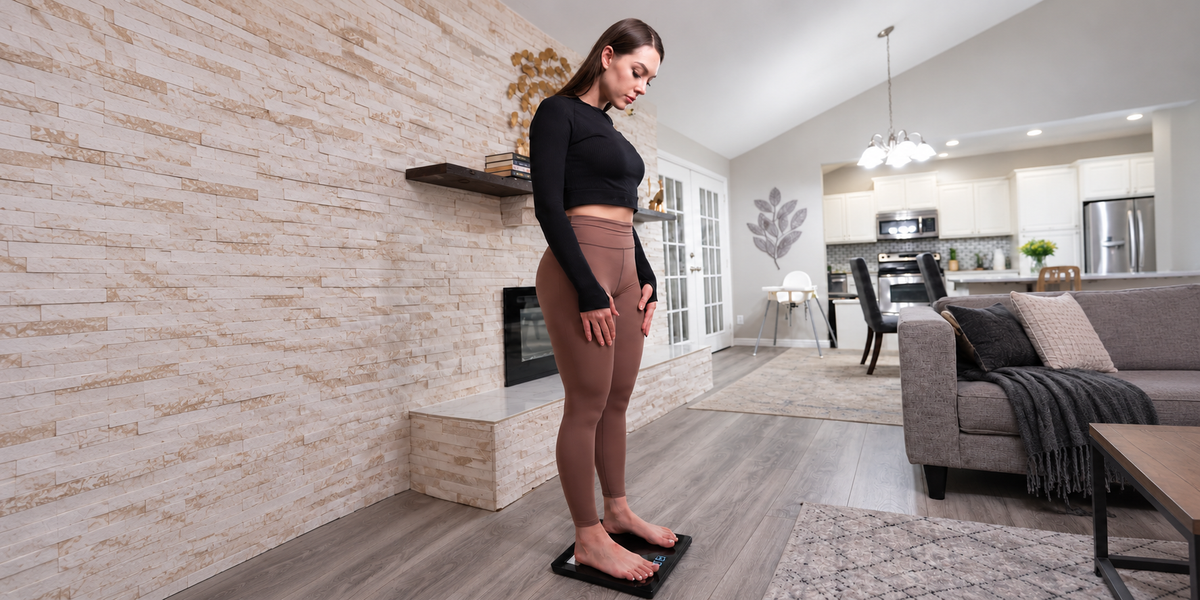
Relying on body signals or a regular bathroom scale for daily estimation ultimately lacks accuracy. Because the balance between water weight vs fat weight is constantly in flux, merely depending on a standard bathroom scale is highly misleading. It only provides an absolute weight number and cannot help you distinguish whether the lost weight is fat burn or normal fluid loss. To scientifically manage your physique, you need real, multi-dimensional data.
3. How to Read Your Metrics: What Does "Body Water Percentage" on a Smart Scale Actually Mean?
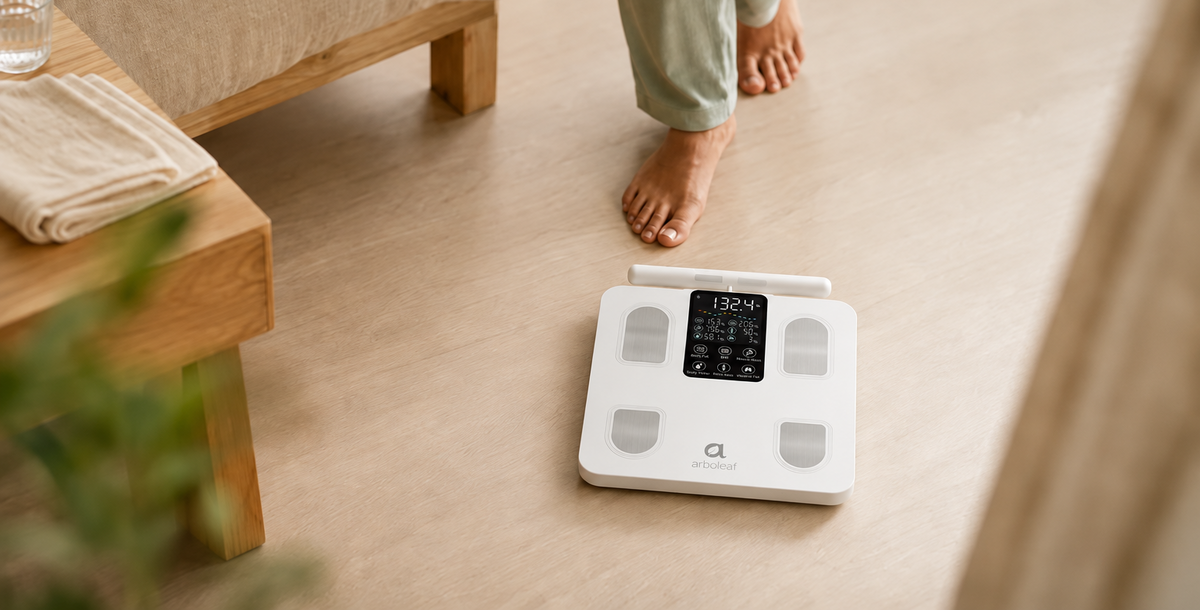
Currently, Bioelectrical Impedance Analysis (BIA) technology has emerged as the most efficient method for consistent daily monitoring. When you step on an Arboleaf Smart Scale and look at your "water percentage" metric, understanding the following three signals can help you track your progress more scientifically:
-
What does a steady increase mean? (A positive sign of muscle growth)
After months of a healthy diet and regular exercise, many people see their water percentage curve slowly rising on the App and immediately worry they are "retaining water." This is actually the most celebratory signal on your fat-loss journey! It means your fat, which has extremely low water content, is gradually being consumed, while your high-quality, water-rich muscle mass is increasing. As you get tighter and leaner, your overall water percentage will naturally and healthily increase.
-
What does a consistently low metric mean? (Body fat ratio might be high) If your water percentage is consistently lower than your peers, barring chronic dehydration, it usually means your body fat ratio is too high. Since adipose tissue contains very little water, a large amount of fat will dilute your overall water ratio. This is a reminder to confront your body composition and create a scientific fat-loss plan.
-
What do short-term erratic jumps mean? (Temporary fluctuations caused by diet)
If you had a rich, high-carb, or high-sodium meal over the weekend and find your water and weight spiking the next morning, don't panic. This is simply a temporary increase in fluids caused by your diet. After a few days of normal eating and exercising, this retained water will naturally metabolize and flush out.
Frequently Asked Questions (FAQs)
Q: Is a high water percentage always a sign of high muscle mass? A: Generally, yes, as muscle is much more aqueous than fat. However, acute inflammation or high sodium intake can artificially inflate the short-term "water" reading without representing an actual increase in muscle tissue. This is why it is necessary to evaluate body fat percentage and muscle mass together for a comprehensive judgment.
Q: Why is my water percentage lower in the morning immediately upon waking? A: Overnight, your body loses water through respiration and skin perspiration without any fluid intake. This mild state of dehydration typically results in a lower total body water calculation immediately upon waking compared to the evening.
Q: Does drinking coffee dehydrate the body and lower the water percentage? A: While caffeine is a mild diuretic, numerous scientific studies suggest that moderate consumption does not lead to long-term dehydration. As long as you maintain adequate daily water intake, there is absolutely no need to give up your moderate coffee habit for the sake of your water percentage.
Q: What are the benefits of relying on the Arboleaf Smart Scale to track water? A: Because the balance of water weight vs fat weight is constantly fluctuating, a regular bathroom scale can be severely misleading. Utilizing a consistent total body water calculation through the Arboleaf Segmental Body Scale CS10E ensures that you are making decisions based on accurate muscle, fat, and water data, thereby allowing you to adjust your nutrition and fitness plans far more precisely.
Share: