

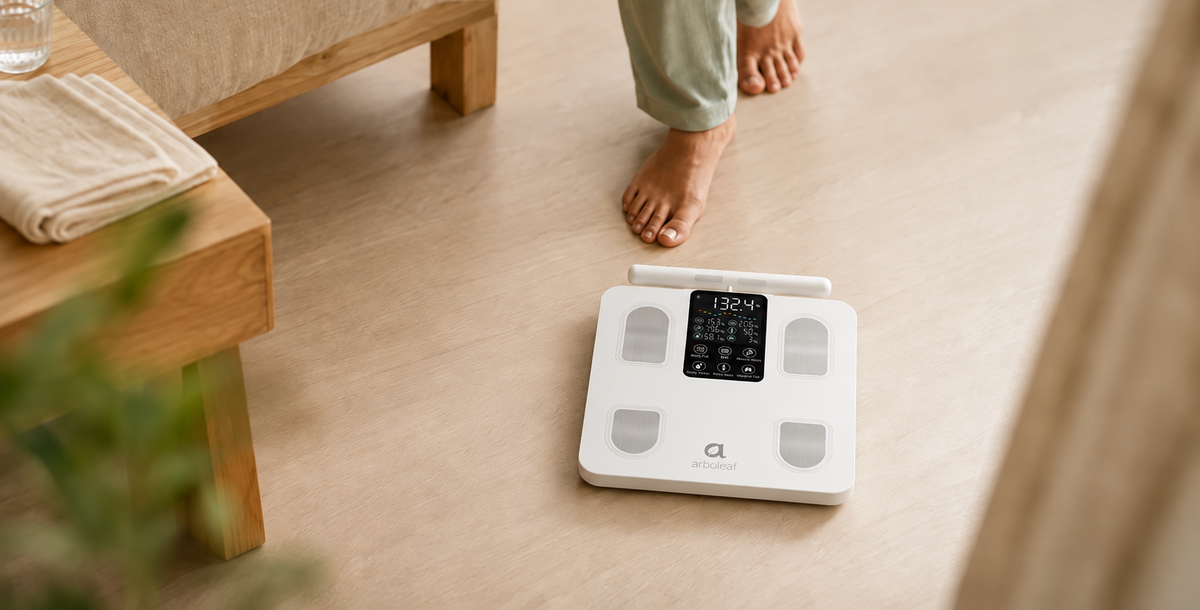
Are smart scales safe? For most healthy adults who meet the manufacturer’s requirements, a smart scale can support regular home tracking when used as directed. Models that measure body fat commonly use bioelectrical impedance analysis (BIA), so restrictions matter for people with implanted medical devices and during pregnancy.
A quick weigh-in can record more than body weight: depending on the model, it may also provide body fat percentage, muscle mass, and body water readings. Understanding how these measurements work helps you decide whether a body composition scale is suitable for you—and how useful its results may be.
How Does a Smart Scale Measure Weight and Body Fat?
What is a smart scale? It is a digital scale that connects to an app to save measurements, often with additional body composition features. Three functions explain what happens when you step on one.
- Weight Sensors Measure Body Weight Sensors beneath the platform detect the load and convert it into a weight reading. This is separate from body fat measurement: the scale does not need to send a signal through your body to weigh you.
- BIA Calculates Body Composition A body fat scale sends a small electrical signal through skin-contact electrodes and measures the impedance it encounters. Lean tissue contains more water and conducts electricity more readily than fat tissue. The scale combines impedance information with inputs such as height, age, and weight to calculate body composition readings.
- Bluetooth or Wi-Fi Saves Your Results A Bluetooth scale transfers measurements to a compatible app; some smart scales use Wi-Fi instead. Connectivity lets you review your measurement history and trends. It does not perform the BIA measurement or make the body fat reading more accurate by itself.
For a closer look at the technology, read how smart scales measure body fat.
Are Body Fat Scales Safe for Everyday Use?
BIA is generally considered safe for suitable users when the device is used according to its instructions. The low-level electrical signal is typically too small to feel during a normal measurement.
The important distinction is between a small signal and a device that is appropriate for everyone. A body composition scale may have restrictions even when the current is imperceptible.
Daily use does not remove those restrictions, and occasional use does not bypass them. Check the instructions before your first measurement and whenever your health circumstances change. Whether you choose daily or weekly tracking, follow the same suitability and handling requirements.
Who Should Avoid a BIA Body Composition Scale?
The manufacturer’s instructions determine who can use a specific device. For Arboleaf smart scales, pay particular attention to the following groups.
Can You Use a Smart Scale With a Pacemaker?
Arboleaf’s warnings state not to use its smart scales if you have a pacemaker or another internal medical device.
BIA signals may interfere with implanted electronic devices, including pacemakers and implantable cardioverter-defibrillators. Research has identified potential interference in testing and simulations. Ask your healthcare professional about an appropriate alternative rather than assuming a different app setting makes the scale suitable.
Can You Use a Smart Scale During Pregnancy?
Arboleaf’s published warnings state not to use its smart scales during pregnancy. Follow that restriction and discuss weight monitoring with your prenatal care provider.
Pregnancy also changes body composition, making ordinary consumer body composition interpretations unsuitable. Advice about another brand’s pregnancy mode does not establish permission to use an Arboleaf scale.
Can Children Use a Body Composition Scale?
Arboleaf does not intend its scale for infants or toddlers, and some body composition measurements are unsuitable for users under 18. Check the age requirements and supported measurements for the exact model. A child being able to step on the platform does not mean every displayed metric is appropriate.
Do Smart Scales Actually Work?
Yes—smart scales measure weight, and BIA-equipped models calculate body composition from impedance data. However, “does it work?” and “how accurate is every result?” are different questions.
- Weight readings: These come from the scale’s load sensors. Correct placement, remaining still, and staying within the weight capacity help the device operate as intended.
- Body composition readings: These depend on impedance measurements and the model’s algorithms. Hydration, recent exercise, and measurement conditions can affect results, so a change in body fat percentage does not automatically mean an equivalent change in body fat.
- Connected tracking: App records make measurements easier to compare. They add convenience and context, but do not turn a home scale into a medical diagnostic tool.
A 2021 study of three consumer smart scales found relatively small weight differences compared with its reference method, but larger discrepancies in body composition. Those findings apply to the tested devices and population; they do not establish the accuracy of every smart scale.
Are body fat scales accurate enough for your goals? Look at the device’s measurement method and use the same conditions for comparisons. Home readings should not replace a clinical assessment. Learn more about body fat scale accuracy.
Are Smart Scales Worth It for Home Tracking?
Smart scales can be worth it if you want an organized measurement history and body composition information alongside weight. If you only need an occasional weight check, a basic digital scale may already meet your needs.
The added value is practical:
- Saved records: Keep measurements together without writing them down.
- Body composition tracking: Review body fat, muscle mass, and other supported metrics alongside weight.
- Progress reports: Compare readings across a chosen period instead of relying on memory.
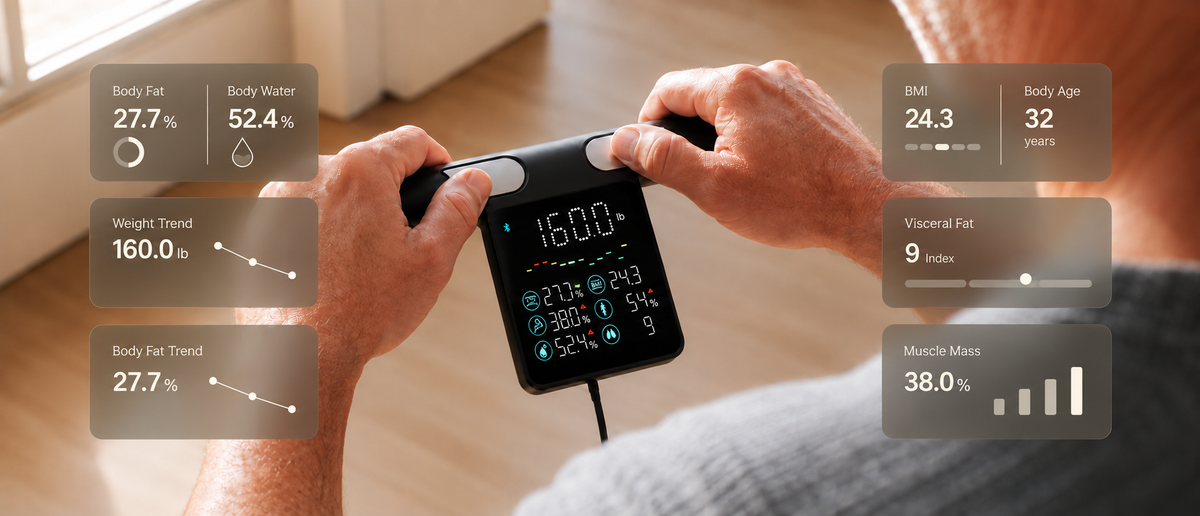
Arboleaf Smart Scales connect with the free Arboleaf app to organize weight and body composition records. You can review body fat percentage, muscle mass, body water, and historical trends, with available metrics depending on the model.
Arboleaf’s segmental scales also provide regional fat and muscle analysis for the arms, legs, and torso. This lets you examine measurements by body area as well as across the whole body. Key results appear on the scale, while the app provides more detailed body composition and trend reports.
For someone building a fitness or weight-management routine, these features make recording and reviewing progress more convenient. They do not diagnose a health condition or explain the cause of every change.
How to Use a Smart Scale Safely and Consistently
A useful routine starts with a suitable device and a repeatable setup.
- Check personal restrictions: Read the model’s health warnings and age requirements before use.
- Keep the setup dry: Place the scale on a hard, level, dry floor. Dry your body and feet before stepping on.
- Check capacity and condition: Stay within the maximum weight limit. Do not use a cracked platform or damaged accessories.
- Follow measurement instructions: Stand still and make the required skin contact. Use a handle according to the model’s positioning directions.
- Compare similar conditions: Measure at a similar time of day and avoid comparing a resting measurement with one taken immediately after strenuous exercise.
Daily weighing is optional. Choose a frequency you can maintain, and reduce it if tracking creates anxiety. Review several readings before making decisions based on a change.
Everyday Use Starts With the Right Fit
Are smart scales safe for everyday use? For suitable adults, they can support home tracking when operated as directed. The essential steps are checking BIA restrictions, using the scale properly, and understanding what its measurements can tell you.
A body fat scale can make weight and body composition records easier to follow. Choose features that match your goals, compare readings consistently, and use medical guidance when a health concern needs assessment.
FAQ
Is Bioelectrical Impedance Safe?
BIA is generally considered safe for suitable users, but product restrictions still apply. Arboleaf warns against use during pregnancy or with a pacemaker or other internal medical device.
Do Smart Scales Give Off Radiation?
BIA measures electrical impedance without X-rays. Bluetooth and Wi-Fi use radiofrequency signals, which are non-ionizing radiation. These wireless signals are distinct from the electrical current used for body composition measurement.
Can a Smart Scale Give You an Electric Shock?
The BIA signal is normally too small to feel. If you experience an unexpected electrical sensation, stop using the scale and contact the manufacturer.
Share: