

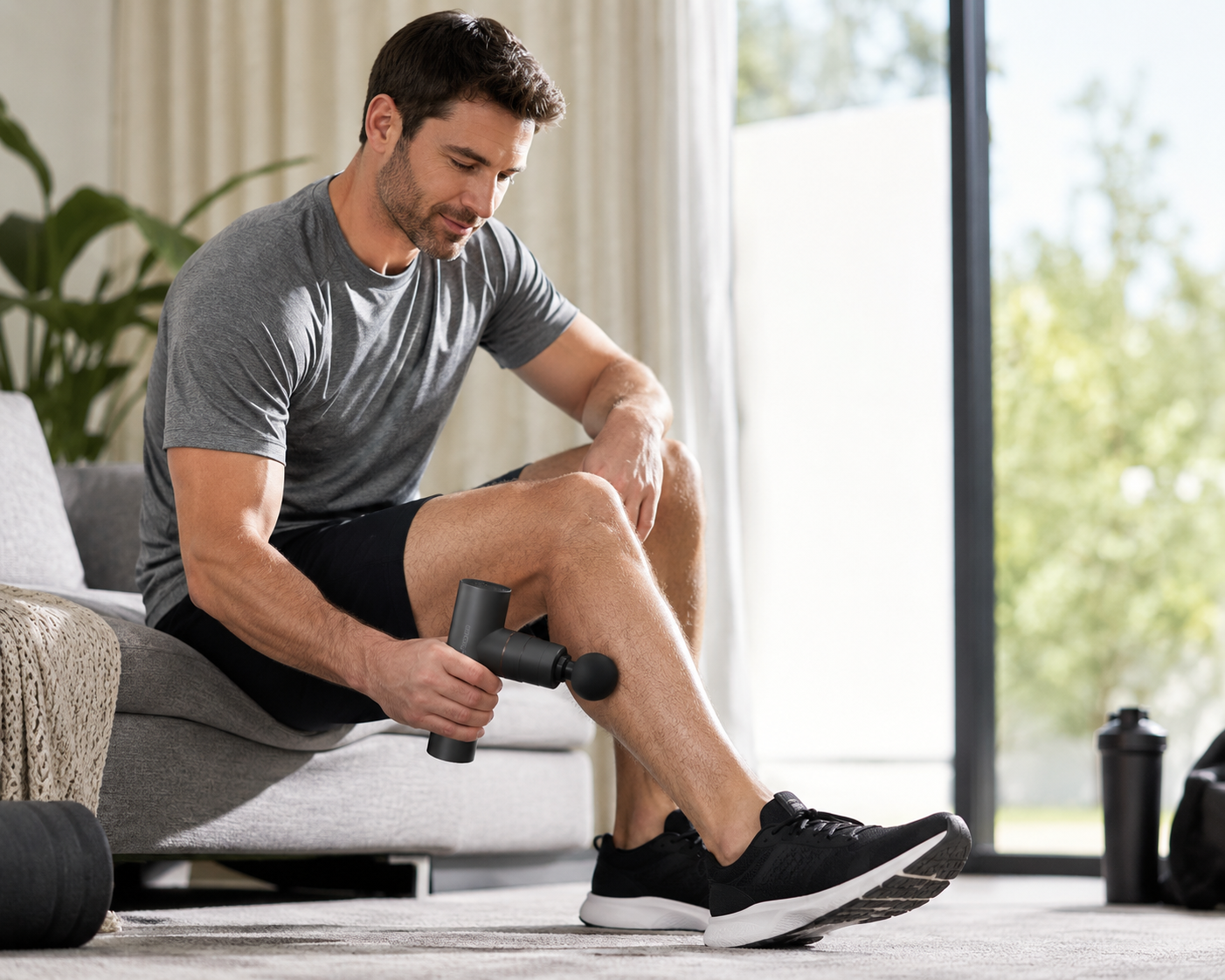
Picture this: You’ve spent 8 hours hunched over your desk, or stood through a long work shift, and by evening, your legs feel heavy, achy, even numb.
Lifting them up at night helps a little, but the discomfort lingers—and it’s not just “tiredness.” It’s your body signaling poor leg circulation.
Today, we’ll break down why this happens, what tools ease it, and how to pick the best leg massager for circulation for your daily life.
Why Do Legs Often Have Poor Circulation?
Poor leg circulation is a common issue for many people, and it’s often linked to our daily habits and body structure. It’s easy to understand once you break it down:
-
Gravity works against you: Your heart is in your chest, so blood has to flow down to your toes and back up—fighting gravity the whole time. When you sit or stand for too long, blood pools in your legs, slowing circulation and causing heaviness and soreness.
-
Posture restricts blood flow: Sitting for hours squeezes your thigh blood vessels, narrowing them and slowing blood flow. Standing for long shifts keeps leg muscles tight, which also hinders blood return, leading to numbness and coldness over time.
-
Underused leg muscles: Leg muscles act like a “second heart”—when you walk or exercise, they contract to help pump blood back up. But many people don’t get enough movement, so these muscles “slack off,” slowing circulation.
-
Other small factors: Late nights, a greasy diet, and not drinking enough water can affect blood vessel elasticity. As we age, blood vessel function declines, which also reduces leg circulation efficiency and worsens discomfort.
Common Types of Leg Massagers for Circulation
When soreness or numbness appears, a leg massager for circulation can be a simple way to find relief. Different types work in different ways, so the best choice depends on whether you need hands-free compression, portable deep muscle relief, or light daily relaxation.
1. Compression Leg Massagers (Wrap-Around)
- Advantages: Hands-free, covers the full calf or thigh area, and is easy to operate.
- Disadvantages: Bulky, less portable, and usually provides only surface-level relief.
- Suitable for: Home users who prefer hands-free use and do not mind a larger device.
2. Percussion Massage Guns
- Advantages: Compact, highly portable, and useful for targeted deep muscle relief. They can be helpful for people who want quick relief after sitting, standing, or traveling.
- Disadvantages: Requires manual operation. New users should avoid pressing too hard, especially around joints or sensitive areas.
- Suitable for: Office workers, frequent travelers, and anyone who needs portable deep relief.
3. Manual Massage Rollers
- Advantages: Budget-friendly, lightweight, and easy to use anytime.
- Disadvantages: Requires full manual effort and may not reach deeper muscle layers.
- Suitable for: Budget users with only mild or occasional leg soreness.
4. Heated Massage Patches
- Advantages: Ultra-light, portable, and can provide gentle warmth for cold or mildly sore legs.
- Disadvantages: Weak massage power and limited relief for deeper tension.
- Suitable for: People with cold legs or mild discomfort who mainly need light daily relaxation.
How to Use a Leg Massager for Circulation Effectively
To get the most out of your circulation-focused leg massager, follow these simple tips—they’re easy to remember and work for all types:
-
Start with low intensity: If you’re new to using this tool, begin with the lowest setting to get used to the sensation. You can increase intensity gradually as your legs adjust.
-
Focus on key areas: Pay extra attention to your calves, thighs, and ankles—these are the areas where blood flow is most likely to get stuck. Spend 30-60 seconds on each area.
-
Control the time: Don’t overdo it—10-15 minutes per day is enough. Over-massaging can lead to muscle fatigue, so stick to a short, consistent routine.
-
Pair with warmth (optional): For better results, warm up your legs first with a short walk or warm towel. This helps dilate blood vessels, making the massage more effective.
Much like how manual massage struggles to reach deep muscle layers, many people turn to tools like Arboleaf Massage Gun—its targeted, deep stimulation makes it a reliable choice for boosting leg circulation without the bulk.
Important Safety Tips for Using These Massagers
Using a circulation-focused leg massager is safe for most people, but keep these tips in mind to avoid discomfort or injury:
-
Avoid joints and protruding blood vessels: Don’t massage knees, ankles, or areas with varicose veins—this can irritate blood vessels and joints.
-
Consult a doctor if you have health issues: Pregnant women, people with blood clots, leg injuries, or severe varicose veins should ask a doctor before using a leg massager.
-
Don’t rely on it alone: This tool is for relief, not a replacement for regular movement. Pair it with light exercise for long-term better circulation.
-
Stick to comfortable intensity: The goal is relief, not pain. Keep the intensity at a level that feels good—no need for heavy pressure.
FAQ
Q: Is a circulation massager necessary for mild leg soreness?
A: Not always. Mild soreness often eases with a short walk or stretch. But if discomfort and numbness become frequent, a massager simplifies relief.
Q: How long until I notice improved leg circulation from a massager?
A: Most people feel less heaviness and soreness after 1-2 weeks of consistent use. Long-term use eases numbness and coldness, though results vary.
Q: Which circulation massager works best for busy office workers?
A: Percussion massage guns are perfect—small, portable, and quick to use during breaks to soothe calf soreness in just 5 minutes.
Q: Can a leg massager for circulation harm blood vessels?
A: No, when used correctly. Avoid joints and protruding veins, control intensity and time, and it will help dilate vessels and boost circulation.
Conclusion
Poor leg circulation is a common daily discomfort, but it’s easy to manage with the right massager for circulation . You don’t need a complicated routine—just a tool that fits your lifestyle and a few minutes each day.
Each massager type has its strengths: choose hands-free compression for at-home relaxation, or a portable percussion gun for on-the-go relief. Consistency is key—over time, you’ll say goodbye to heavy, achy legs and hello to lighter, more comfortable lower limbs.
Partager: