


If you are putting in the work at the gym, you have likely wondered: what body fat percentage to see abs?
Online searches and body fat percentage images usually give a standard answer: around 10% for men and 18% for women. But in reality, you might see someone rocking a six-pack at 15%, while someone else at 12% shows zero definition.
The truth is, your body fat percentage is only one piece of the puzzle. Truly visible abs also depend heavily on your muscle mass, fat distribution, and genetics.
This guide breaks down the realistic body fat ranges, explains why the exact same number looks different on everyone, and shows you how to track your actual progress without obsessing over a single digit.
What Percentage of Body Fat to See Abs?
While many people rely on a standard female body fat percentage chart or generic guidelines to set their goals, everyone’s body is unique. Here is a general breakdown of the baseline body fat percentage for abs when men and women typically start to see abdominal definition.
Men
-
20% and Above (No Visibility): At this level, the midsection is softer with no visible muscle definition, as the abs are completely hidden beneath subcutaneous fat.
-
15%–17% (The Athletic Zone): You will have an overall athletic build. In this range, a faint outline of the upper abs may start to become visible, especially under good lighting.
-
12%–14% (Clear Definition): This is the sweet spot where most men see a solid four-pack or six-pack. The midsection looks highly lean with clear abdominal muscle separation.
-
8%–10% (Maximum Definition): Your core will look highly shredded with deep, highly visible muscle separation.
-
Below 8% (Competition Level): This level reveals extreme definition and visible vascularity. It is usually only sustainable for bodybuilders during peak competition season and is not recommended year-round.
Women
-
28% and Above (No Visibility): Your body will have natural curves with a softer midsection, and there will be no visible abdominal muscle separation.
-
22%–24% (The Fit Zone): You will generally have a flat stomach and a fit appearance, but there will still be minimal to no abdominal definition.
-
18%–20% (The "Outline" Zone): At this athletic and lean stage, faint vertical lines (often called the "11 line" abs) or subtle upper ab definition begins to show.
-
16%–18% (Clear Definition): This is where you will see a highly defined core with clear abdominal muscle separation.
-
Below 16% (Elite Level): Reaching this level yields an elite competitor physique. However, maintaining this leanness year-round is often unsustainable and requires careful monitoring to protect hormonal health.
Why Do Some People See Abs at 15% While Others Don't?
This is the most misunderstood aspect of core training. You might wonder what body percentage fat to see abs is truly required when Person A has 17% body fat and highly visible abs, while Person B has 14% body fat but very little ab definition. Why does this happen?
Muscle Mass Matters
Your abs are muscles just like your biceps or chest. If you train them heavily with resistance, they will grow thicker. Thicker, well-developed abdominal muscles will push through the layer of subcutaneous fat much easier, making them visible even at a slightly higher body fat percentage.
Fat Distribution Is Different
Where your body prefers to store fat is largely out of your control. Some people naturally store excess fat in their legs, hips, or arms first, leaving their midsection relatively lean. Others store fat predominantly in their belly. If you are genetically predisposed to store fat in your midsection, you will need a lower overall body fat percentage to reveal your abs compared to someone who stores fat in their lower body.
Genetics Play a Role
Your DNA dictates the actual shape of your abdominal wall. Your muscle insertion points determine whether you are capable of having a four-pack, a six-pack, or an eight-pack, and whether those muscle blocks are perfectly symmetrical or staggered.
Water Retention Can Hide Definition
Sometimes, it is not fat covering your abs—it is water. Factors like a high-sodium diet, poor sleep, intense stress, or hormonal fluctuations can cause your body to retain extra subcutaneous water, which blurs muscle lines and makes you look softer than you actually are.
Can You Get Visible Abs Without Extremely Low Body Fat?
Yes. The secret to a highly defined midsection isn't always achieving the lowest body fat possible; it is achieving a healthier body composition.
If you focus on building thicker core muscles and losing fat gradually, you can reveal your abs at a sustainable body fat level. Looking lean isn't always about getting lighter—it is often about improving your muscle-to-fat ratio.
How to Get Visible Abs (Without Chasing Unrealistic Numbers)
If you want a defined core, skip the extreme crash diets and follow a sustainable action plan.
-
Prioritize Strength Training: Do not just do cardio. Building overall muscle mass increases your metabolic rate and improves your entire physique.
-
Stay in a Moderate Calorie Deficit: A slight deficit (around 300-500 calories) allows you to lose fat steadily without losing hard-earned muscle.
-
Eat Enough Protein: Protein is essential for preserving muscle tissue while you are losing body fat.
-
Train Your Core with Weights: You cannot spot-reduce belly fat, but you can build thicker abs. Treat your core like any other muscle group by using weighted cable crunches, leg raises, and planks.
-
Sleep and Recovery Matter: Lack of sleep spikes cortisol levels, which can encourage your body to store stubborn belly fat and retain water.
-
Be Patient: Revealing your abs is a gradual biological process. Consistency always beats intensity.
Why You Shouldn't Obsess Over What Body Fat Percentage to See Abs
When you are actively trying to reveal your core, it is easy to become hyper-focused on a single digit. However, obsessing over a one-time measurement or daily scale fluctuations is a recipe for frustration.
Because your body composition is highly dynamic, your daily body fat reading can be temporarily influenced by hydration levels, sodium intake, or intense workouts. Instead of chasing a static number, the secret to success is tracking your long-term trends and overall muscle-to-fat ratio.
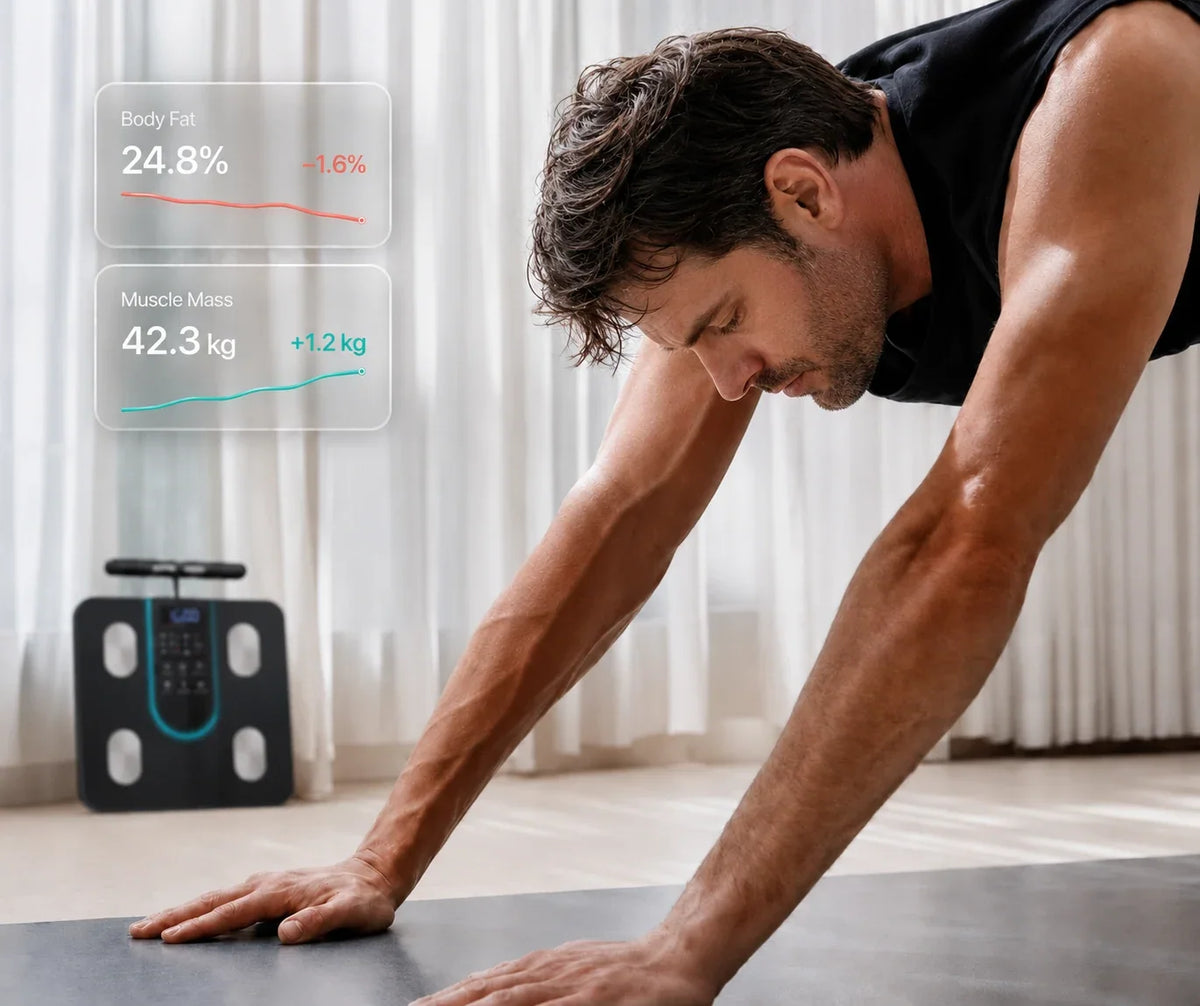
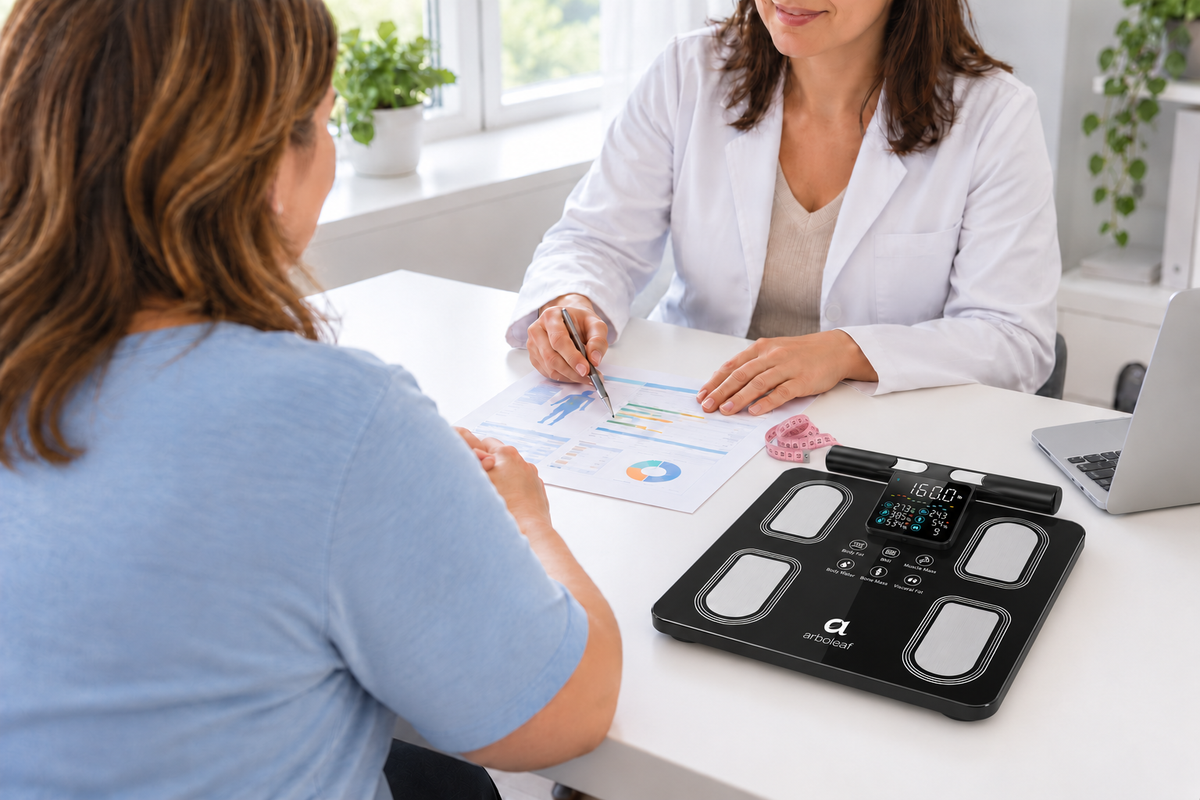
This is where the Arboleaf Smart Body Composition Scale becomes an essential part of your routine. Rather than just giving you a standard weight, it intelligently tracks comprehensive metrics like Body Fat, Skeletal Muscle Mass, and Body Water. Furthermore, for individuals actively training their core and building muscle, the scale offers a specialized Athlete Mode to provide a more tailored and accurate body composition analysis for active lifestyles.
Common Mistakes That Keep Your Abs Hidden
If you feel stuck, make sure you are avoiding these common traps:
-
Doing Endless Crunches: Doing 500 sit-ups a day will not burn the fat covering your stomach. Spot reduction is a myth.
-
Losing Weight Too Quickly: Extreme calorie deficits cause your body to burn muscle for energy, resulting in a "skinny fat" look with zero definition.
-
Ignoring Muscle Building: Less overall muscle means less definition, even if you are very lean.
-
Comparing Yourself to Others: Because of genetics and fat distribution, your 15% body fat will look completely different from an influencer's 15%.
-
Chasing an Unrealistic Body Fat Percentage: Pushing your body fat too low for too long can wreck your hormones, energy levels, and overall health. Lower is not always healthier.
Frequently Asked Questions (FAQ)
Q: What body fat percentage to see abs women typically need?
While it varies by genetics, most women begin to see faint upper abdominal definition around 18% to 20%, with clear muscle separation becoming visible between 16% and 18%.
Q: Can you see abs at 15% body fat?
A: Yes, it is entirely possible. Men with well-developed core muscles and favorable fat distribution can often see clear abdominal definition at 15%.
Q: Is 10% body fat necessary for abs?
A: No. While 10% will almost guarantee highly visible abs for men, many individuals can see a defined midsection at 12% to 14% if they have built sufficient abdominal muscle thickness.
Q: Why do I still have belly fat even with low body fat?
A: For many people, the lower abdomen is the body's preferred location to store "stubborn" fat. It is often the first place you gain fat and the very last place you lose it during a diet.
Q: What is a practical way to track body fat over time?
A: Consistency is more important than clinical precision. Stepping on your smart scale daily under the same conditions (e.g., first thing in the morning) and monitoring your 30-day moving average trend lines in the Arboleaf companion App is a highly practical way to track real progress without getting distracted by daily water weight.
Conclusion
When asking what body fat percentage to see abs, remember that there is no single magic number that applies to every human body. Your results will always be a unique combination of your overall body fat, your core muscle mass, and your genetic fat distribution.
Instead of chasing the lowest possible body fat percentage on a chart, focus on the habits that actually matter: consistent strength training, a high-protein diet, and a moderate caloric deficit. By focusing on improving your overall body composition and tracking your long-term trends with an Arboleaf smart scale, you will build a stronger, leaner, and healthier physique.
Partager: