You finish one bottle at your desk, another with lunch, and then wonder whether you are behind—or already drinking enough. If you have searched how many water bottles should I drink a day, the answer depends heavily on the size of your bottle.

Here is what an 80-ounce plain-water goal looks like with several common bottle sizes:

  • 16.9-ounce / 500-mL bottle: About 4.7 bottles
  • 24-ounce bottle: About 3.3 bottles
  • 32-ounce bottle: 2.5 bottles
  • 40-ounce bottle: 2 bottles

Those numbers give you a quick starting point, but they are not a prescription for everyone. Your appropriate intake may be lower or higher, and part of your total water intake will usually come from food and other beverages.

Quick Answer: How Many Water Bottles Should I Drink a Day?

There is no universal bottle count for everyone. A 16.9-ounce disposable bottle holds less than half as much water as a 40-ounce tumbler, so saying that everyone should drink a certain number of bottles can be misleading.

Your hydration needs can also change with physical activity, climate, diet, pregnancy or breastfeeding, illness, and certain health conditions.

A more practical calculation is:

Daily plain-water goal ÷ bottle capacity = approximate number of bottles or refills

This formula can turn a general hydration goal into an easier daily routine. Instead of focusing on a fixed number of bottles, start with a daily water goal and divide it by the size of the bottle you actually use.

The 80-ounce goal above is only a calculation example. Your actual daily water intake depends on your body, environment, activity, diet, and health needs.

How Much Water Should I Drink a Day?

The National Academies established Adequate Intake values of approximately:

  • Adult men: 3.7 liters, or about 125 ounces, of total water per day

  • Adult women: 2.7 liters, or about 91 ounces, of total water per day

These are population-level reference values rather than personalized requirements. More importantly, total water is not the same as plain drinking water. It includes water from beverages and moisture from food. 

Recommended Daily Water Intake: What the Numbers Include

In the survey data used to establish these values, beverages supplied approximately 101 ounces per day for men and 74 ounces for women. Food supplied the remaining water

This means you should not interpret 91 or 125 ounces as the amount of plain water you must drink in addition to coffee, tea, meals, and other fluids.

The familiar 8×8 rule—eight 8-ounce glasses, or 64 ounces—is easy to remember and may be a reasonable starting habit for some adults. However, it is not a universal requirement. A person working outdoors in humid weather may need more fluid than someone spending a quiet day in an air-conditioned office.

How Water Bottle Size Changes the Answer

Once you have a daily water goal, your bottle size determines how many bottlefuls you need.

  • 200-pound person: A 100-ounce starting goal is about five 24-ounce bottlefuls or three 32-ounce bottlefuls.
  • 160-pound person: An 80-ounce starting goal is about four 24-ounce bottlefuls or three 32-ounce bottlefuls.

A larger bottle means fewer refills, so choose the bottle size that fits your routine.

Can You Calculate Water Intake Based on Weight?

Some hydration charts use half your body weight in ounces as a simple starting estimate. Body weight is only one factor, however. Activity, climate, diet, pregnancy or breastfeeding, medications, and health conditions can all change your needs.

Use the chart below to find an estimated water goal and see how it converts into 24-ounce or 32-ounce bottlefuls.

Treat the chart as a practical guide rather than a fixed medical requirement.

Factors Affecting Your Hydration Needs

Your usual bottle count does not need to remain identical every day. Several factors can change how much fluid your body needs.

1. Climate and Where You Live

Temperature is an important factor, but it is not the only environmental consideration.

  • Hot or humid conditions:Higher temperatures and humidity can increase sweating, which raises fluid loss.
  • Dry environments:You may lose more moisture through breathing and skin even when sweat is less noticeable.
  • High altitude:Faster breathing, dry air, and changes in urine output can affect fluid balance.
  • Cold weather:You may feel less thirsty in cold conditions even though your body continues to lose water through breathing and normal daily activity.

The CDC recommends increasing water intake in hot climates and during activities that cause additional fluid loss. 

2. Activity Level and Time Outdoors

The more you move and sweat, the more fluid you generally need to replace.

A short walk in a cool environment does not create the same fluid demand as a long run, outdoor shift, or intense workout in summer. Individual sweat rates also vary, so there is no single extra number of ounces that fits every workout.

Pay attention to:

  • Workout duration

  • Exercise intensity

  • Temperature and humidity

  • Clothing and protective equipment

  • How heavily you usually sweat

For prolonged or intense activity, water may not be the only consideration. Sweat also contains electrolytes, including sodium. An electrolyte replacement plan may be useful during extended exercise, especially in hot conditions, but needs vary by person and activity. 

3. Diet and Other Beverages

What you eat and drink affects both your fluid intake and how thirsty you feel.

  • Salty foods:A high-sodium meal can increase thirst and temporarily change how the body holds water.
  • Water-rich foods:Watermelon, cucumber, oranges, strawberries, lettuce, tomatoes, soup, and yogurt all contribute water.
  • Coffee and tea:Both contribute fluid. Moderate caffeine intake does not automatically cancel out the water they contain, although caffeine, sugar, and calories may still influence your beverage choices.
  • Alcohol:Alcohol can increase urine production and may contribute to dehydration, particularly when intake is high.

The CDC confirms that daily water intake comes primarily from water and other beverages, while water-rich foods also contribute

Because food and other drinks count, your plain-water target does not have to equal your entire total-water recommendation.

4. Pregnancy and Breastfeeding

Fluid requirements change during pregnancy and lactation.

The National Academies lists total-water Adequate Intake values of approximately:

  • Pregnancy: 3.0 liters per day

  • Breastfeeding: 3.8 liters per day

These amounts include water from beverages and food rather than plain water alone. Individual requirements can still vary

Pregnant or breastfeeding readers should discuss specific hydration concerns with their healthcare professionals, especially when experiencing vomiting, diarrhea, fever, or difficulty keeping fluids down.

5. Illness, Health Conditions, and Medications

Fever, vomiting, and diarrhea can increase fluid and electrolyte loss. Persistent symptoms, dizziness, confusion, very low urine output, or an inability to keep fluids down require medical advice.

In some situations, an oral rehydration solution may be more appropriate than plain water because it contains a specific balance of water, glucose, and electrolytes

Certain health conditions can also change fluid requirements:

  • Kidney conditions

  • Heart conditions

  • Liver conditions

  • Diabetes

  • Hormonal or endocrine disorders

Some medications affect urine production, sodium balance, or fluid retention. People with these conditions may need to drink more, drink less, or follow a prescribed fluid limit. A generic bottle formula should not replace individualized medical guidance.

How Do You Know If You Are Drinking Enough Water?

No single at-home sign can provide a complete hydration assessment. Looking at several cues together is more useful.

  • Thirst

    Thirst is one signal that your body wants fluid. However, the thirst response may be less noticeable in older adults and in some medical situations.


  • Urine color

    Pale-yellow urine often accompanies adequate hydration, while darker, strong-smelling urine can occur with dehydration. Vitamins, food, medications, and health conditions can also affect urine color, so it should be treated as a clue rather than a diagnostic test.


  • How you feel

    Dry mouth, headache, fatigue, dizziness, and urinating less often can occur with dehydration. These symptoms can have other causes as well.

Dehydration occurs when the body loses more water and fluid than it takes in. Severe dehydration can become a life-threatening emergency

Seek prompt medical guidance for severe or worsening symptoms, fainting, confusion, an inability to keep fluids down, or very low urine output.

Can You Drink Too Much Water?

Yes. More water is not always better.

Drinking a very large amount in a short period can disrupt electrolyte balance and contribute to hyponatremia, which means the sodium level in the blood is lower than normal. Severe hyponatremia may cause weakness, fatigue, confusion, muscle twitching, seizures, or loss of consciousness. 

Dangerous overhydration is uncommon in healthy adults, but risk can be higher during endurance events or among people with certain health conditions and medications.

  • Spread your intake across the day

    Avoid rapidly drinking a large remaining amount at night simply to reach your daily goal.

  • Do not force water

    Stop treating the bottle count as a target if drinking makes you feel nauseated, uncomfortable, or unwell.

  • Seek individualized guidance when appropriate

    Endurance athletes and people with conditions that affect fluid or sodium balance may need professional advice about water and electrolyte replacement.

How to Track Your Daily Water Intake

Counting bottle refills shows how much water you drank, but hydration is also influenced by sodium intake, carbohydrate intake, sweating, alcohol, recent meals, and measurement timing. These factors can temporarily affect fluid retention and daily scale weight.

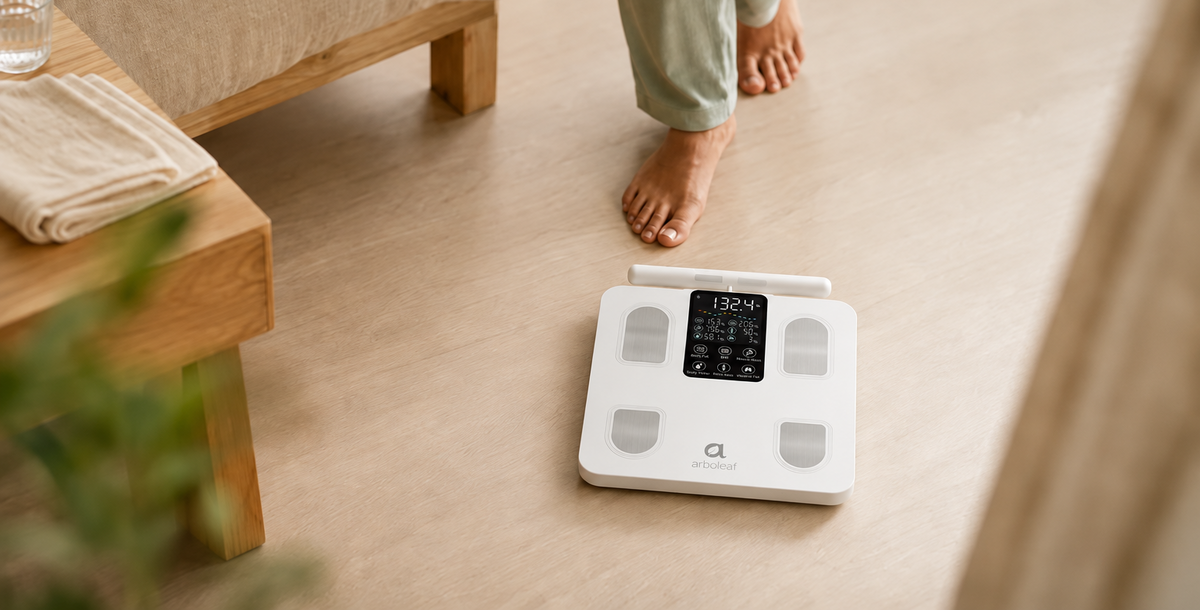
This is where body water percentage can provide additional context. The Arboleaf Smart Body Composition Scale estimates body water percentage and saves each measurement in the Arboleaf app. Body water is included among more than 50 available body metrics, but it is the most directly relevant measurement when reviewing hydration-related changes. 

For example, a higher scale weight after a salty dinner may partly reflect temporary water retention rather than an immediate increase in body tissue. A lower reading after a long, sweaty day may partly reflect fluid loss. Reviewing body water percentage beside weight can help you recognize that these short-term changes do not always mean the same thing.

The scale uses bioelectrical impedance analysis, commonly abbreviated as BIA. BIA estimates body composition by measuring how a low-level electrical current travels through the body. Because body water affects electrical conductivity, recent fluid intake and hydration status can influence the resulting estimates. 

For more comparable Arboleaf readings:

  • Measure at approximately the same time of day.

  • Use the scale before eating, drinking, or exercising.

  • Avoid comparing a post-workout reading with a rested morning reading.

  • Keep your measurement routine as consistent as possible.

  • Review the app’s 30-day moving average instead of reacting to one unusual result.

Recent food and fluid intake can affect bioelectrical impedance measurements, which is why consistent testing conditions matter. 

A consumer smart scale cannot diagnose dehydration or prescribe a daily water target. Instead, Arboleaf can give your water-intake routine additional context. Bottle refills show your intake, while body water percentage and weight measurements show how temporary fluid shifts may appear in your data.

Review these measurements alongside thirst, urine color, activity, meals, symptoms, and professional advice when needed.

Frequently Asked Questions

Q:How Many Bottles of Water Should I Drink a Day?

A:It depends on your daily water goal and bottle size. An 80-ounce goal equals about five 16.9-ounce bottles, four 24-ounce bottlefuls, or three 32-ounce bottlefuls.

Q:Is Four Bottles of Water a Day Enough?

A:Check the capacity first. Four 16.9-ounce bottles provide 67.6 ounces, while four 32-ounce bottles provide 128 ounces. Food and other beverages also contribute to your total water intake.

Q:How Many 16.9 oz Bottles of Water Should I Drink a Day?

A:Four bottles provide 67.6 ounces, five provide 84.5 ounces, and six provide 101.4 ounces. Your appropriate amount depends on activity, climate, diet, and individual health needs.

Q:How Many Times Should I Refill My Water Bottle a Day?

A:Divide your water goal by your bottle capacity. An 80-ounce goal with a 32-ounce bottle equals approximately 2.5 bottlefuls: the starting bottle, one full refill, and one half refill.

Q:Can I Drink Too Much Water?

A:Yes. Drinking a large amount too quickly can dilute blood sodium and contribute to hyponatremia. Spread your intake throughout the day and avoid forcing water simply to reach a fixed number. 

Q:What Are the Benefits of Relying on the Arboleaf Smart Scale to Track Water?

A:The Arboleaf Segmental Body Scale estimates body water percentage and saves measurements in the Arboleaf app. When readings are taken under similar conditions, they can help you distinguish temporary fluid-related changes from broader body-composition patterns and make more informed adjustments to your hydration, nutrition, and fitness routines.

Conclusion

The answer to how many water bottles should I drink a day starts with bottle capacity, not a universal bottle count. Estimate a practical fluid goal, account for water from food and other beverages, divide the plain-water portion by your bottle size, and spread it throughout the day.

Then adjust your intake for climate, activity, diet, pregnancy or breastfeeding, illness, and your body’s signals. Counting refills can make hydration easier to manage, while consistently recorded body water measurements can provide additional context for temporary fluid-related changes.

Latest Stories

Alle anzeigen

How Many Water Bottles Should I Drink a Day?

How Many Water Bottles Should I Drink a Day?

You finish one bottle at your desk, another with lunch, and then wonder whether you are behind—or already drinking enough. If you have searched how many water bottles should I drink a day, the answer depends heavily on the size...

Weiterlesenüber How Many Water Bottles Should I Drink a Day?

Does Muscle Weigh More Than Fat?

Does Muscle Weigh More Than Fat?

Does muscle weigh more than fat? While a pound is always a pound, the real difference is density. Discover why 5 pounds of muscle looks completely different than 5 pounds of fat, why you can gain weight but look leaner, and why tracking your body composition is the true secret to measuring fitness progress.

Weiterlesenüber Does Muscle Weigh More Than Fat?

What Body Fat Percentage to See Abs? Why the Number Isn't the Whole Story

What Body Fat Percentage to See Abs? Why the Number Isn't the Whole Story

Wondering what body fat percentage to see abs? While standard advice says 10% for men and 18% for women, the real answer is much more complex. Discover why muscle mass and genetics matter just as much as your body fat percentage, and learn how to build visible abs without chasing unrealistic numbers.

Weiterlesenüber What Body Fat Percentage to See Abs? Why the Number Isn't the Whole Story