


Wenn es um die Verfolgung von Gewicht und allgemeiner Gesundheit zu Hause geht, ist Genauigkeit nicht verhandelbar. Eine zuverlässige, präzise und genaueste Personenwaage für zu Hause liefert Ihnen nicht nur eine Zahl, sondern hilft Ihnen auch, fundierte Entscheidungen über Ihre Ernährung, Bewegung, Gesundheitsgewohnheiten und sogar die Gewichtsabnahme zu treffen. Aber es gibt so viele Optionen auf dem Markt: Waagen mit 10, 20 oder 50 Messindikatoren; BIA-Technologie, DF-BIA-Technologie, M-BIA-Technologie und so weiter. Wie finden Sie also die genaueste Personenwaage für zu Hause? In diesem Leitfaden für 2026 werden wir detailliert die Schlüsselfaktoren, die die Genauigkeit der Waage beeinflussen, die Überprüfung der Genauigkeit und die wichtigsten Punkte erläutern, auf die Sie bei der Auswahl einer geeigneten Personenwaage für Ihre Familie achten sollten.

(Dualfrequenz-Bioelektrische Impedanzanalyse)
Was bestimmt die Genauigkeit einer Personenwaage für zu Hause?
Die Genauigkeit einer Personenwaage für zu Hause wird nicht nur durch das Display bestimmt – ihr Kern liegt in der Erkennungstechnologie, der Produktqualität und den Kalibrierungsfunktionen. Hier sind die Kernkomponenten, die die Genauigkeit einer Waage bestimmen:
Hochwertige Sensoren
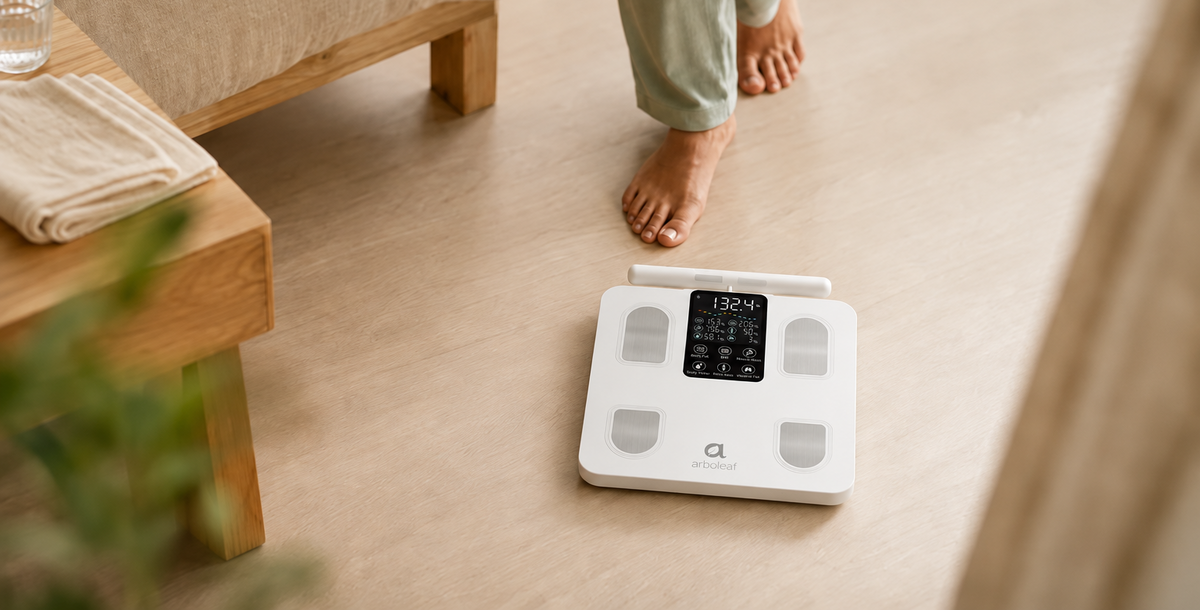
Die genauesten Waagen verwenden Dehnungsmessstreifen-Sensoren (oder Wägezellen), die Gewicht in elektrische Signale umwandeln können. Wählen Sie eine Waage mit 4 oder mehr Sensoren – einen unter jedem Fußpolster –, um eine gleichmäßige Gewichtsverteilung und stabile Messwerte zu gewährleisten. Günstige Waagen mit nur 2 Sensoren haben normalerweise instabile Messwerte, besonders wenn Sie nicht mittig stehen. Die genauesten Personenwaagen für zu Hause sind heutzutage jedoch mit 8 Sensoren ausgestattet. Sie verfügen über einen ausziehbaren Griff an der Waage und vier zusätzliche Sensoren am Griff zur Kalibrierung von Daten und Messergebnissen.
Kalibrierungstechnologie
Die Kalibrierungstechnologie ist eine wesentliche Funktion von Haushaltswaagen. Hochwertige Waagen kalibrieren sich automatisch, wenn Sie darauf treten, und passen sich an geringfügige Bodenveränderungen (wie leicht unebene Badezimmerböden) oder Temperaturschwankungen an. Einige Marken von Körperfettwaagen können erkennen, ob der Untergrund, auf dem Sie stehen, hart und eben ist, um die genauesten Messergebnisse zu erzielen.
Robustes Material
Eine robuste, rutschfeste Waagenoberfläche (vorzugsweise Glas oder Metall) kann Wackeln verhindern und Messabweichungen vermeiden. Vermeiden Sie die Wahl von dünnen Plastikwaagen – diese Art von Waage neigt dazu, sich mit der Zeit zu verformen, was die Genauigkeit verringert. Bei der Wahl von Glasmaterial sollten Sie jedoch auch darauf achten, gehärtetes Glas zu wählen, und wenn das Glas versehentlich zerbricht, zeigt es Spinnwebenrisse an, anstatt direkt vollständig zu zersplittern.
Gewichtskapazität
Wählen Sie eine Waage mit einer Gewichtskapazität, die Ihren Bedürfnissen entspricht (die meisten Haushaltswaagen können bis zu 136-181 Kilogramm tragen). Waagen, die nahe ihrer maximalen Gewichtskapazität sind, neigen dazu, weniger genau zu sein, daher wird empfohlen, ein Modell mit einer Gewichtskapazität zu wählen, die 22-45 Kilogramm höher ist als Ihr aktuelles Gewicht.
Wie testet man die Genauigkeit einer Personenwaage für zu Hause?
Selbst die „genaueste“ Waage kann Messabweichungen aufweisen, wenn sie nicht richtig verwendet oder gewartet wird. Befolgen Sie diese einfachen Schritte, um die Genauigkeit Ihrer Waage zu Hause zu testen:
1. Wählen Sie eine flache, harte Oberfläche
Verwenden Sie die Waage niemals auf Teppich oder unebenem Untergrund – dies ist die Hauptursache für ungenaue Messwerte. Stellen Sie die Waage auf eine harte, ebene Fläche im Badezimmer (z. B. Fliesen- oder Holzboden).
2. Wiegen Sie sich mehrmals
Stellen Sie sich auf die Waage, warten Sie, bis der Messwert stabil ist, steigen Sie dann ab und wiederholen Sie dies 3-4 Mal. Wenn der Messwert um mehr als 0,2-0,5 kg abweicht, ist die Waage möglicherweise nicht genau genug (oder Sie stehen nicht jedes Mal an derselben Stelle).
3. Testen Sie mit einem bekannten Gewicht
Nehmen Sie einen Gegenstand mit bekanntem Gewicht (z. B. eine Hantel, eine Gewichtsplatte oder einen 9 kg Sack Mehl) und legen Sie ihn auf die Waage – wenn der Messwert dem tatsächlichen Gewicht des Gegenstands entspricht, ist die Waage genau; wenn nicht, muss sie möglicherweise kalibriert werden.
4. Auf Messwertdrift prüfen
Wiegen Sie sich eine Woche lang jeden Tag zur gleichen Zeit (es wird empfohlen, dies morgens nüchtern und ohne Wasser zu tun). Geringfügige Schwankungen (0,5-1 kg) sind normal (beeinflusst durch Wassergewicht), aber große, unregelmäßige Veränderungen können auf eine Fehlfunktion der Waage hindeuten.
Wichtige Kaufkriterien für die genaueste Personenwaage für zu Hause
Beim Kauf der genauesten Personenwaage für zu Hause sollten Sie sich nicht nur auf die Genauigkeit konzentrieren, sondern auch Funktionen wählen, die einfach zu bedienen sind und sich in Ihre täglichen Gewohnheiten integrieren lassen. Hier sind die wichtigsten Punkte, auf die Sie achten sollten:
1. Digitalanzeige
Ein großes, hinterleuchtetes Display erleichtert das Ablesen Ihres Gewichts in einem schwach beleuchteten Badezimmer. Vermeiden Sie analoge Waagen – diese Art von Waage ist schwer abzulesen und weniger genau.
2. Speicherfunktion
Wenn mehrere Personen in Ihrer Familie die Waage benutzen, wählen Sie ein Modell mit Speicherplätzen (meistens können 4-8 Benutzerinformationen gespeichert werden), was für jeden praktisch ist, um den eigenen Fortschritt zu verfolgen und Verwirrung beim Ablesen zu vermeiden. Darüber hinaus können Sie auch eine Waage wählen, die mit einer App verbunden werden kann. Solche Waagen unterstützen in der Regel das Hinzufügen unbegrenzter Benutzer und können die Daten von Ihnen, Ihrer Familie und Freunden jederzeit verfolgen.
3. Batterielebensdauer
Wählen Sie eine Waage mit langer Batterielebensdauer (mehr als 6 Monate) oder eine wiederaufladbare – es ist sehr frustrierend, wenn die Waage keinen Strom mehr hat, wenn Sie sich wiegen möchten.
4. Intelligente Funktionen
Wenn Sie andere Indikatoren als das Gewicht verfolgen möchten, können Sie eine intelligente Waage wählen, die eine Bluetooth- oder Wi-Fi-Verbindung zu Ihrem Mobiltelefon unterstützt. Solche Waagen können den Körperfettanteil, die Muskelmasse und den Wasseranteil messen (Hinweis: Die Genauigkeit dieser zusätzlichen Indikatoren ist geringer als die des Gewichts, aber sie können dennoch verwendet werden, um Veränderungstrends zu verfolgen). Zum Beispiel ist die Arboleaf Körperfettwaage mit einer entsprechenden App ausgestattet, die auch Daten mit Software wie Apple Health und Google Fit synchronisieren, und mehr als 50 Datenpunkte, sogar das Körperalter und den Viszeralfettanteil, verfolgen und analysieren kann.
Häufige Fehler, die zu ungenauen Messwerten bei Personenwaagen zu Hause führen
Selbst die genaueste Personenwaage für zu Hause kann Messabweichungen aufweisen, wenn Sie die folgenden häufigen Fehler machen. Vermeiden Sie diese Fehler, um stabile und zuverlässige Messwerte zu gewährleisten:
1. Schiefe Stehhaltung
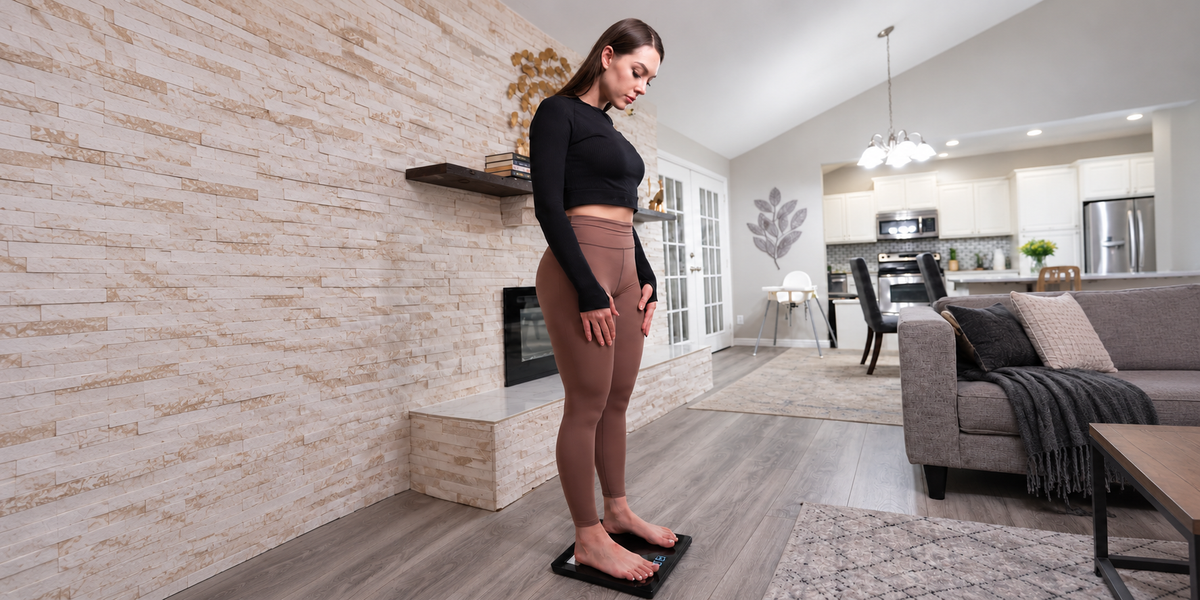
Stellen Sie sich immer schulterbreit und mittig auf die Waage. Ein Vorneigen oder seitliches Neigen führt zu einer ungleichmäßigen Gewichtsverteilung und beeinflusst den Messwert. Denken Sie außerdem daran, fest und aufrecht zu stehen und sich nicht zu bewegen. Wenn sich Ihr Körper bewegt, führt die Beschleunigung dazu, dass Ihr Gewichtswert sofort ansteigt, also bleiben Sie still.
2. Kalibrierung ignorieren
Wenn die Waage eine manuelle Kalibrierungsfunktion hat, wird empfohlen, sie alle 1-2 Monate zu kalibrieren. Auch bei automatisch kalibrierenden Waagen wird empfohlen, ihre Genauigkeit regelmäßig mit einem Objekt bekannten Gewichts zu überprüfen. Wenn Sie vermuten, dass die Waage ungenau ist, können Sie ein Objekt bekannten Gewichts verwenden, um die Genauigkeit der Waage zu messen und zu testen. Wenn Sie außerdem feststellen, dass die Waage ein Gewicht anzeigt, obwohl sich kein Gegenstand darauf befindet, kann es sein, dass Sie sie nicht auf Null zurückgesetzt haben; eine detaillierte Erklärung finden Sie hier.
3. Überladung
Überschreiten Sie niemals die maximale Gewichtskapazität der Waage – dies beschädigt die Sensoren und führt zu einer dauerhaften Ungenauigkeit der Waage. Darüber hinaus kann eine starke Überladung dazu führen, dass die Waagenoberfläche aus Glas platzt und sogar Ihre Beine oder andere Körperteile zerkratzt. Beim Kauf einer Personenwaage müssen Sie zuerst den zu verwendenden Gewichtsbereich abschätzen und dann die entsprechende Waage auswählen.
Empfehlungen für die genaueste Personenwaage für zu Hause
Im Folgenden finden Sie Empfehlungen für die genauesten Personenwaagen für zu Hause im Jahr 2026 – geeignet für den täglichen Gebrauch, mit sowohl Zuverlässigkeit als auch Genauigkeit:
1. ARBOLEAF CS10E Genaue Personenwaage für zu Hause: Ausgestattet mit 8 hochpräzisen Sensoren und einem ausziehbaren Griff; unterstützt automatische und manuelle Kalibrierung, mit einer Gewichtskapazität von bis zu 181 kg, kostengünstig und genau. Sie verfügt über ein großes, hinterleuchtetes Display und rutschfeste Fußpolster. Darüber hinaus unterstützt sie die Verbindung mit der ARBOLEAF-App, Apple Health, Google Fit, Samsung Health und anderen Anwendungen. Sie unterstützt auch die Anzeige von mehr als 24 Datenpunkten, einschließlich Körperfett und Muskelmasse, mit einem Maximalgewicht von über 181 kg.
2.ARBOLEAF CS10K Genaue Personenwaage für zu Hause: Geeignet für Personen, die zusätzliche Indikatoren (Körperfettanteil, Muskelmasse) genau verfolgen müssen, und ihre Gewichtsverfolgungsgenauigkeit ist immer noch extrem hoch. Sie unterstützt auch die automatische Kalibrierung, verfügt über 8 Elektroden und einen ausziehbaren Griff und unterstützt auch die Verwendung passender Apps. Sie kann mehr als 40 Datenpunkte verfolgen und hat eine maximale Gewichtskapazität von über 181 kg.
3.ARBOLEAF Personenwaage für zu Hause: Verwendet 4 Elektrodensensoren, kann 14 Datenpunkte verfolgen, hat eine rutschfeste Glasoberfläche und eine automatische Kalibrierungsfunktion und ist eine kostengünstige und genaue Wahl.
Fazit
Die genaueste Personenwaage für zu Hause ist mehr als nur ein Werkzeug – sie ist ein guter Helfer, um Ihre Gesundheit und Fortschritte zu verfolgen. Bei der Wahl einer Waage sollten Sie hochwertige Sensoren, automatische Kalibrierungsfunktionen und robuste Materialien priorisieren. Befolgen Sie unsere Testtipps, um sicherzustellen, dass die Waage jederzeit genau bleibt, und vermeiden Sie häufige Fehler, die zu Messabweichungen führen. Mit einer geeigneten Waage erhalten Sie stabile und zuverlässige Gewichtsdaten, die Ihnen helfen, Ihre Gesundheitsziele im Jahr 2026 und darüber hinaus zu erreichen.
Share: