

You’ve been eating mindfully, hitting the gym, and doing everything right—yet the scale barely moves. If this sounds like your daily reality, you already know how incredibly frustrating it can be. Losing weight with polycystic ovary syndrome (PCOS) often feels like your own body is working against you.
But please hear this: your struggle is a metabolic reality, not a lack of willpower. This condition fundamentally changes how your body handles hormones, manages blood sugar, and regulates your metabolism.
If you are trying to figure out how to lose weight with PCOS, the most important first step is to step away from extreme, quick-fix social media diets. The goal isn't to punish your body, but to support it. The good news is that reducing just 5% to 10% of your body weight can significantly improve your menstrual regularity and overall health. This guide will walk you through sustainable, science-backed habits and show you how to accurately track the progress you are actually making.
Why Is It So Hard to Lose Weight with PCOS?
Understanding what is happening inside your endocrine system can help alleviate the guilt you might be carrying. Here is why PCOS weight loss feels so much harder for you compared to others.
Insulin Resistance Promotes Fat Storage
A large majority of women with this condition deal with insulin resistance. This means your cells don't respond well to insulin, so your pancreas pumps out even more of it. High insulin levels essentially act as a "fat-storage" signal, telling your body to hold onto energy rather than burning it off.
Hormonal Imbalances and PCOS Belly Fat
You might notice that your weight tends to settle mostly around your midsection. This is often due to elevated levels of androgens (often called male hormones, though all women have them). These hormonal shifts not only increase visceral fat (often referred to as PCOS belly fat) but can also hijack your appetite-regulating hormones, leading to intense carbohydrate cravings.
Metabolism and Chronic Stress
Your body often experiences low-grade inflammation and elevated cortisol (the stress hormone). When your system feels constantly stressed, it naturally clings to its energy reserves, which slows down your resting metabolic rate.
Can Weight Loss Help Manage PCOS Symptoms?
Yes, but the goal should always be feeling healthier and improving your body composition, not just chasing a smaller number. Research shows that even a modest weight reduction brings real, tangible benefits to your daily life.
- More Predictable Menstrual Cycles Reducing excess body weight helps balance your hormones, which can encourage natural ovulation and bring much-needed regularity to your periods.
- Better Insulin Sensitivity Losing fat—especially around your abdomen—helps your cells use insulin more effectively. This naturally dials down intense sugar cravings and protects your long-term metabolic health.
- Lower Cardiovascular Risk Sustainable weight management actively improves your blood pressure and lipid profiles, helping to protect your heart health over time.
Effective Lifestyle Changes for PCOS Weight Loss
If you are looking for long-term solutions, modifying your daily habits is your strongest tool. The secret is consistency, not extreme restriction.
Start with a Sustainable Diet for PCOS Weight Loss
Fad diets that demand starvation-level calories usually backfire, leaving you exhausted and further stressing your metabolism. Instead, focus on a nutrition plan that keeps your blood sugar stable. Experts at Harvard Health note that leaning toward a Mediterranean-style or low-glycemic index (GI) way of eating is highly effective for reducing inflammation.
- Prioritize High-Quality Protein Lean meats, tofu, and fish keep you full and protect your skeletal muscle mass during weight loss.
- Add More Fiber Leafy greens and legumes slow down digestion and prevent sudden insulin spikes after meals.
- Incorporate Healthy Fats Avocados, olive oil, and nuts support healthy hormone production and keep your energy levels steady.
Combine Strength Training and Cardio
Cardio is great for your heart, but endless hours on the treadmill won't give you optimal results. You need strength training. Lifting weights or using resistance bands builds skeletal muscle mass. Think of muscle as your body's metabolic engine—the more muscle you have, the better your body processes glucose, which directly fights back against insulin resistance.
Prioritize Sleep and Stress Management
Skimping on sleep and living with chronic stress keeps your cortisol levels high, which tells your body to store more belly fat. Getting 7-9 hours of restful sleep and finding simple ways to decompress—whether that is yoga, reading, or a quiet walk—is just as critical as what is on your plate.
Can Medication Help?
Sometimes, lifestyle changes alone aren't quite enough to break through the metabolic barriers. Your doctor might suggest medications like Metformin to help manage insulin resistance, or GLP-1 receptor agonists to assist with weight management. Always consult with your healthcare provider to see if this is the right path for your specific needs.
Tracking Body Composition: Measuring Real Progress Beyond the Scale
One of the biggest reasons you might feel like giving up is the frustration of the daily weigh-in. When managing PCOS, you need a smarter way to look at your data.
Understand Daily Data Collection
Your body weight fluctuates every single day due to water retention, sodium, digestion, and your menstrual cycle. Stepping on the scale daily is actually highly valuable, but not so you can judge yourself over a two-pound overnight gain. You weigh in daily simply to collect consistent data.
Focus on Comprehensive Health Metrics
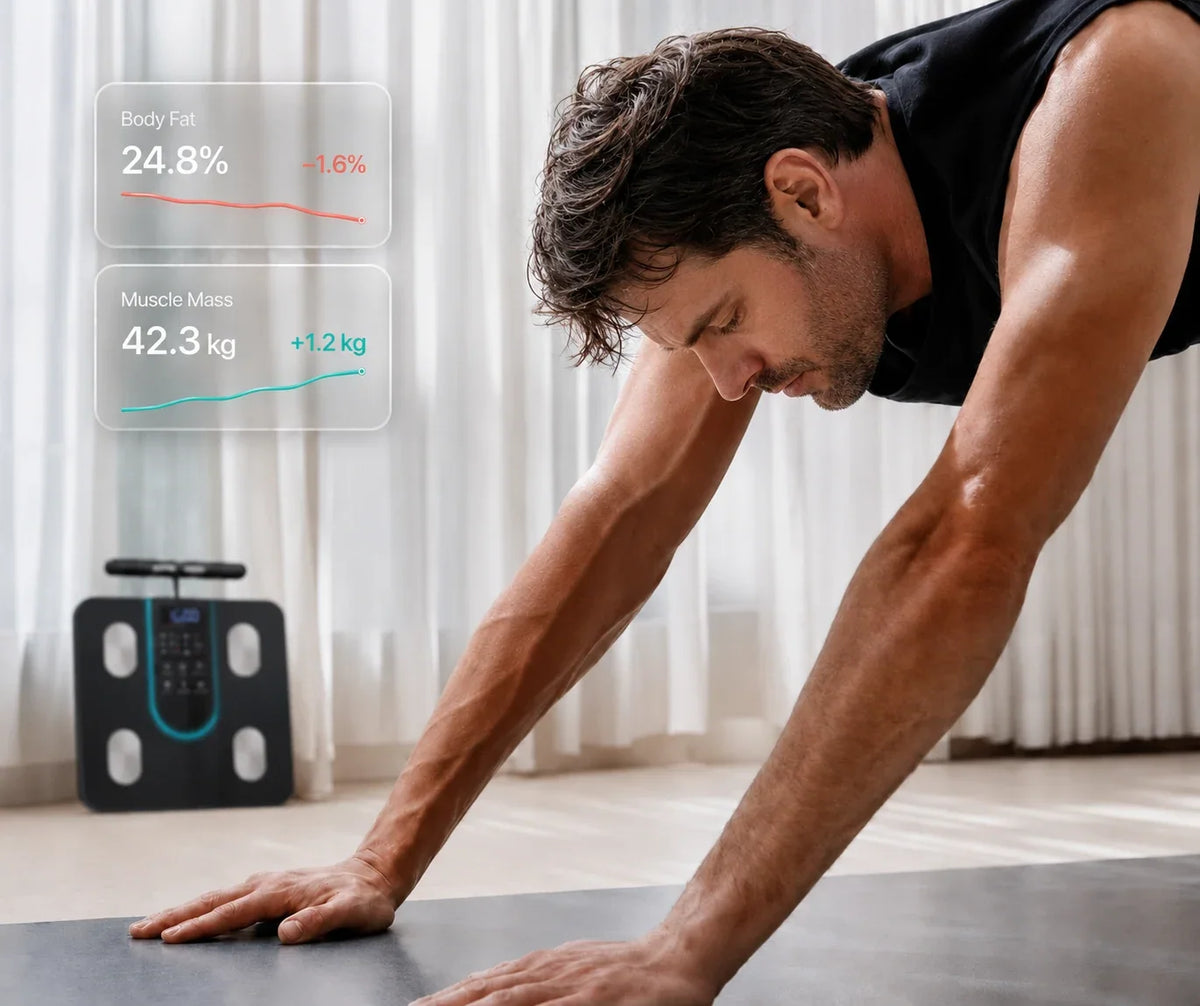
Instead of asking, "How much do I weigh today?", you should be looking at what your body is actually composed of. Tracking your body fat percentage, skeletal muscle mass, and visceral fat tells the real story of your metabolic health. You might find your total weight hasn't dropped, but your waistline is shrinking because you are losing fat and gaining metabolically active muscle.
Rely on Long-Term Trends and Moving Averages
To stay sane and motivated, you need to look at the larger trendline. By collecting your data daily under the exact same conditions (like every morning right after waking up), you can calculate a reliable baseline.
This is where a smart scale becomes a game-changer for your routine. An Arboleaf smart scale seamlessly tracks over 50 specific body metrics, including body fat, skeletal muscle mass, and visceral fat. As you step on the scale each morning, the companion App automatically charts your data to generate a 30-day moving average. This intelligent tracking smooths out those frustrating daily weight spikes, allowing you to clearly visualize your actual, long-term physical improvements and focus on the trends that truly matter.
Common Misconceptions
To successfully navigate how to lose weight with PCOS, you have to block out the noise and avoid these common traps.
The harder you diet, the faster you lose weight?
Starving yourself puts your body into a protective "survival" mode, slowing down your metabolism and making it even harder to lose fat later. Consistent, nourishing meals work much better.
You must cut out all carbohydrates?
Carbs are not your enemy; highly processed, sugary foods are. Complex, fiber-rich carbohydrates give you essential energy and actively support healthy digestion and hormone balance.
Cardio is all you need to lose fat?
While great for stamina, doing too much high-intensity cardio without giving your body time to recover can actually spike your stress hormones. A routine balanced with strength training is much kinder to your system.
Frequently Asked Questions (FAQ)
Q: What is the fastest way to lose weight with PCOS?
A: There is no healthy "fast" way. The most reliable approach is a consistent combination of a blood-sugar-friendly diet, regular strength training, and prioritizing your sleep. Slow and steady progress is much more likely to last.
Q: How long does it take to lose weight with PCOS?
A: This depends entirely on your starting point and body composition. You will likely notice more energy and looser-fitting clothes within a few weeks, while significant changes on the scale might take several months to appear.
Q: Why am I exercising but not losing weight with PCOS?
A: You might be building muscle tissue while losing fat, which keeps your total weight steady. Alternatively, you might be overtraining and spiking your cortisol, or your meals might not be fully supporting your workouts.
Q: Do I need to completely cut out sugar?
A: While you should definitely minimize refined sugars to help manage insulin resistance, completely banning all sweet foods usually leads to bingeing. Focus on portion control and try pairing natural sugars (like fruit) with a source of protein or fat.
Q: Can a smart scale for PCOS really help?
A: Yes. Because PCOS weight loss is often slow and heavily linked to changes in your body composition (like gaining muscle and losing visceral fat), a smart scale helps you track these exact metrics. By focusing on your 30-day moving average rather than daily numbers, it gives you an accurate, encouraging picture of your progress.
Conclusion
Figuring out how to lose weight with PCOS is undeniably challenging, but you have the power to improve your health. Instead of chasing rapid fixes, focus on building habits you can actually live with: balanced nutrition, consistent strength training, effective stress management, and realistic expectations. Remember that your journey is not defined by a single number on a traditional scale. By consistently tracking your data to observe long-term trends in your body fat and muscle mass, you can objectively evaluate your progress, listen to your body, and build a healthier, more resilient metabolism over time.


Partager: