

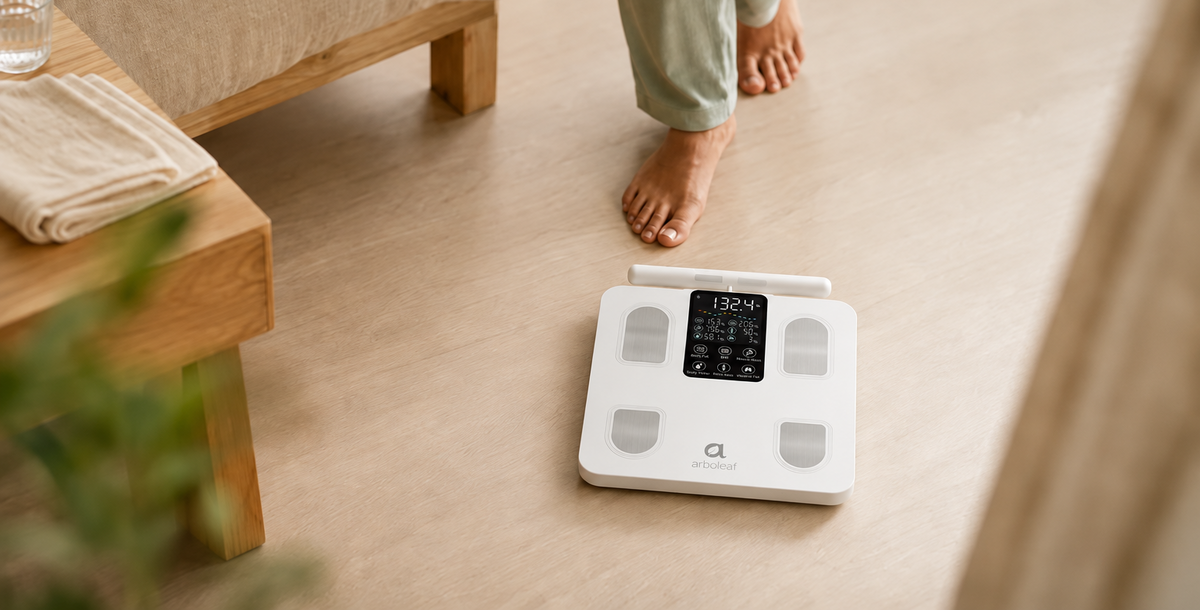
Smart scales make it easy to record weight and body composition at home. A quick measurement can show readings such as body fat percentage and muscle mass, while a connected app keeps a history you can review over time.
As weighing becomes part of a regular routine, a question naturally follows: Are smart scales safe to use every day? For adults who meet the manufacturer’s suitability requirements, they can support regular home tracking when used as directed. The important steps are understanding the measurement technology, checking whether the scale is appropriate for you, and using it correctly.
How Does a Smart Scale Work?
What is a smart scale, and what happens when you step on one? It combines digital weight measurement with connected features that save your results. Models with body composition functions also collect information through bioelectrical impedance analysis, or BIA.
-
Measuring weight: Sensors beneath the platform detect the load and convert it into a weight reading on the display.
-
Calculating body composition: BIA sends a small electrical signal through the body and measures the impedance it encounters. The scale combines this information with inputs such as height and age to calculate body composition results.
-
Recording measurements: Bluetooth or Wi-Fi transfers readings to a compatible app, where you can compare previous measurements and follow trends.
The BIA signal is typically too small to feel. Weight measurement and impedance measurement are separate functions, which is why a body composition scale may have precautions that a basic weight-only scale does not.
Is Daily Smart Scale Use Safe?
For suitable users, BIA is generally considered safe when used according to the product’s instructions. Its low-level electrical signal is ordinarily below the threshold of perception.
The same precautions apply whether you measure every morning or once a week. A small electrical signal does not make a device suitable for everyone, and measuring less often does not remove a manufacturer’s restriction.
Think about daily use in two parts:
-
Device suitability: Are you within the product’s intended age range, and do any health restrictions apply?
-
Your tracking routine: Does the frequency help you follow progress without creating pressure around each result?
Once you have confirmed suitability, the next question is how frequently you want to record measurements.
Who Should Not Use a Body Composition Scale?
Check the instructions for your exact model before using its body composition features. The following situations deserve particular attention.
Pacemakers and Other Internal Medical Devices
Bioimpedance signals may interfere with implanted electronic devices, including pacemakers and implantable cardioverter-defibrillators. Research has identified potential interference in testing and simulations.
Arboleaf’s warnings state that people with pacemakers or other internal medical devices should not use its smart scales. If this applies to you, ask your healthcare professional about an appropriate alternative.
Pregnancy
Arboleaf’s published warnings state not to use its smart scales during pregnancy. Follow this restriction and discuss weight monitoring with your prenatal care provider.
Do not assume that a weight-only setting or advice for another brand makes an Arboleaf scale suitable during pregnancy.
Infants, Toddlers, and Younger Users
Arboleaf notes that its scale is not intended for infants or toddlers and that some body composition measurements are unsuitable for users under 18. Age restrictions and available readings should be checked against the model’s instructions.
An app displaying a result does not, by itself, establish that the metric is appropriate for a child.
What Should You Check Before Stepping On?
After confirming that the scale is suitable for you, check your setup.
-
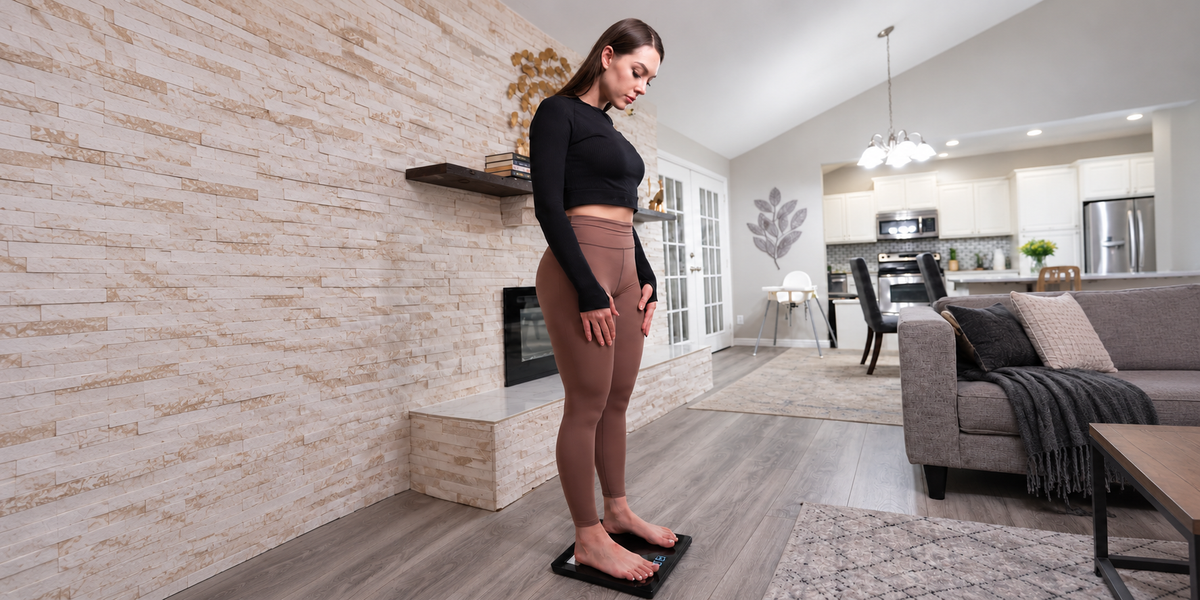
Floor and placement: Use a hard, level, dry surface with enough room to step on and off comfortably. Avoid slippery floors and loose rugs.
-
Dry body and platform: Dry off after bathing and check that the platform is dry. Arboleaf warns against use when your body is wet or the floor is slippery.
-
Weight capacity: Check the maximum capacity in your product instructions before using the scale.
-
Device condition: Look for cracks, loose parts, or damaged accessories. Stop using the scale if it is damaged or behaves abnormally.
-
Measurement position: Stand as directed and remain still. For a handle-equipped model, follow its grip and positioning instructions.
A safe setup should be easy to repeat. Keeping the scale in a suitable location makes regular check-ins more convenient.
How Often Should You Use a Smart Scale?
You do not need to use a smart scale every day to build a useful record. Your schedule should fit your goals and be comfortable to maintain.
Daily check-ins: If you prefer a regular routine, measure once at a similar time and under similar conditions. Avoid repeatedly stepping on to seek a different result.
A few check-ins each week: If daily weighing feels unnecessary, choose consistent days and review the readings together.
Less frequent check-ins: If frequent tracking creates anxiety or makes you react strongly to small changes, reduce the frequency. You can also discuss an appropriate monitoring routine with a healthcare professional.
Whichever schedule you choose, avoid changing your eating or exercise based solely on one reading. Give yourself enough measurements to see a pattern.
How Can You Make Each Measurement More Useful?
A measurement becomes easier to understand when you can place it alongside previous results. Saving your readings also removes the need to remember numbers or keep handwritten notes.
Keep Your Results Together
Arboleaf Smart Scales connect with the free Arboleaf app to organize your measurements and historical records. You can review weight alongside supported body composition metrics, including body fat percentage, muscle mass, and body water.
Having these readings together helps you follow several aspects of your routine without switching between separate records.
Review Whole-Body and Regional Changes
Arboleaf’s segmental scales provide fat and muscle analysis for the arms, legs, and torso. This gives you a way to review changes across individual body areas as well as the whole body.
Key results appear on the scale, while the app offers more detailed body composition information and trend reports. Available features depend on the model.
Give Trends Time to Develop
Review your history at intervals that suit your goals. You do not need to analyze every metric after every measurement or treat a small change as an immediate instruction.
These readings support home tracking; they do not diagnose a condition or replace medical advice.
Building a Routine You Can Maintain
Are smart scales safe for everyday use? For suitable users, following the manufacturer’s instructions allows them to support regular home tracking. Check personal restrictions first, keep your setup dry and stable, and choose a frequency that feels manageable.
Use the record you build to understand changes over time. A useful routine is one that helps you stay informed without making every weigh-in feel like a test.
FAQ
Do All Smart Scales Use BIA?
No. Some connected scales record weight only. Models that provide body composition readings commonly use BIA, so check the product’s features and instructions.
Do Smart Scales Cause an Electric Shock?
The BIA signal is typically too small to feel during normal use. If you experience an unexpected electrical sensation, stop using the device and contact the manufacturer.
Is a Smart Scale the Same as a Body Fat Scale?
The terms can overlap. “Smart scale” refers to connected features such as app syncing, while “body fat scale” describes a device that provides body fat readings. Many scales offer both.
共有: