If you've ever looked at a smart scale and wondered, "How do scales measure body fat?", you're not alone.

Unlike a traditional bathroom scale that only measures weight, a body fat scale can estimate body fat percentage, muscle mass, body water, and other body composition metrics within seconds. Since the device only comes into contact with your feet, many people question how these measurements are possible—and whether they can be trusted.

The answer lies in a method called Bioelectrical Impedance Analysis (BIA). While smart scales don't directly measure body fat, they use BIA technology to estimate body composition based on how electrical signals move through the body.

Understanding how this process works can help you better interpret your results and decide whether a body fat scale is the right tool for your health and fitness goals.

What Is a Body Fat Scale?

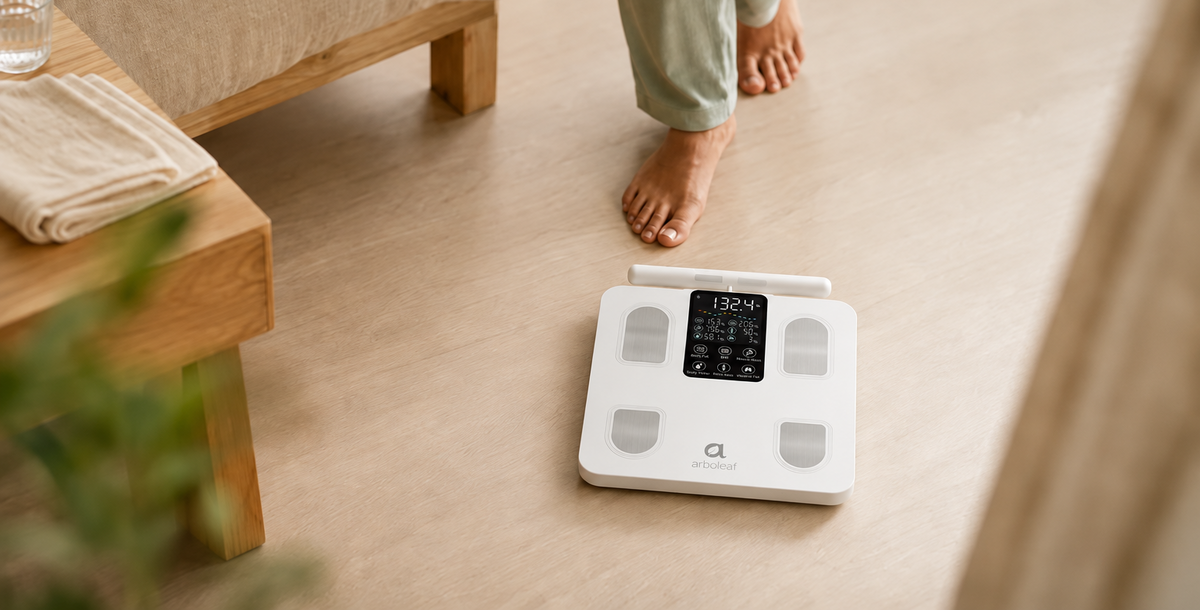
A body fat scale is a type of smart scale designed to measure more than just body weight.

While a traditional scale only tells you how much you weigh, a body fat scale estimates several aspects of body composition, including body fat percentage, muscle mass, body water, and visceral fat. Many models also sync with mobile apps, allowing users to monitor changes over time.

This additional information can provide a clearer picture of overall health. Two people may weigh exactly the same, but have very different levels of body fat and muscle mass. That's why body composition is often considered a more useful health indicator than weight alone.

How Do Scales Measure Body Fat?

Most smart scales use BIA technology to estimate body fat.

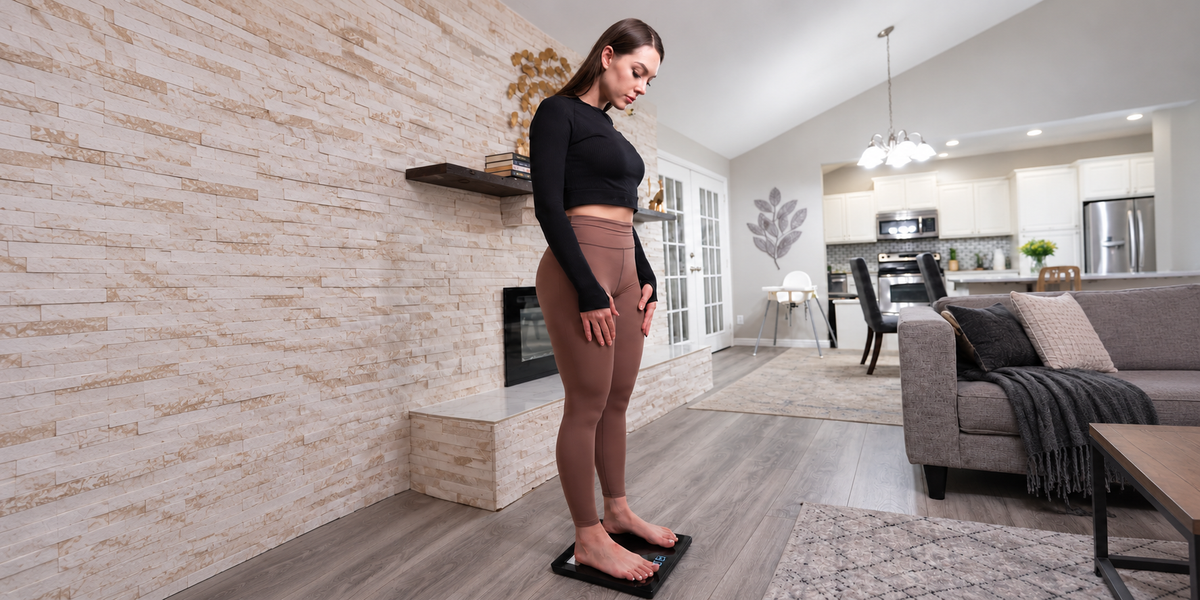
When you stand barefoot on the scale's metal sensors, the device sends a very small, safe electrical current through your body. Different tissues conduct electricity differently because they contain varying amounts of water.

Muscle tissue contains a higher percentage of water and allows electrical signals to travel more easily. Fat tissue contains less water and creates greater resistance.

The scale measures this resistance, known as electrical impedance, and combines it with personal information such as age, height, weight, and sex. Using predictive algorithms, it then estimates body fat percentage and other body composition metrics.

In other words, smart scales do not directly detect fat. Instead, they estimate body composition based on how your body responds to a low-level electrical signal.

What Can a Body Fat Scale Measure?

Modern smart scales can provide much more than a body fat percentage reading.

Depending on the model, users may be able to track:

  • Body fat percentage

  • Muscle mass

  • Body water percentage

  • Bone mass

  • Visceral fat

  • BMI

  • Basal metabolic rate (BMR)

  • Protein percentage

  • Lean body mass

Some advanced models provide even more comprehensive health insights. For example, Arboleaf smart scales offer access to more than 50 body metrics through the companion app, helping users monitor body composition changes and long-term health trends beyond weight alone.

How Accurate Are Body Fat Scales?

One of the most common questions people ask before buying a smart scale is whether the measurements are accurate.

Body fat scales are generally accurate enough for personal health tracking, but they should be viewed as estimation tools rather than clinical diagnostic devices.

Several factors can influence body fat readings, including hydration levels, meals, exercise, and even the time of day. As a result, measurements may fluctuate slightly from one day to the next.

For most users, however, the value of a body fat scale lies in tracking trends rather than focusing on a single reading. Consistent measurements taken under similar conditions can help reveal meaningful changes in body composition over time.

Comparing Different Ways to Measure Body Fat

There are several methods available for measuring body fat, but they differ significantly in cost, convenience, and practicality.

Evaluation Factor Smart Scale (BIA) DEXA Scan
How It Works Uses electrical impedance to estimate body composition Uses low-dose X-ray imaging to analyze body composition
Accuracy Provides reliable estimates and trend tracking for everyday use Widely considered one of the most accurate body composition methods available
Convenience Can be used at home in seconds Requires an appointment at a medical or testing facility
Frequency Suitable for regular tracking Usually performed occasionally
Cost Typically $30–$150 for unlimited use Often $50–$300 per scan
Best For Ongoing health and fitness monitoring Detailed clinical assessments

DEXA scans are often considered the gold standard for body composition analysis. However, they can be expensive and impractical for routine use.

For people who want to monitor progress regularly, smart scales offer a more convenient and affordable solution. While they don't provide medical-grade measurements, they make it easy to track body composition trends over weeks, months, and years.

Pros and Cons of Body Fat Scales

Like any health-tracking device, body fat scales have both advantages and limitations.

Pros

  • Easy to use at home

  • Provides more information than weight alone

  • Supports long-term health tracking

  • More affordable than professional testing

  • Syncs with apps for trend analysis

Cons

  • Measurements are estimates

  • Results can be affected by hydration levels

  • Different devices may produce slightly different readings

  • Not a replacement for clinical testing

What Should You Look for in a Body Fat Scale?

Not all body fat scales offer the same experience. While most models can estimate body fat percentage, the features that matter most often depend on how you plan to use the scale.

Comprehensive Body Composition Metrics

Some scales provide only a handful of measurements, while others deliver a more complete picture of body composition. If your goal is long-term health tracking, it can be helpful to monitor metrics such as muscle mass, visceral fat, body water, protein percentage, and metabolic rate alongside body fat percentage.

App Connectivity and Trend Tracking

A single measurement rarely tells the whole story. The ability to view historical trends through a companion app can make it easier to identify meaningful changes in body composition over time.

Multi-User Support

For families or shared households, multi-user support helps keep measurements organized and ensures each person can track their own progress independently.

Long-Term Value

When evaluating a body fat scale, it's worth considering how much information the device can provide beyond weight alone. The Arboleaf Smart Scale Collection combines app-based trend tracking with access to 50+ body metrics, giving users a broader view of body composition and overall health progress over time.

Frequently Asked Questions

Q: Can a scale really measure body fat?

A: Not directly. Smart scales estimate body fat using BIA technology, which analyzes how electrical signals travel through the body and uses that information to calculate body composition.

Q:How does a smart scale work?

A: A smart scale sends a small electrical current through the body, measures electrical impedance, and combines that data with personal information to estimate body fat percentage and other body composition metrics.

Q:How accurate are body fat scales?

A: Body fat scales are generally accurate enough for tracking long-term trends, although they are not as precise as clinical methods such as DEXA scans.

Q:Why does my body fat percentage change from day to day?

A: Hydration levels, meals, exercise, and the time of day can all affect BIA measurements, causing normal fluctuations in body fat readings.

Conclusion

So, how do scales measure body fat?

Most smart scales use BIA technology to estimate body composition by measuring electrical impedance and combining that data with personal information. While the results are estimates rather than direct measurements, smart scales provide a convenient and affordable way to monitor body fat percentage and other health metrics over time.

For most people, consistent tracking is more valuable than a single highly precise measurement, making a smart scale a practical tool for supporting long-term health and fitness goals.

Latest Stories

このセクションには現在コンテンツがありません。サイドバーを使ってこのセクションにコンテンツを追加してください。