

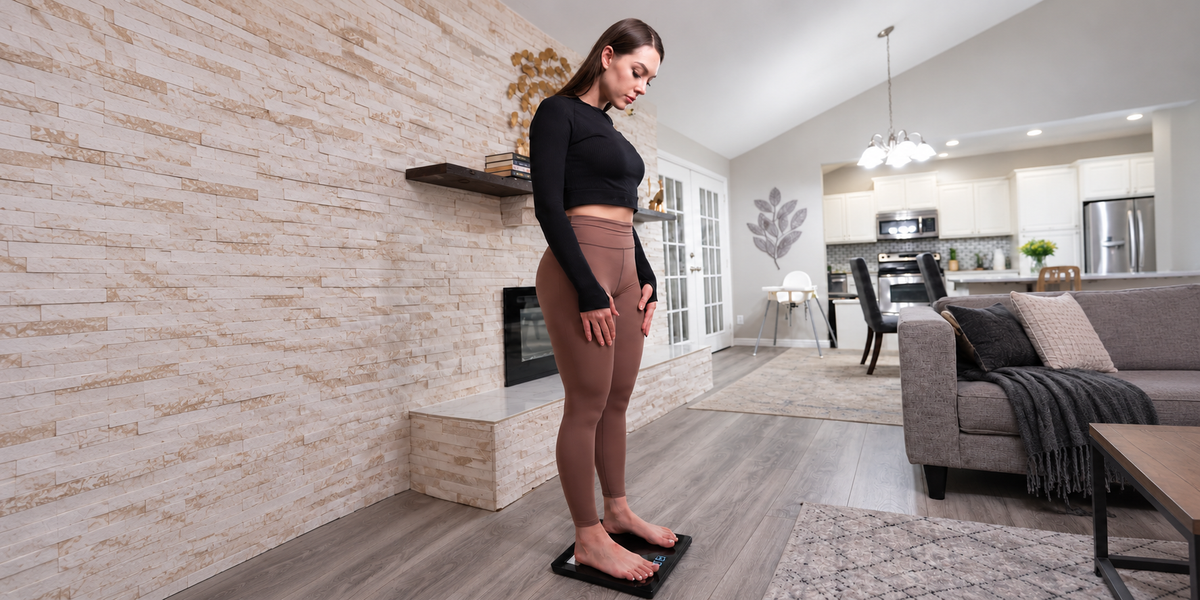
Both analog and digital scales can help you keep track of your weight. An analog scale gives you a straightforward reading, while a digital scale makes that reading easier to see. Depending on the model, it can also save measurements and show body composition data, making it easier to follow changes over time.
The analog scale vs digital scale choice comes down to what you want from each weigh-in. If you only need to check your weight now and then, either can work. If you want a clearer record of your progress, the added capabilities of a digital scale become more useful.
What’s the Difference Between an Analog and a Digital Scale?
An analog scale uses a pointer and a numbered dial to show your weight. You step on, wait for the pointer to settle, and read the nearest mark. Most household analog scales do not need batteries or store previous measurements.
A digital scale shows your weight as a number on a screen. Basic models stop there. Others can connect to an app, keep a history of your measurements, or provide body composition readings. A smart scale is simply a digital scale with some of these additional features; not every digital scale measures body fat.
Both types can tell you how much you weigh. The difference becomes more noticeable when you use a scale regularly and want to make sense of what changes.
What Does a Digital Scale Do Better?
The number is easier to read
With an analog dial, you may need to judge where the pointer falls between two marks. A digital screen gives you a number at a glance, making it easier to write down or compare with an earlier reading. Display size and contrast still vary by model, so it is worth choosing a screen you can comfortably see.
A digital scale may show smaller increments than an analog dial. That makes changes easier to display, but extra decimal places do not automatically make a scale more accurate. For a closer look at what affects measurements, see our guide to body fat scale accuracy.
Some models keep your measurements together
You can track weight with either kind of scale by recording the number yourself. A connected digital scale removes that extra step by saving measurements in an app. Instead of trying to remember what the dial showed last month, you can look back at your records in one place.
This is useful if your goal takes time. A single weigh-in gives you one reading; a record helps you see how your weight has changed across many weigh-ins. The feature depends on the model, so check whether a digital scale actually offers app syncing before you buy it.
Smart digital scales can add body composition context
Imagine your weight stays nearly the same while you change your workouts and eating habits. The number alone cannot tell you whether your body fat or muscle mass has changed. Cleveland Clinic notes that weight can also vary with factors such as water retention and time of day.
Some digital scales show body fat, muscle mass, body water, and other body composition metrics to give you more context. These readings can change with your measurement conditions, so comparing results taken under a similar routine is more useful than reacting to one number. A scale also cannot diagnose a health condition.
That is where Arboleaf Smart Scales can be useful. You can see key results on the scale, then open the Arboleaf app to explore body fat, muscle mass, body water, and other metrics alongside your weight. The app keeps your measurements together and shows how they change over time, so a steady weight does not have to be the end of the story.
Arboleaf’s segmental scales also let you look at fat and muscle results for your arms, legs, and torso. If you are following a strength routine, for example, you can review those body-area results alongside your overall weight rather than judging your progress from a single figure. The point is to understand the pattern across repeated check-ins, not to draw a conclusion from one day’s reading.
When Is an Analog Scale Enough?
An analog scale makes sense if you only want to check your approximate weight occasionally and prefer a device that does not need batteries. Step on, read the dial, and you are done.
Its simplicity also sets its limit. You have to interpret and record each reading yourself, and the scale cannot show whether a change in weight relates to fat, muscle, or other factors. If you find yourself trying to compare many past readings, a digital model will usually make that routine easier.
Analog Scale vs Digital Scale: Which Should You Choose?
- Choose an analog scale if you want an occasional, basic weight reading and have no interest in saving measurements.
- Choose a basic digital scale if you want a number that is easy to read but only need to track weight.
- Choose a digital scale with smart features if you want saved records and body composition readings alongside your weight.
These are all digital scales in the last two cases; the difference is which features the model includes. You do not need the most detailed device to start weighing yourself. But if you already want to understand changes beyond weight, it makes sense to choose a scale that can show and organize that information.
Frequently Asked Questions
Are digital scales always more accurate than analog scales?
No. A digital display makes the result easier to read, but the number of decimal places does not prove that a device measures more accurately. Product quality and how you use the scale also matter.
Do all digital scales measure body fat?
No. Many digital bathroom scales measure weight only. Body fat and other body composition readings are features of certain smart digital models.
Can I track my weight with an analog scale?
Yes. You can write down each reading and compare your records over time. If you would rather have measurements saved automatically, look for a digital scale with app connectivity.
Which Scale Makes Sense for You?
In an analog scale vs digital scale comparison, a digital scale is the better fit for most people who weigh themselves regularly: its reading is easier to use, and connected models can keep track of results. An analog scale remains a straightforward choice for occasional weight checks. If you also want to understand body composition changes, consider a smart digital scale that gives you more context than weight alone.


Share: