

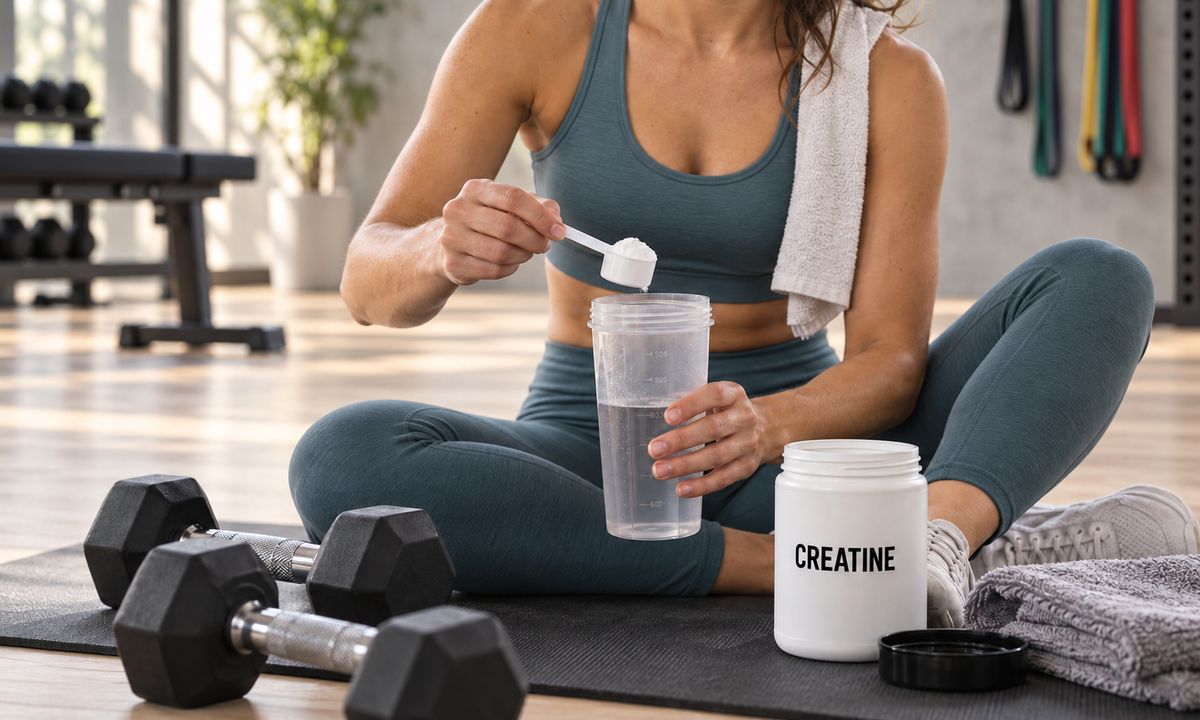
If you are trying to lose weight, creatine can seem like a confusing choice. It is known for supporting strength and muscle, yet some people notice the number on the scale rise after they start taking it. So, does creatine help with weight loss, or does it work against your goal?
The short answer is that creatine does not directly burn fat or cause weight loss. However, it may support a fat-loss plan by helping you maintain training performance and preserve lean muscle. The initial increase you may see on the scale is often related to water stored in muscle—not an increase in body fat.
Understanding that difference can help you decide whether creatine fits your goal and keep a normal change in water weight from looking like a setback.
What Is Creatine and How Does It Work?

Creatine is a naturally occurring compound made by the body and found in foods such as meat and fish. Most of it is stored in skeletal muscle, where it helps produce energy for muscle contractions.
During short, intense activities such as lifting weights or sprinting, your muscles use adenosine triphosphate, or ATP, for quick energy. Stored phosphocreatine helps regenerate ATP, which is why creatine is most closely associated with strength, power, and repeated high-intensity effort. Cleveland Clinic explains that creatine monohydrate is the most common form and supports performance during short-duration, high-intensity exercise.
That does not make creatine a fat burner. It does not create a calorie deficit, target fat cells, or automatically make the body use more stored fat. Its potential value for weight loss comes from what it may help you do during training.
Does Creatine Help With Weight Loss?
Not directly. Weight loss happens when your body uses more energy than it takes in over time. Creatine does not replace that basic requirement.
It is also important to separate weight loss from fat loss:
-
Weight loss can include changes in fat, muscle, body water, and even food moving through the digestive system.
-
Fat loss means reducing stored body fat.
-
Body recomposition means losing fat while maintaining or gaining lean mass.
Creatine is more relevant to fat loss and body recomposition than to simply making scale weight fall faster.
Creatine Does Not Directly Burn Fat
Taking creatine without changing your diet, activity level, or training does not usually produce meaningful fat loss. It is not an appetite suppressant, and it should not be presented as a supplement that melts fat or dramatically speeds up metabolism.
A calorie deficit remains the main driver of fat loss. Creatine may make that process easier to support, but it cannot create the process on its own.
How Creatine May Support Fat Loss Indirectly
Creatine can support a fat-loss plan in a few practical ways:
-
Maintaining training quality: Eating fewer calories can make workouts feel harder. By supporting quick energy production, creatine may help you maintain weight, repetitions, or training intensity.
-
Preserving lean muscle: Weight loss can include muscle as well as fat. Resistance training, adequate protein, and creatine may work together to help preserve more lean mass during a calorie deficit.
-
Supporting body recomposition: If you lose fat while maintaining or building muscle, your shape and body composition may improve even when scale weight changes slowly.
A 2024 systematic review and meta-analysis found that adults under 50 who combined creatine with resistance training had modestly better lean-mass and fat outcomes than those who performed resistance training alone. That does not prove creatine is a stand-alone weight-loss supplement; it shows that its effects are most meaningful when paired with training.
Why Does Creatine Make You Gain Weight?
Early creatine weight gain is one of the main reasons people question whether the supplement belongs in a fat-loss plan. In many cases, the change is related to water in the muscles rather than new body fat.
Creatine Water Weight vs. Fat Gain
Creatine increases the amount of creatine stored in muscle, and water follows it into the muscle cells. This is often described as intracellular water retention. The change can make muscles feel or look fuller and may show up as a higher number on the scale.
This is not the same as gaining fat. Body fat increases when a sustained calorie surplus causes the body to store excess energy. A short-term increase after starting creatine—especially during a loading phase—can happen without that calorie surplus.
Not everyone experiences the same change. The amount and timing can vary with dosage, body size, diet, muscle mass, and whether you use a loading phase. Research reviews also note that water retention is more likely to be noticeable during the early stages of supplementation and is not necessarily a continuing long-term effect.
Muscle Gain Can Change the Scale, Too
Over time, resistance training combined with creatine may support an increase in lean mass. That can create another situation in which fat is decreasing but total body weight is not falling as quickly as expected.
For example, a person who loses fat while maintaining muscle may see better waist measurements and more definition without a dramatic change in weight. Someone who loses fat while gaining a small amount of muscle may see even less movement on the scale.
The scale is not wrong—it is simply measuring total weight rather than explaining what changed.
Look Beyond One Scale Reading
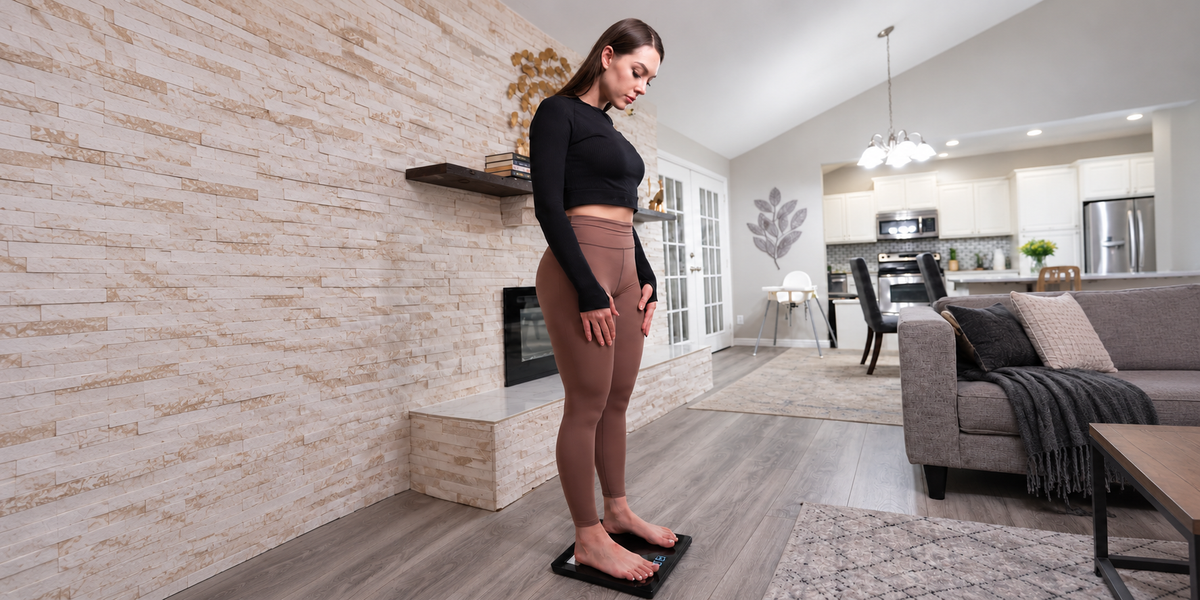
This is where body composition tools such as Arboleaf smart scales can provide more context. Alongside body weight, they bring estimated body fat, muscle mass, body water, and other measurements together so you can review how the overall pattern changes. They cannot identify the exact source of every pound, and at-home bioelectrical impedance estimates can shift with hydration, meals, recent exercise, and measurement time. But when measurements are taken under similar conditions, the combined trends can be more informative than one isolated weigh-in.
For a clearer picture, compare several indicators:
-
Weight trend: Use weekly averages or several weeks of readings instead of reacting to one day.
-
Body composition trend: Watch the direction of estimated body fat, muscle mass, and body water rather than treating any single reading as exact.
-
Waist and clothing fit: These can reveal changes that total weight may hide.
-
Workout performance: Maintaining strength during a calorie deficit can be a useful sign that you are supporting lean mass.
-
Progress photos: Use similar lighting, clothing, and timing for more useful comparisons.
Using body trend tracking over multiple weeks can make normal water fluctuations easier to interpret. For more consistent comparisons, measure at a similar time of day and under similar hydration, meal, and exercise conditions.
How to Use Creatine While Trying to Lose Fat

Using creatine while cutting does not require a complicated protocol. The supplement works best as one part of a plan built around a manageable calorie deficit, resistance training, adequate protein, and consistent recovery.
Choose Creatine Monohydrate
Creatine monohydrate is the most extensively studied form. More expensive blends and newer forms have not been shown to produce better fat-loss results.
When choosing a supplement, look for a simple ingredient list and independent third-party testing. Product quality matters because supplements are not regulated in exactly the same way as prescription medications.
How Much Creatine Should I Take for Weight Loss?
A common maintenance approach is 3 to 5 grams of creatine monohydrate per day. The appropriate amount can vary, so follow the product directions and ask a qualified healthcare or nutrition professional if you need individualized guidance.
Some protocols begin with a higher-dose loading phase to saturate muscle stores more quickly. Loading is optional, not a requirement for long-term results. Starting with a consistent maintenance dose may also make early water-weight changes and digestive discomfort less noticeable.
Consistency Matters More Than Perfect Timing
There is no need to build your fat-loss plan around a narrow creatine timing window. For most people, taking it consistently matters more than whether it is consumed before or after a workout.
Choose a time that is easy to remember and continue on rest days. Taking it with a meal may feel more comfortable if you are prone to stomach upset. Normal, adequate hydration is also important, but you do not need to force an extreme amount of water simply because you use creatine.
Keep the Foundation in Place
Creatine can support a plan, but it cannot compensate for a plan that is missing the basics:
-
Use a sustainable calorie deficit: Extremely aggressive restriction can make training and muscle retention more difficult.
-
Continue resistance training: Creatine’s body-composition benefits are most relevant when your muscles have a reason to adapt.
-
Eat enough protein: Protein provides the building blocks needed to maintain and repair muscle.
-
Allow time for recovery: Sleep and rest help you train consistently and manage fatigue.
Safety and Possible Side Effects
Creatine is well studied and is generally considered well tolerated by healthy adults. The most common concerns include temporary water-related weight gain and digestive symptoms such as nausea, diarrhea, or stomach discomfort, particularly with larger doses. The American Medical Association notes that evidence does not show kidney harm in people with healthy kidney function, but existing health conditions still matter.
Talk with a healthcare professional before using creatine if you have kidney or liver disease, diabetes, take medications that may affect kidney function, or are pregnant or breastfeeding. Stop and seek medical advice if you develop persistent or concerning symptoms.
Key Takeaways
So, does creatine help with weight loss? It does not directly burn fat or guarantee a lower number on the scale. Its value is more indirect: creatine may help you maintain productive workouts and preserve lean muscle while your nutrition plan drives fat loss.
-
Creatine is not a fat burner. A calorie deficit is still necessary for fat loss.
-
Early weight gain is not automatically fat gain. Water stored in muscle can raise scale weight after supplementation begins.
-
Training gives creatine a useful role. Its body-composition benefits are most relevant alongside resistance exercise.
-
Look at the overall pattern. Arboleaf smart scales can keep weight and body-composition trends together, while waist measurements, clothing fit, photos, and workout performance add useful context.
-
Simple use is usually enough. Creatine monohydrate, a consistent daily routine, and a strong nutrition and training foundation matter more than elaborate timing strategies.
Frequently Asked Questions
Q:Can You Lose Weight While Taking Creatine?
A:Yes. Creatine does not prevent the body from losing fat when you are in a calorie deficit. However, water stored in muscle may temporarily hide some of that progress on the scale. Look at several weeks of weight and body-composition trends rather than expecting every weigh-in to be lower.
Q:Does Creatine Make You Gain Fat?
A:Creatine itself does not directly cause fat gain. Gaining body fat generally requires a sustained calorie surplus. A weight increase soon after starting creatine is more likely to reflect water stored in muscle, especially if your calorie intake has not increased.
Q:Should I Take Creatine While Trying to Lose Belly Fat?
A:Creatine cannot target belly fat or produce spot reduction. If it helps you maintain resistance-training performance and lean muscle, it may support an overall fat-loss plan—but the calorie deficit reduces fat throughout the body, not from one chosen area.
Q:Will Creatine Make Me Look Bloated?
A:Some people notice fuller muscles or a temporary change in scale weight because creatine draws water into muscle cells. That is different from gaining fat. Larger doses may also cause digestive bloating in some people, which is one reason a steady maintenance dose may feel more comfortable than a loading phase.
Q:How Long Does Creatine Water Weight Last?
A:There is no single timeline that applies to everyone. Water-related changes are often most noticeable early in supplementation, particularly with loading, and may become less noticeable as body weight stabilizes. Dosage, diet, muscle mass, hydration, and individual response can all affect the pattern.

Share: