Building a leaner physique sounds simple, but the scale can make it highly confusing. You step on it, see the number go up while your clothes fit looser, and immediately wonder: does muscle weigh more than fat?
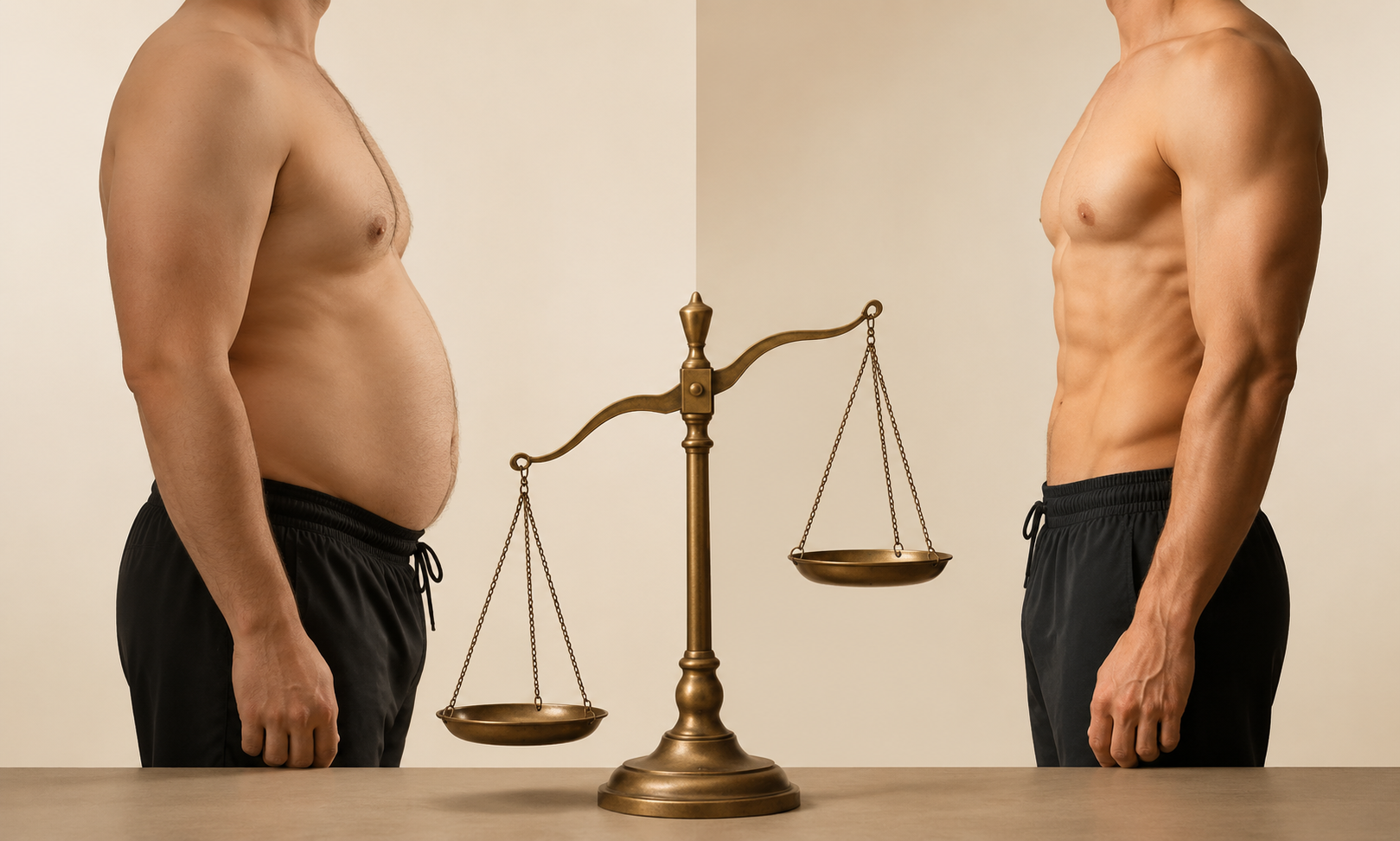
The short answer is no. A pound of muscle and a pound of fat weigh exactly the same. The real difference lies in density—muscle is highly compact and takes up significantly less space in your body.
This guide explains why your scale weight is misleading, why two people at the exact same weight look completely different, and how to track your true progress.
Is Muscle Heavier Than Fat? The Truth About Muscle vs Fat
If you put one pound of muscle on a scale and one pound of fat on another scale, they will balance perfectly. A pound is a pound. By pure weight, muscle does not weigh more than fat, nor does fat weigh more than muscle.
How much more does muscle weigh than fat? If you are searching for a mathematical formula, the answer is zero—a pound of either tissue is exactly one pound.
So, why does muscle weigh more than fat in popular fitness myths? It all comes down to a common misunderstanding of volume and density.
-
Muscle Tissue: Muscle is highly dense and compact. It is heavy for its size. Because muscle is denser than fat, a pound of muscle takes up significantly less space in your body.
-
Fat Tissue: Fat (adipose tissue) is fluffy, bulky, and less dense. A pound of fat takes up much more physical volume than a pound of muscle.
When people compare muscle vs fat density, what they are really observing is physical volume. Muscle is simply more compact, which is why gaining muscle can dramatically change how you look without necessarily dropping your total scale weight.
5 Pounds of Muscle vs. 5 Pounds of Fat: What It Looks Like in Real Life
To truly understand how density affects your body, it helps to use a handy visual analogy. Think about packing a carry-on suitcase for a trip.
Muscle is like tightly rolled clothes—compact, dense, and highly space-efficient. Fat is like chunky, bulky winter sweaters. Even if the rolled clothes and the bulky sweaters weigh the exact same amount, the sweaters will take up significantly more room in your bag (which, in this case, is your body).
When we look at actual human tissue, skeletal muscle is roughly 18% denser than fat. If you were to place them side-by-side on a table:
-
5 pounds of muscle would be roughly the size of a grapefruit.
-
5 pounds of fat would be closer to the size of a small loaf of bread.
How That Difference Shows Up in the Mirror
This difference in physical volume is exactly why the scale can be so deceptive. Consider two individuals who both weigh exactly 160 lbs:
-
A 160-lb individual who lifts weights regularly and sits at 18% body fat will wear a significantly smaller jean size.
-
A 160-lb sedentary office worker who sits at 28% body fat will wear a larger jean size.
They both weigh exactly 160 lbs. However, because the lifter has a higher ratio of compact muscle (the "rolled clothes") instead of bulky fat (the "sweaters"), their physical body simply takes up less space. This is why gaining muscle often shows up as a visible volume reduction—your waist shrinks even when the scale weight rises.

BMI and Muscle
Your total body weight is just a raw number. A traditional scale cannot tell you if that weight comes from muscle, fat, or water.
This is why relying solely on BMI (Body Mass Index) can be misleading. BMI only compares your height to your weight. It completely ignores your body composition. As a result, a highly conditioned athlete with dense muscle is often incorrectly categorized as "overweight."
Muscle and Fat Percentages in the Body
On the flip side, you can have a "normal" scale weight and a healthy BMI, but still carry a high percentage of dangerous visceral fat.
Research shows that a higher percentage of body fat increases your overall health risks, regardless of your weight. Excess fat increases your chances of developing conditions such as:
-
Hypertension
-
Diabetes
-
Heart disease
This means even individuals with a low body weight are at risk if they have a poor muscle-to-fat ratio. Tracking your true body fat percentage is essential for preventing obesity-related conditions.
To give you a realistic benchmark, the American College of Sports Medicine (ACSM) provides clinical guidelines for healthy body fat percentage ranges for adults
-
Ages 20–29: Women (16% – 24%) | Men (7% – 17%)
-
Ages 30–39: Women (17% – 25%) | Men (12% – 21%)
-
Ages 40–49: Women (19% – 28%) | Men (14% – 23%)
-
Ages 50–59: Women (22% – 31%) | Men (16% – 24%)
-
Ages 60 and above: Women (22% – 33%) | Men (17% – 25%)
Rather than chasing the absolute lowest body fat percentage possible, use these guidelines to establish your baseline and focus on improving your own muscle-to-fat ratio over time.
Why You Can Gain Weight but Look Leaner
Understanding your body composition explains one of the most frustrating experiences in fitness: gaining scale weight while your body actually looks better.
When you start a consistent strength training routine and eat a nutritious diet, your body undergoes a profound metabolic shift. You begin to burn stored body fat for energy, while simultaneously building new, dense muscle tissue.
Because muscle is so compact, you can lose physical inches around your waist, arms, and thighs while the scale stays exactly the same—or even creeps up.
A Real-World Example:
-
Before: You weigh 150 lbs at 30% body fat.
-
After: A few months later, you weigh 155 lbs at 25% body fat.
Even though you gained 5 lbs of total weight, you actually lost a significant amount of bulky fat and replaced it with tight, compact muscle. Your waist is smaller, your clothes fit looser, and your body feels firmer. In the fitness community, this process is known as body recomposition. If you only look at the scale, you might think you are failing. But if you look in the mirror, you are making real progress.
How to Track Changes in Muscle and Fat
Since a traditional bathroom scale and BMI calculations are lying to you about your actual fitness progress, how are you supposed to know if your body recomposition is working?
Traditional methods like taking weekly progress photos or measuring your waist with a tape measure are excellent ways to track changes in physical volume. However, if you want a clear, data-driven picture of what is happening inside your body, you need a tool designed specifically for body composition.
This is where a smart scale utilizing advanced BIA (Bioelectrical Impedance Analysis) technology becomes an invaluable asset.
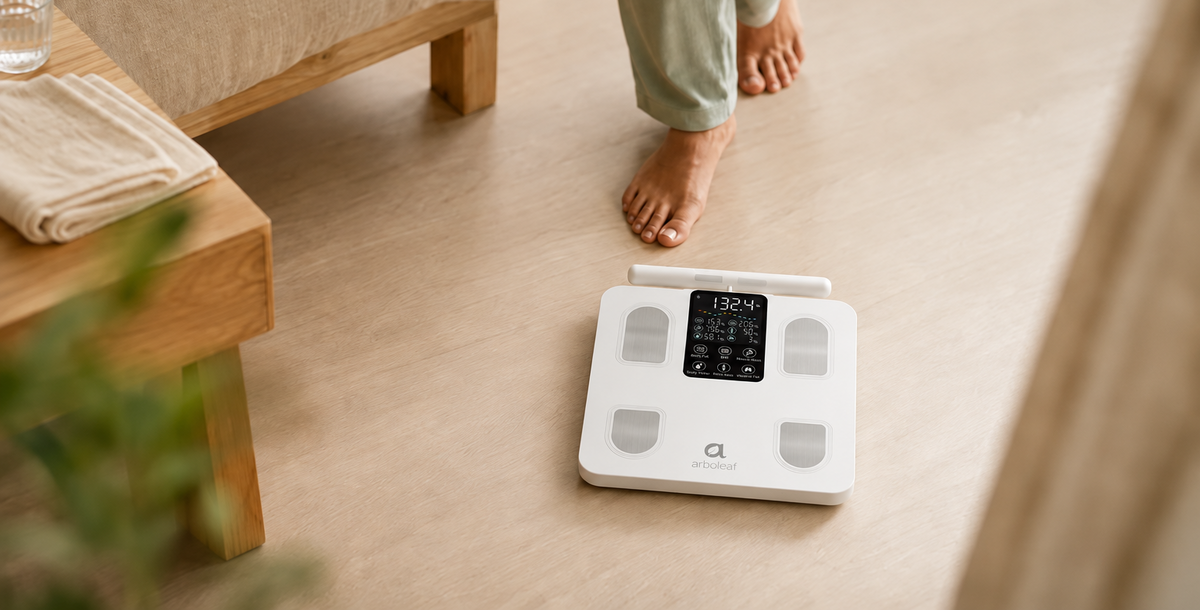
The Arboleaf Smart Body Composition Scale is fully capable of precisely measuring your body fat, skeletal muscle mass, and body water. Advanced models featuring 8-electrode technology even allow for precise segmental analysis—helping you understand the exact distribution of fat and muscle across your arms, legs, and torso.
By tracking these specific metrics in a companion App, you can confidently watch your skeletal muscle mass trend upward while your fat mass trends downward. It completely removes the anxiety of a fluctuating scale weight, allowing you to clearly see the real, structural changes your hard work is producing.
Frequently Asked Questions (FAQ)
Can fat turn into muscle?
No. Muscle and fat are completely different biological tissues. One cannot magically convert into the other; instead, you burn fat while building muscle simultaneously.
Does muscle burn more calories than fat?
Yes. Muscle is highly metabolically active and requires more energy to maintain at rest. Building muscle naturally increases your Basal Metabolic Rate (BMR).
What is the difference between muscle and fat weight?
The physical weight is exactly the same. The actual difference is density: muscle is dense and compact, while fat takes up significantly more physical space.
Does weight gain from muscle vs fat look different?
Yes. Gaining compact muscle results in a tighter, more toned appearance. Conversely, gaining fat increases your overall measurements and creates a softer body shape.
How can I tell if my weight gain is muscle or fat?
A standard scale cannot distinguish the two. The best approach is tracking your body composition with a smart scale, measuring your waist, and observing how your clothes fit. If your weight goes up but your waist shrinks, you are gaining muscle.
Conclusion: Your Body Composition Tells the Real Story
So, does muscle weigh more than fat? Absolutely not. A pound is always a pound.
However, because muscle is significantly denser and more compact than fat, it takes up far less space in your body. This biological fact explains why gaining weight on the scale does not always mean you are gaining fat. If you are lifting weights and eating well, that extra weight is often tight, metabolically active muscle.
The next time you step on the scale and feel disappointed by the number, remember that weight is just a raw measurement of gravity. By focusing on your true body composition and tracking your long-term trends, you can stop stressing over a single digit and start celebrating a stronger, leaner, and healthier body.


共有: