When fitness articles talk about achieving a certain physique, you will often see the word "lean." But what is the true lean body meaning?
In short, a lean body indicates a physique with relatively low body fat and a higher proportion of lean tissue. It is a description of your body composition and shape, not just a raw number on the scale.
Being lean does not simply mean being "skinny," nor does it mean you have to be a heavily muscled bodybuilder. To picture this, imagine two people who weigh the exact same amount. If one person has a significantly lower body fat percentage and a higher proportion of muscle, that person would be considered to have a leaner physique.
What Does Lean Mean in the Body?
If you are wondering what does lean mean in the body, it all comes down to the ratio of fat to non-fat tissue.
In a health and fitness context, a lean body typically features visible body lines and muscle definition due to a lower body fat percentage. However, having a lean physique does not necessarily require carrying a massive amount of muscle.
It is also highly important to understand that "lean" is not the same as "skinny."
-
Skinny generally describes someone with a low overall body weight or a very thin frame, regardless of their muscle mass.
-
Lean heavily emphasizes your body composition.
This means that someone who is quite heavy on the scale can still be described as lean, provided their body fat is relatively low and their lean tissue proportion is high.
So, what does lean body mean when you are tracking your fitness? To truly grasp the lean body meaning, you must look beyond your total body weight and understand the specific metrics that make up your body, starting with lean body mass.
What Is Lean Body Mass?
Now that we understand the visual physique, what is lean body mass biologically?
Lean Body Mass (LBM) is a specific, measurable physiological metric. It refers to the total weight of your body minus all of your body fat (fat mass).
The basic formula is:
-
Lean Body Mass = Body Weight − Fat Mass
If you know your body fat percentage, you can calculate it like this:
-
LBM = Body Weight × (1 − Body Fat Percentage)
A Simple Calculation Example: If your body weight is 70 kg and your body fat is 20%:
-
Your fat mass is 14 kg.
-
Your lean body mass is 56 kg.
So, what exactly is making up that 56 kg? Your lean body mass includes everything that is not fat, such as:
-
Muscle
-
Body water
-
Bone
-
Organs
-
Other non-fat tissues
This brings up a critical point: lean body mass is not the same as muscle mass. When tracking your health, remember this distinction: a "lean body" describes your physical shape, whereas "lean body mass" is a highly specific body composition measurement.
Lean Mass, Muscle Mass, and Skeletal Muscle: What’s the Difference?
Understanding your body composition metrics can sometimes feel like learning a new language. To make it completely simple, think of these three terms like a set of Russian nesting dolls, where each specific category fits inside the larger one.
If you are asking what is lean mass compared to muscle, here is exactly how they break down from largest to smallest:
1. Lean Mass (The Largest Category)
-
Layman’s term: "Everything in your body that isn't fat."
-
What it includes: Your muscles, bones, total body water, organs, and skin.
-
Why it matters: This is the baseline of your non-fat weight. It is important to know that when you drink a large glass of water, your overall lean mass temporarily goes up—even though you did not build a single ounce of muscle.
2. Muscle Mass (The Middle Category)
-
Layman’s term: "All the muscle tissue in your entire body."
-
What it includes: This is a smaller sub-category inside your lean mass. It includes three types of muscle: skeletal muscle (the ones you flex), smooth muscle (which lines your organs, like your digestive tract), and cardiac muscle (your heart).
-
Why it matters: It tracks the overall engine of your body. However, you cannot consciously control or "work out" your smooth muscle in the same way you train your biceps.
3. Skeletal Muscle (The Most Specific Category)
-
Layman’s term: "The muscles you actually train at the gym."
-
What it includes: This is a highly specific sub-category inside your muscle mass. These are the muscles attached to your bones that control your physical movement, posture, and strength.
-
Why it matters: When comparing skeletal muscle vs muscle mass, skeletal muscle is the specific metric you want to watch when you are lifting weights or exercising. If your goal is to build a leaner physique and get stronger, this is the exact tissue you are actively trying to grow.
What about "Lean Muscle"? You might also wonder: what is lean muscle mass? In casual fitness conversations, "lean muscle" is a popular phrase used to describe muscles that look highly defined because the person has a low body fat percentage. However, biologically speaking, all muscle is lean tissue. There is no such thing as "fatty muscle" versus "lean muscle" in your body's structural breakdown.
How to Determine and Track Lean Body Mass
Understanding the lean body meaning is only useful if you can actually monitor your own progress.
Calculate Your Lean Body Mass
If you already know your body weight and your body fat percentage, you can estimate your LBM using the formula: Body Weight × (1 − Body Fat Percentage). However, the accuracy of this number depends entirely on how accurately your body fat was initially measured.
Track Lean Body Mass at Home
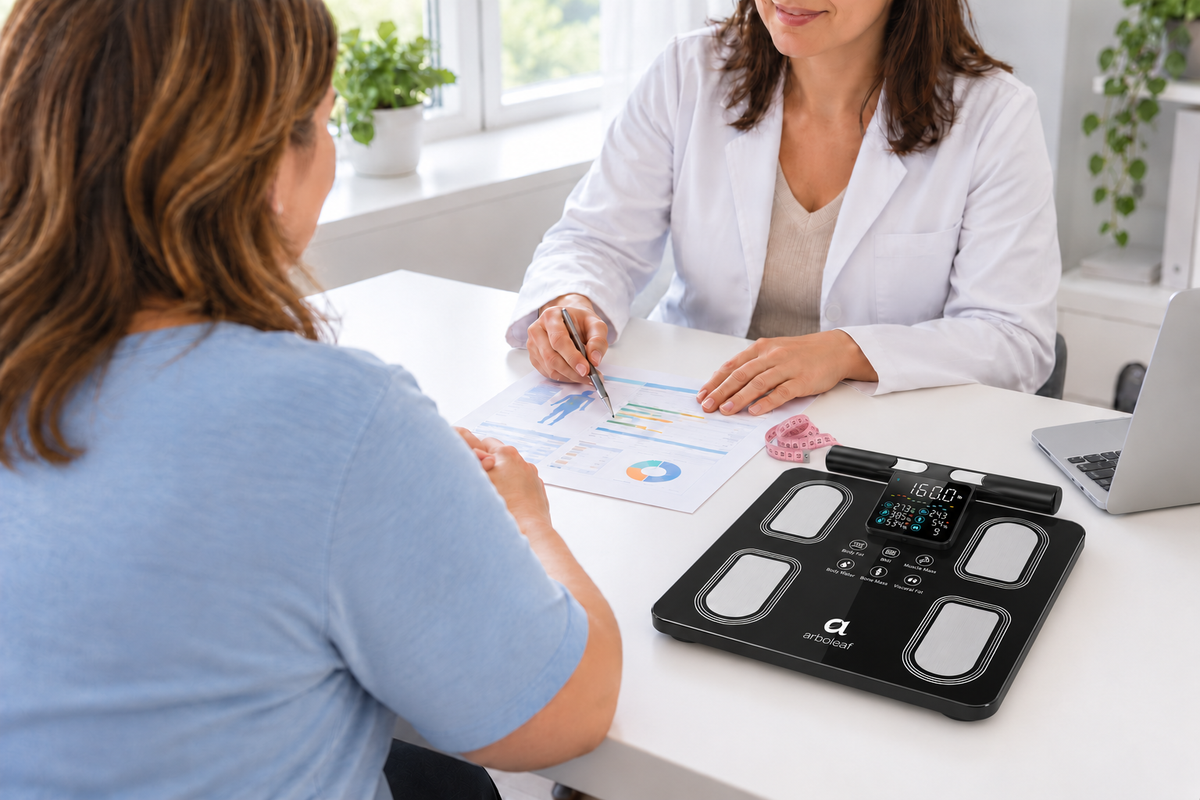
Manually calculating your LBM every time you step on a standard bathroom scale is tedious and often provides limited information. If you want to regularly monitor your body composition at home, utilizing a smart scale is an effective and practical solution.
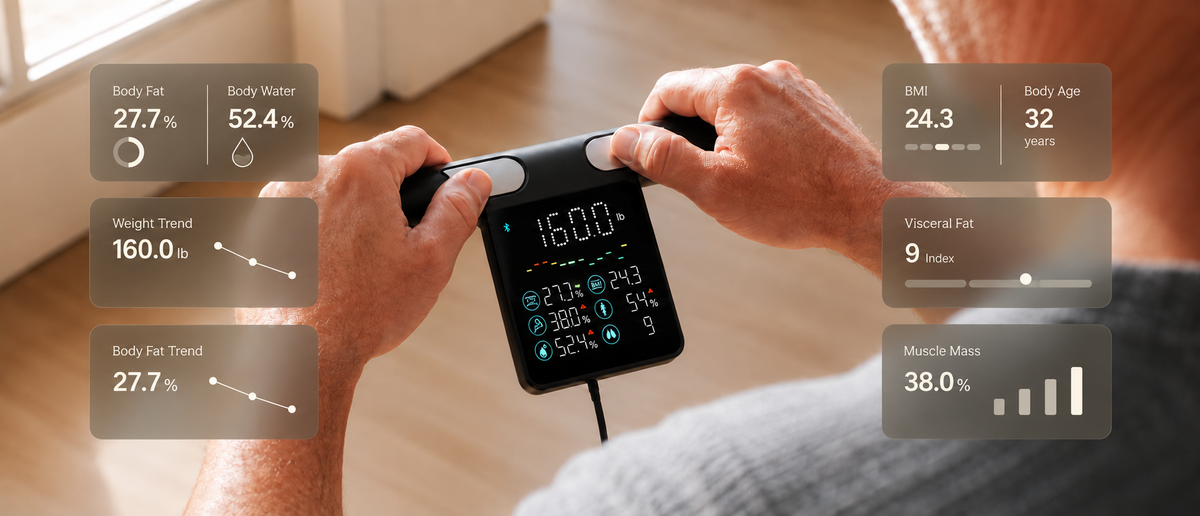
Arboleaf smart scales utilize BIA (Bioelectrical Impedance Analysis) technology to estimate your body composition simply by stepping on the device. Instead of just giving you a raw weight, these scales help you track:
-
Body weight
-
Body fat percentage
-
Lean mass
-
Muscle mass and skeletal muscle metrics
-
Body water
Looking at all these metrics together gives you a clearer, comprehensive picture of your actual health.
Focus on Trends, Not a Single Reading
A sudden increase in your lean body mass does not necessarily mean you gained pure muscle overnight. Because LBM includes body water, your hydration levels, recent meals, and workout intensity can all cause your daily numbers to fluctuate.
For clearer insights, weigh yourself under similar conditions and focus on the trends over several weeks or months. For example, if your Body Weight is decreasing, your Body Fat is decreasing, but your Lean Mass is remaining relatively stable, you are successfully losing fat while preserving your muscle. This is the true value of tracking with a smart scale—it helps you record and deeply understand your long-term body composition trends rather than obsessing over a single digit.
Frequently Asked Questions (FAQ)
What is the exact lean body meaning?
A lean body indicates a physique with a relatively low body fat percentage and a higher proportion of lean tissue. It describes your body composition, not just a low scale weight.
What does lean body mean compared to skinny?
"Skinny" generally refers to having a low body weight or thin frame, regardless of muscle. "Lean" means you have a healthy, higher proportion of non-fat tissue compared to fat mass.
What does lean body mass mean?
Lean body mass (LBM) is the total weight of your body minus all of your body fat. It includes your muscles, bones, organs, and total body water.
Is lean body mass the same as muscle mass?
No. Muscle mass is just one part of your overall lean body mass. LBM includes your muscle, but it also heavily incorporates the weight of your bones, water, and internal organs.
How do you determine lean body mass?
You can estimate it mathematically by subtracting your fat mass from your total body weight. An effective way to track this long-term is by using a BIA smart scale that automatically calculates your body composition metrics.


共有: